


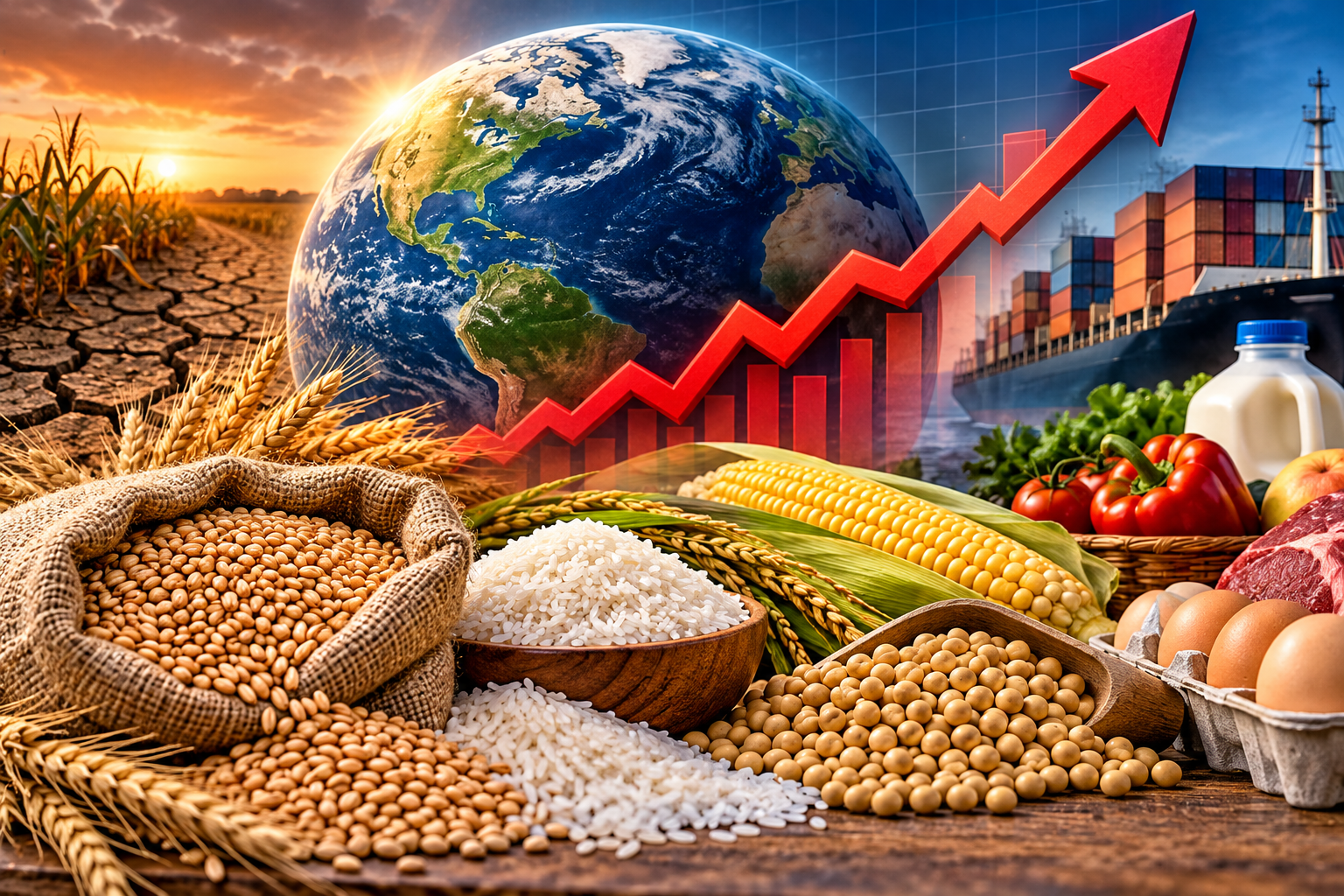
Global food prices could continue rising through next year as international conflicts, higher production costs and unfavorable weather threaten agricultural supplies and disrupt global trade.
The United Nations Food and Agriculture Organization warns that disruptions to Black Sea grain shipments and shipping routes through the Red Sea are pushing transportation costs higher.
Conflict involving Iran is adding pressure to agricultural markets by driving up fuel prices and disrupting fertilizer shipments through the Strait of Hormuz. Higher fuel and fertilizer costs can increase expenses for farmers and eventually contribute to higher food prices for consumers.

Weather is another concern. Dry conditions associated with El Niño are threatening agricultural production in India and Southeast Asia, potentially reducing supplies of key crops.
Wheat prices have increased more than 30% this year, while rice prices in major Asian exporting countries have climbed between 10% and 13%.
FAO economists warn the impact of supply disruptions, higher energy costs and unfavorable weather could become more pronounced late this year and continue throughout 2027.
The increases could have the greatest impact on lower-income households, which typically spend a larger share of their income on food. Continued increases in staple food prices could put additional pressure on household budgets while increasing concerns about food security in vulnerable countries.