


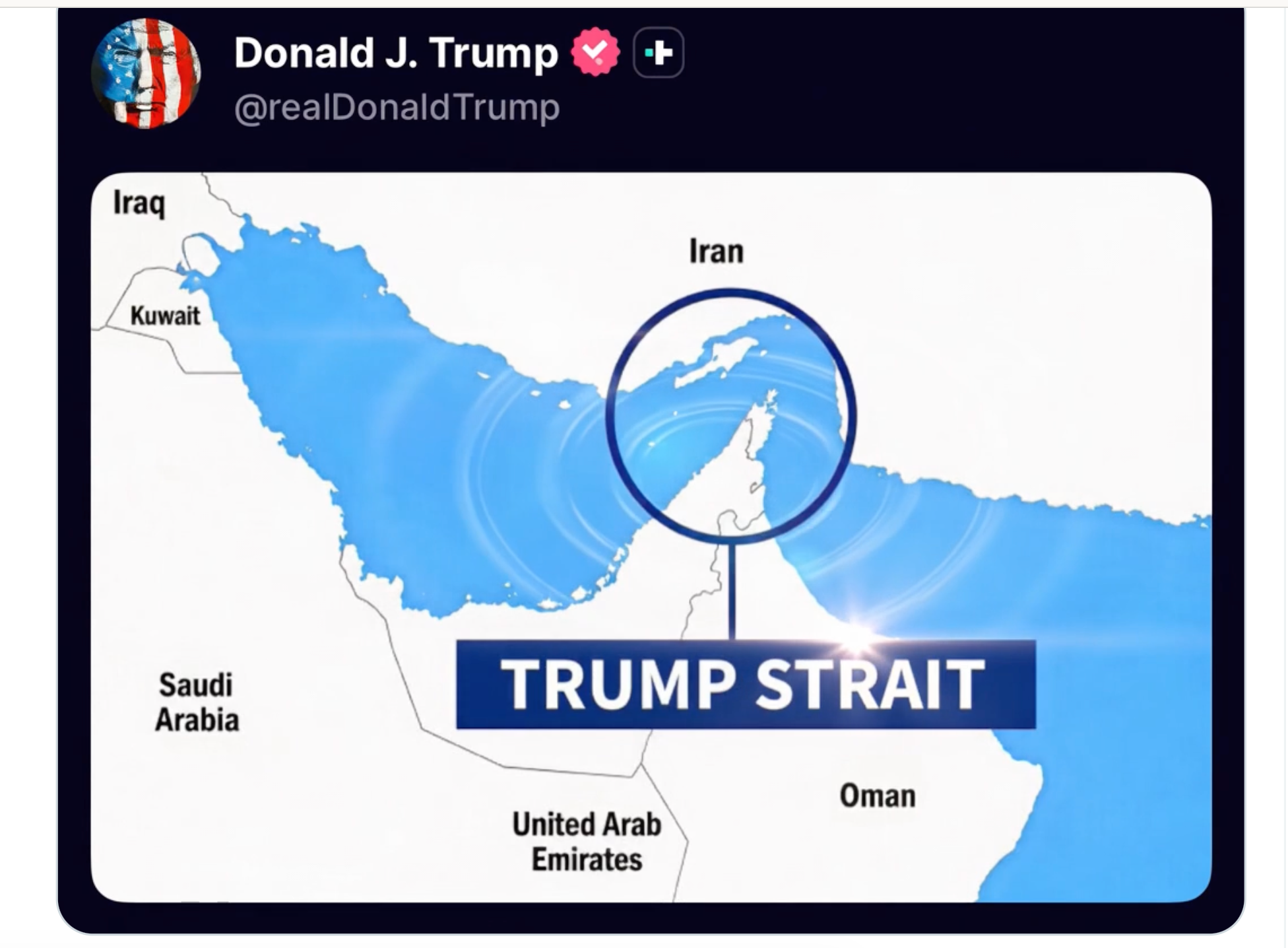
WASHINGTON (AP) —U.S. President Donald Trump on Saturday rejected Iran's proposal to reopen the Strait of Hormuz within a week if the U.S. meets certain conditions.
Meanwhile, Iranian media outlets said the country's president has left New York after the United Nations gathering of world leaders that included Iran's indirect talks with the United States. And Saudi Arabia says it has intercepted another missile it blames on Iran -backed Houthis in neighboring Yemen.
Trump rejects Iran proposal to reopen the Strait
Iran offered this week to reopen the strait and resume talks on its nuclear program in seven days if the U.S. lifts its naval blockade of Iranian ports, waives sanctions on Iranian oil sales and observes a ceasefire that would include Lebanon.
But on Saturday, Trump rejected the proposal saying Iran wanted to make a deal because it was “losing so badly.”
“They want to make a deal and I think that’s fine,” Trump told reporters outside the White House before leaving for a college football game. “I’d like to make a deal, too. But that deal would not be acceptable.”
Iran effectively closed the strait after the U.S. and Israel attacked the Islamic Republic in late February, and the number of ships passing through has dropped significantly because of Iranian threats and attacks on vessels in the waterway.
Iranian outlets say the country's president has left New York
Semiofficial media outlets in Iran reported that President Masoud Pezeshkian has left New York for Tehran after the annual U.N. gathering of world leaders.
Pezeshkian's speech to the gathering pushed back against Trump's latest threat to “annihilate” the Islamic Republic, but he ended by saying Tehran remains open to diplomacy.
Iranian Foreign Minister Abbas Araghchi told journalists Friday night that under Tehran's proposal, Iran would reopen the Strait of Hormuz and resume talks on its nuclear program in seven days if the United States lifts its naval blockade of Iranian ports, waives sanctions on Iranian oil sales and observes a ceasefire that would include Lebanon.
Iran's president says supreme leader, still unseen in public, has no health issues
Iranian President Masoud Pezeshkian told CBS that, from his viewpoint as a physician, Supreme Leader Mojtaba Khamenei has “no specific ongoing health issues” despite not being seen or heard in public since the war with the U.S. and Israel began in February.
The interview will air Sunday.
In the transcript CBS released, Pezeshkian described his most recent meeting with Khamenei as lasting over seven hours. “But, of course, he was healthy enough to be able to withstand those hours of that situation. From a medical standpoint, he’s completely healthy,” the president said. When asked whether the supreme leader’s face and legs have recovered, Pezeshkian responded, “Yes.”
Khamenei’s father and other family members were killed on the opening day of the war.