


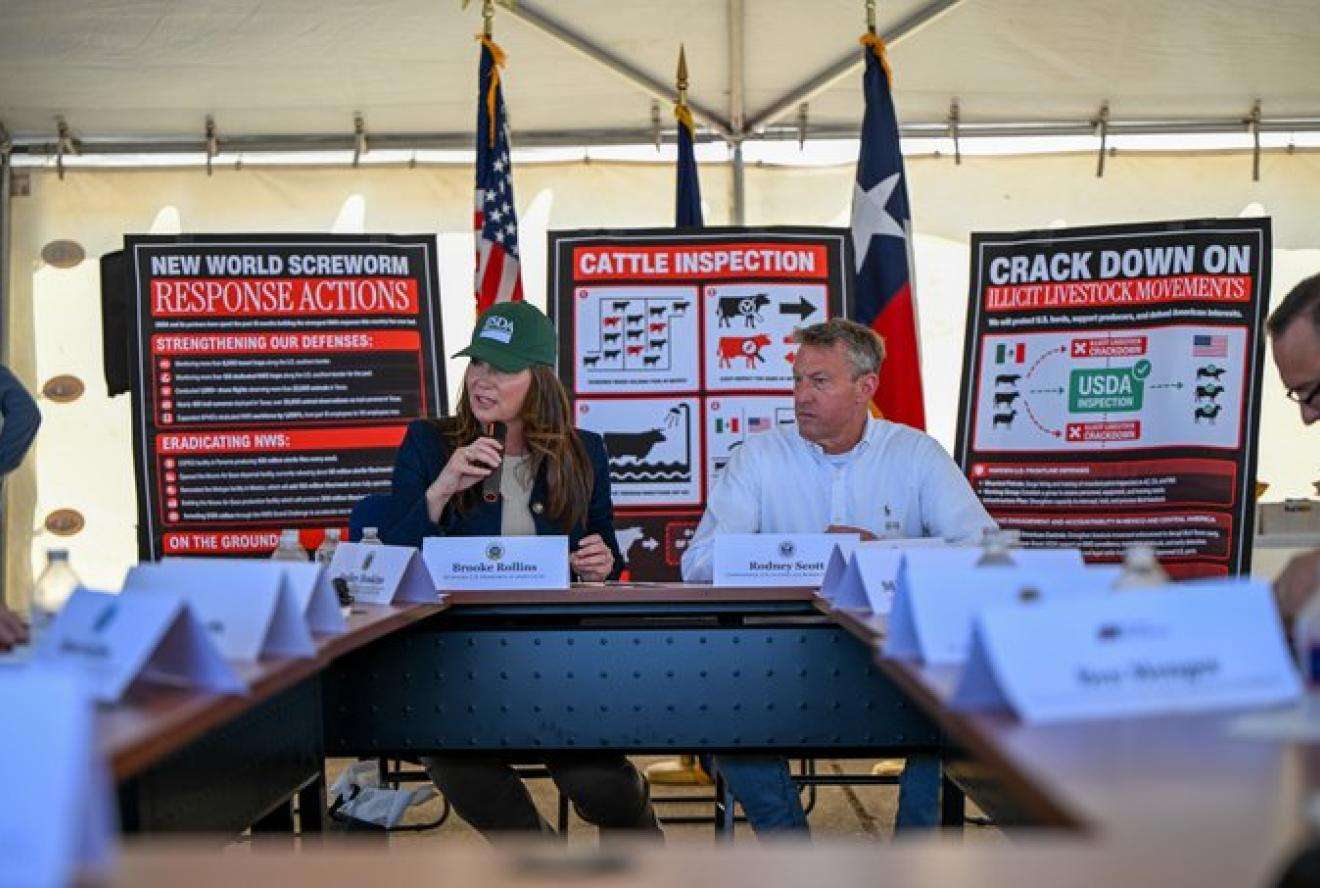
The U.S. Department of Agriculture and Department of Homeland Security are expanding their partnership to protect the nation’s livestock and agricultural system from New World screwworm and other emerging threats.
Agriculture Secretary Brooke Rollins announced a new memorandum of understanding between the two departments during an event Monday at Moore Air Base in Texas. U.S. Customs and Border Protection Commissioner Rodney Scott also attended the announcement.
The agreement is intended to improve coordination between USDA’s animal health programs and DHS border security and inspection authorities.
“The United States has the strongest food and agriculture system in the world,” Rollins said. “The MOU further aligns our animal health mission with DHS’s border, security, and inspection authorities, so we are better positioned to detect, assess, and respond to agricultural threats like New World screwworm.”

Under the agreement, the agencies plan to expand the use of technologies including artificial intelligence and unmanned aircraft systems to improve screening and detection at ports of entry and within border enforcement areas.
USDA and DHS will also increase real-time sharing of biosurveillance information, establish protocols for coordinated responses and joint training, and expand research into new methods of detecting and controlling agricultural threats.
Federal officials say the partnership is particularly important as they work to prevent the spread of New World screwworm, a parasitic fly whose larvae infest wounds and feed on the living tissue of warm-blooded animals. An infestation can cause serious injury or death if it is not treated.
The agreement also addresses concerns about illegal cattle movements in the region. USDA estimates approximately 800,000 cattle are smuggled annually from Central America into Mexico, representing about $320 million in illicit trade.
Officials say illegally transported livestock can bypass sanitary inspections and animal-traceability systems, increasing the possibility that diseased or unmonitored animals could move across borders and undermine efforts to control New World screwworm.
USDA said it will continue working with Mexico to ensure cattle entering the United States through approved ports of entry are properly documented and comply with federal import requirements and screwworm safeguards.
“Safeguarding American agriculture from threats abroad starts at our border,” Homeland Security Secretary Markwayne Mullin said in the USDA release. “Proud to work alongside Secretary Rollins as we fight to protect our farmers, ranchers, and livestock.”
Federal, state, tribal and local partners, along with agricultural industry stakeholders, helped develop the new agreement.
USDA and DHS said the memorandum will be periodically reviewed and updated as threats, preparedness efforts and industry practices change.