


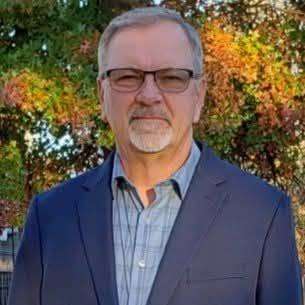
Ed. Note: Below is the transcript of the interview with Randy Parks. He is the Republican nominee running for the Kansas House District 104.
Marc Jacobs: This morning we are talking with Randy Parks. He is a candidate for House District 104. Good morning, sir.
Randy Parks: Good morning, Marc. Thanks.
Marc Jacobs: So, making a step from the county commission to the state house, hopefully, what is the most important thing or the most pressing thing that you see in District 104?
Randy Parks: Well, there's certainly several issues, but the top of that's going to be property tax. It's still quite the debate in the state. Certainly, at the local level, at the county, we've heard constantly. The four years I've almost been in there now, that's the top priority with people right now. So, so what would be a solution to help solve that problem? Well, you know they've done some work at the state level. I hope to be able to get there to continue to work with the other folks there to maybe come to some resolutions that will help the folks. I know they've looked at capping tax, they've looked at revenue neutral rates, those kinds of things, appraisal adjustments, appraisal caps, maybe. But I think fair appraisals are a great thing that we need to look at. It has to be a fair appraisal to people, but we certainly have to get the mill levy down here and find some some property tax relief of some kind. It's just it's hard to do with the base that we have here to bring it down. To be quite honest with you, we don't we don't have. I believe the industry numbers and some of those things that that it really would take to start to to give some relief to people.
Marc Jacobs: Is there something that you could things that you could change, or how, if if property tax reform happens, how would you protect funding for schools and other local services?
Randy Parks: Well, I'm certainly a proponent for funding schools with the necessary money that they need, and and the other things that are required. I'm not a big person about continuing to escalate cost, I can tell you. If anybody's watched me, I think I've kind of proved myself at the county level where I've tried to toe the line every time we turn around. I'm hollering about not spending money, and so you know, getting costs under control is a big deal. Cutting expenses of taxes is going to help. But your question to helping those budgets, I think, is to build a bigger base here. Obviously, to have more money to be able to be able to reduce those mill rates. I'm going to go back to that again because if the population continues to shrink and we continue to have to have the money to operate, obviously that's going to go up.
Marc Jacobs: So, you you're going from county commission to State legislators, and your district is a little bit different. It will be a little bit different now than what the composition of the district of District 104 is a little bit different because now it brings in a little bit of McPherson County as well. Do you see any differences on how you handle, like, say, the city versus the rural areas in your in your jurisdiction.
Randy Parks: No, I don't. And in fact, I've said this many times. Even when I ran for county commission, I'm running for a district, but I'm running for the people of Kansas. I ran for the people of Reno County. I think the decisions you make has to be those kinds of things that is good for all the people that are in your district. Certainly, all the people in Kansas, and so that really doesn't have a lot of borders when you look at it. I'm going to work the same for them. I've had a lot of feedback from Inman already from some people over there that that certainly are excited about me running and excited about the possibility of getting some good things done. And I've reassured them the same thing I'm telling you here this morning that we're going to work to help everybody that we can. You do some logical things that are good for business, but it can't hurt small business, and it certainly has to be fair and equitable for everybody. And so that's kind of how I view that, really.
Marc Jacobs: You would look at the economy of the state of Kansas, and we're looking at the jobs and job growth. I want to take a look back. I want to take a step back from that, and I want to look at career technical education because you know USD 308 has a great career and technical education academy and a lot of the schools and including Hutch Community College and that, Buhler High School use that for the trades. But recently there was a change in the legislature passed a law that kind of puts some limits on some of those. Is it important to continue career and technical education to expand it and try to get back to where it was compared to what it is now?
Randy Parks: Yeah, absolutely. I believe it is. I'm actually a product of that. I went through technical school right here at HCC, and that's how I started my career early on in the automotive field, and then continued to expand on that, and continued my education in some other areas. But I think what I see is the fact that I've watched parents raise kids, and they go through if they go through technical or they take university get a get a degree that a lot of times, they take that that talent and that education somewhere else. We need to find a way to retain it here, but I'm certainly somebody that'll stand behind technical degrees because I mean you can only have so many people sitting at a computer desk. There's people got to put hands on things, and I think there's some great opportunities for people to make a good living. It's certainly going to play well in the community if we can educate people and have a great workforce. If you're going. Build a base here, and you're going to try to get a tax base. You need some people to certainly do the work. You need some people to move here, and I think it's it's a great asset that we have here through the college, and and even 308. You know the things they're doing in partnership with the college now is it's phenomenal. I would encourage people to get involved and look at that if they haven't seen what's actually there.
Marc Jacobs: I want to take a look because there's a lot of people that are complaining about housing and affordable housing. How much can you do at the state level to help promote or increase affordable housing in your district?
Randy Parks: Well, there's a lot of different answers that come out to this, and one of the things that I said the other night at the forum that I'll repeat for you here this morning is I like the term attainable housing over affordable because you can have an affordable point for somebody, but it isn't for somebody else. There needs to be enough housing available for people that are beginning to buy a house for their first home from possibly people that have moved out of that and bought a new home to people that want to buy new homes that are being built in town right now. As a matter of fact, and so, but I think the incentives that are out there, we've used some of them at the county level for people to refurbish your house for tax credits, and there's some of those kind of things that that are following some of the new construction here in town. They're helping people to get into those houses to defer some of those taxes for some years, and so that's a good thing, I think. And I think those programs can work. I think they're effective, but I will say this about me: I always use that measure. If you're doing investment and it's not paying a return, then you certainly look at doing something else that does work. And so, they need to be scrutinized to make sure that they're an effective program. If they're not, then they need to be tweaked so they're going to work for people that need them.
Marc Jacobs: Another hot button topic that I've recently discovered is healthcare and mental healthcare. What can a state do? Because I know there's like been federal cuts to Medicare and things like that. What can a state do to, or what's your feelings on the state trying to create a way to help people who can't necessarily afford insurance or can't afford health care? What can the state do to help them?
Randy Parks: Well, I think they continue to fund Medicare and Medicaid, some of those things that that get funded to help people. I know there's a big push for an expansion for those programs. I certainly want to see those serve the people they were intended to serve. But I, you know, even I look at the local level where we give a certain portion of money every year to Horizons Mental Health, and I get excited about them because I don't know anybody that that doesn't affect the mental health. I mean, every family has somebody that's suffering from some sort of that, and I look at what they've done with their funding and been creative to reach more people in the community. I think that's what if you know if the state gets behind funding more of that kind of stuff. That's what they need to be searching for. We didn't even ask them to do that here locally, but I get excited when the gal comes in and talks and gives a report, all the things they're doing within that budget to do so much more. I mean, I can stand behind that pretty easily.
Marc Jacobs: You know, we talk about you know healthcare, and I want to advance a little bit here and talk a little bit about water because that's a precious resource. And of course, you guys on the county level have had that discussion about data centers and water consumption there, but I want to look at the wider picture because not only you know agriculture needs water, the cities need water, and now you have data centers coming in, and there's a water demand there. What's your thoughts on controlling water and controlling water use to help sustain not only the farmers but the cities and the and the and the people living in in those cities. Yeah.
Randy Parks: Well, I'll tell you some of the technologies out there that I've talked to some of the farmers are using is already helping them to conserve things like fertilizers and waters and stuff. Where they're used to overwater, they're not overwatering. I mean, they got utilities that they can put on the leave, and they can look, and the plant will actually tell them what it's needing or not needing, and so and that has helped them greatly reduce water usage and fertilizations and things like that. But on the other side, that you're talking about data centers. You know, it is somewhat easily controlled by conditional use permits as to what you write in there and require. If company doesn't want to abide by those rules, they can't build. I do know here it's a big rub because there's so many people that are against data centers and things. Interestingly, I don't know if we got time, but I'll tell you real quick that we had one of the leaders come down from McPherson Commission and talk to us in one of our meetings because people don't understand that what we do here with our resources actually adversely affects them up there. They're on the outside of that aquifer a little bit, and it causes theirs to drop pretty significantly if we're pulling too much here, and so you know, it's really a partner thing. When you think about being selfish of the county, you want to raise money, but what are we going to do to another county next to us? We got to really look at the things regionally instead of necessarily just here at home. Yeah, it'd be great to have a great big tax base come in here and defer the tax to help your property tax go down. I'm for projects like that. I honestly. To get your taxes down, but I don't want to hurt any of the resources that we have. It's too valuable here in Kansas to lose the water, and so it's been a resounding no from the people that I serve that they don't want to do it. I think people have seen that locally in town too.
Marc Jacobs: So, you know, we talk about you know local control versus state control, and I know there's a lot of people who say we want more control over what we do? We don't want the state telling us what to do. How do you find that balance? Because you're going from the local control to now the state control. If you if you're elected, how do you find a good balance between state versus local?
Randy Parks: I'll give you a quick example. Yeah, we operate primarily at the county on a state statute, there is very little home rule. There's a lot of home rule in municipalities that they can do some stuff. We don't have that liberty there, but sometimes not having that home rule here actually hinders us because by statute there's some monies we spend. If we spend 25,001 penny, we have to engineer a remodeling project. If we had a home rule to spend that money, which we're well within our means to be able to do, and didn't have to have that requirement. It would actually save the taxpayers' dollars. If you've hired an engineer lately, it could be more than the cost of that $25,000 project, and so some of that needs to be relaxed a little bit to the local level. And then there's certainly some things I realize why there's statute to run those. But so it would be a shift in what then the way I think, that's for sure because I've seen it on this side for a while now. But I think that there there are some good things that can happen by letting the counties do their. I know the worry is that they'll continue to raise taxes, they'll continue to escalate expenses out of control. I don't think that's the normal thinking, though. I really don't because I've been around it enough to know that that's not true.
Marc Jacobs: You know, we talk about spending. You know, you talk about state versus local control and what you can do and what you can't do, but what is the most important state spending issue now that you could see either increasing or decreasing funding for that?
Randy Parks: Well, look, the biggest one is schools. I mean, that's a big chunk of the budget in Topeka, and the battle over funding and not funding, and I know there are shortfalls in some of the things, such as I've heard of special educations and things like that. There's always the fear we're not going to fund the things that need to be funded. Now, certainly, I think we need to fund and take care of what needs to be taken care of in the budget. Certainly, without a lot of fluff, but and I think that goes with every line item that you're going to see, not just schools. But that certainly is one of the big ones on that, and payroll is going to be. So, I think that's something that has to be watched that we don't cut it too deep. But we certainly have to fund what needs to be taken care of.
Marc Jacobs: All right, Randy, I thank you for time this morning already. We were talking to Randy Parks. He is the Republican nominee for House District 104. Thank you for your time this morning.
Randy Parks: Thank you. I appreciate you having me, Marc.