


By: Morgan Chilson
Kansas Reflector
TOPEKA — A Kansas healthcare leader and a U.S. Representative are questioning why funding needed to continue essential scientific research isn’t being paid out.
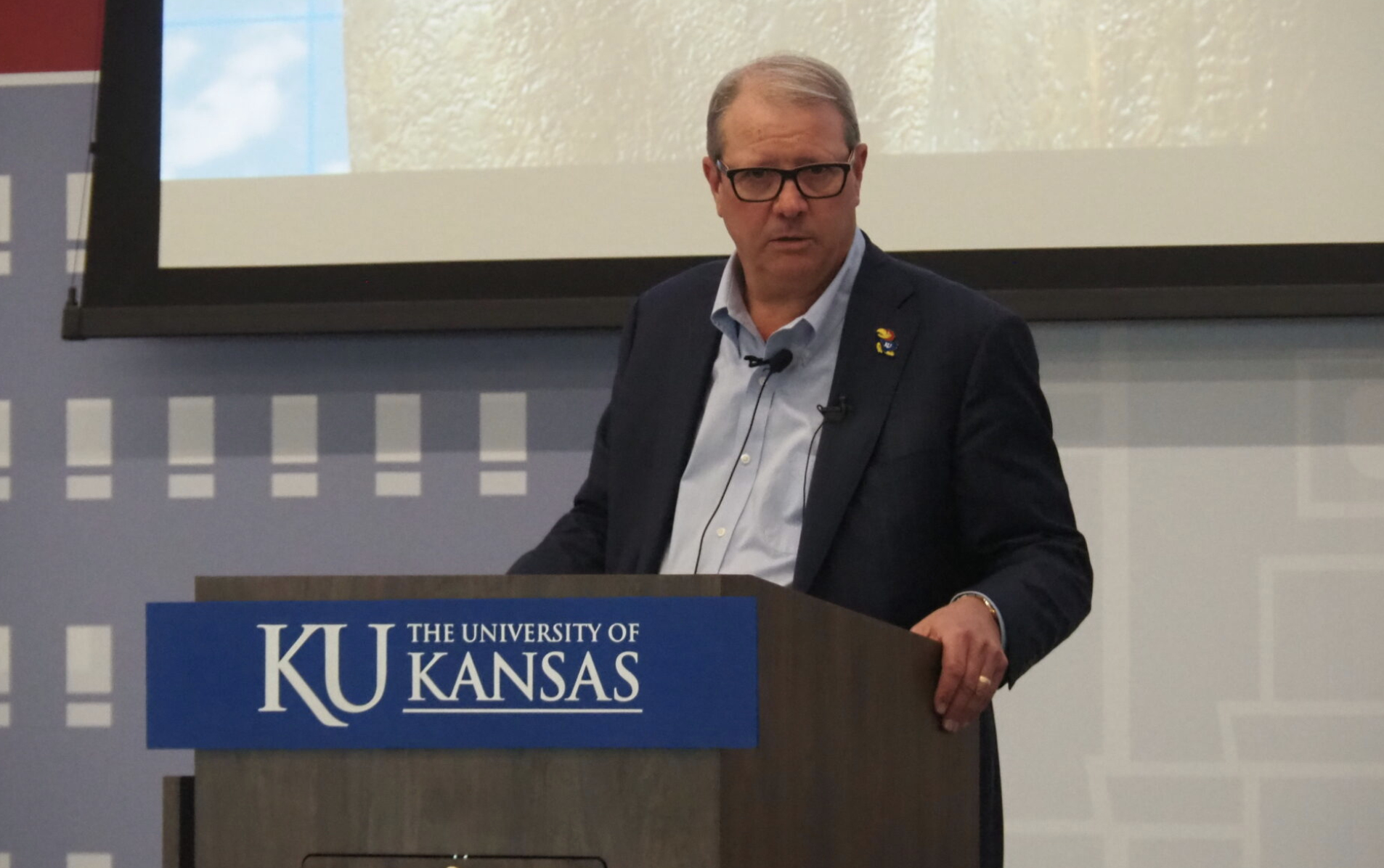
“More than halfway through fiscal 2026, the National Institutes of Health has allocated only 33% of the $26 billion it normally awards to universities,” wrote University of Kansas Chancellor Douglas Girod with Ron Daniels, Johns Hopkins University president, in a Wall Street Journal column in May.
Democrat Rep. Sharice Davids teamed with 38 national legislators to ask Robert F. Kennedy Jr., secretary of the Department of Health and Human Services, about staffing shortages slowing distribution of research funding that had already received congressional approval.
“These delays are not abstract. They affect research into cancer treatments, Alzheimer’s and dementia, diabetes, and rare diseases that families across the country are living with every day,” the lawmakers wrote in a letter to Kennedy. “When grants stall, so does progress toward new therapies and potential cures.”
Girod’s Wall St. Journal piece said that three quarters into the fiscal year, Kansas has seen a year-over-year drop of $182 million in new awards.
“The consequences reach beyond any single campus,” Girod and Daniels wrote. “NIH research funding supports around 400,000 jobs annually across all 50 states and generates more than $94.5 billion in new economic activity each year.”
In their letter, the legislators asked Kennedy to provide information about staffing shortages, plans to hire grant management specialists and whether the agency intends to fully distribute appropriated funding this fiscal year.