


WASHINGTON (AP) —For Republicans, a contest to replace the late Sen. Lindsey Graham pitted his sister, Darline Graham, against far more experienced candidates. But she also had the endorsement of President Donald Trump, and she secured a spot in a runoff election later this month.
In a race that showcased Democrats’ struggle between the ideological left and center, Milwaukee County Executive David Crowley managed a razor-thin victory over his democratic socialist challenger. The race was so close that neither side could claim a decisive victory.
In other contests, experience was rewarded in two governors’ races and voters went for generational change in voting out a House incumbent.
Here are some takeaways from the night’s elections.
Family name + Trump nod = runoff spot for Graham in South Carolina
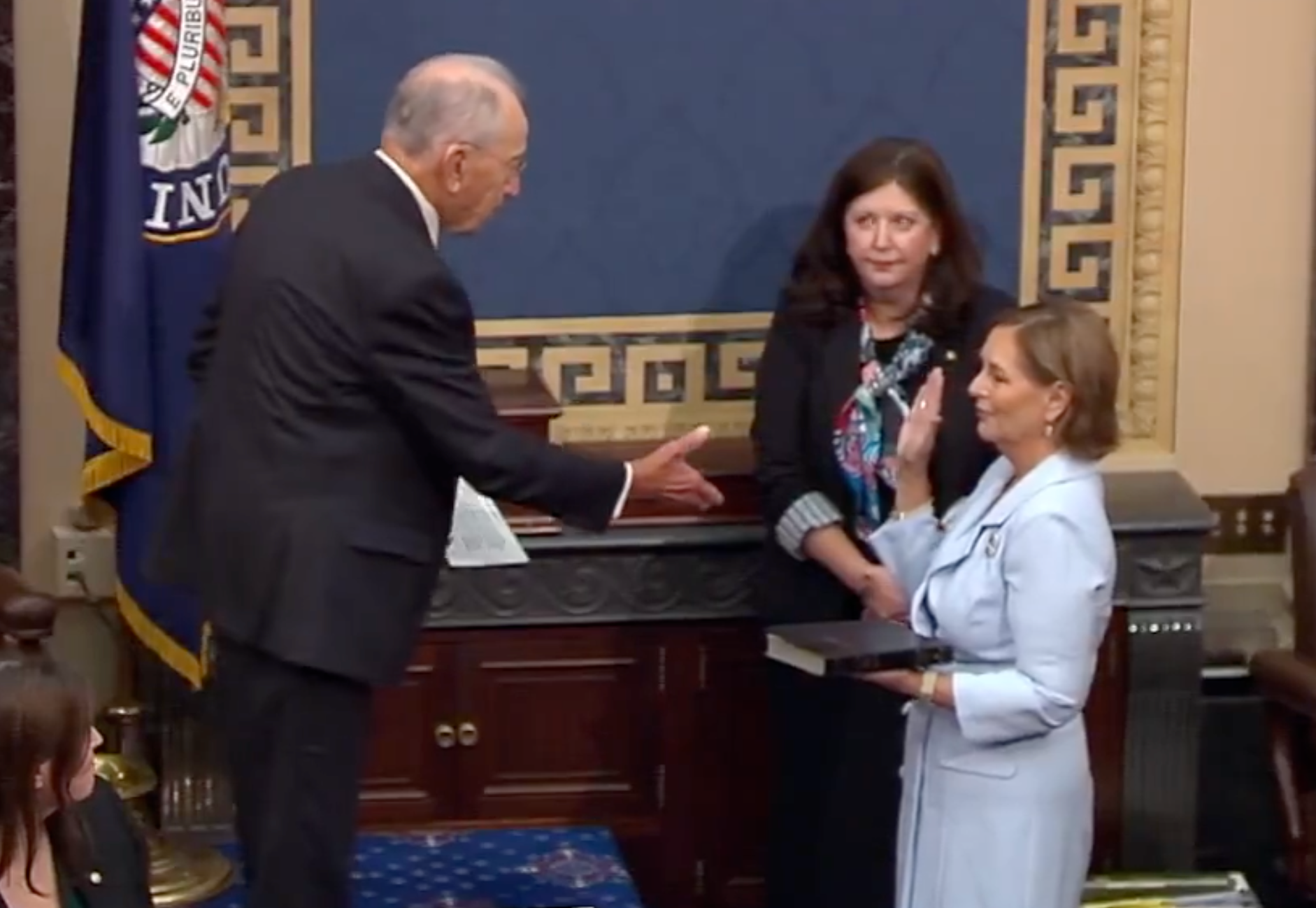
Darline Graham advanced to a runoff Tuesday night in the primary for her brother’s seat. She was appointed to fill the remaining months of his current term after his death last month. While little was known about her, the family name and the goodwill toward her brother propelled her candidacy.
Trump then endorsed her in the GOP primary to occupy the seat for the next six years. He also praised her Tuesday night after returning to Washington. The role Trump chooses to play in the next two weeks could be decisive in a state where he is quite popular.
A who’s who of conservative South Carolina politicians also competed for the rare prize of a Senate seat, and Rep. Ralph Norman, a durable conservative who finished second, will face off against Graham in two weeks. Both candidates will need to consolidate votes from the other challengers to win.
In Wisconsin, verdict anything but clear for Democrats’ direction
Crowley eked out a stunningly narrow, surprise win that did not become clear until the predawn hours of Wednesday, but that seemed to settle little in the party’s national battle between party establishment candidates and an insurgent, populist movement from the left.
Crowley’s win by less than a percentage point over state Rep. Francesca Hong, a democratic socialist, showed neither side of the party debate was winning the argument convincingly.
A week earlier, Michigan’s Democratic primary for an open U.S. Senate seat came down to roughly 15,000 votes — a margin of a percentage point — as progressive candidate Abdul El-Sayed edged four-term U.S. Rep. Haley Stevens, who had the support of Michigan governor Gretchen Whitmer.
In both Midwestern battleground states, presidential elections have been decided by tiny margins in recent cycles, making midterm statewide elections proxies for the 2028 race for the White House.
Trump won Wisconsin in 2024 and its state legislature has long been in the hands of the GOP, but Democrats have been bullish about reversing that trend. The pressure will now be on Crowley to knit together the divergent wings of the party against Republican Rep. Tom Tiffany in November.
Democrats in neighboring Minnesota weren’t as torn. They solidly supported progressive Lt. Gov Peggy Flanagan over centrist Rep. Angie Craig. But there are obvious differences — Minnesota has been reliably Democratic for several elections, albeit by smaller margins. And Flanagan has already won statewide elections before.
Nonetheless, Republicans are hopeful the divisive, bitter primary gives their candidate, sportscaster Michele Tafoya, a chance in November.
Another veteran Democrat goes down in race over generational change
Connecticut Rep. John Larson became the latest Democratic stalwart to lose his primary. The 78-year-old, who served 14 terms in the House, was defeated by former Hartford mayor Luke Bronin.
Larson’s loss didn’t have the ideological overtones that have dominated some other Democratic House primaries, where younger, socialist candidates ousted veteran House members in Denver and New York City. But there was a definite generational cast, with his 47-year-old challenger arguing voters deserved a different choice in the overwhelmingly Democratic district.
Larson is the 10th member of the House to lose a primary this year, in a sign of bipartisan fury with each party’s veterans.
While that tally includes three Republicans, the rest are Democrats. After Joe Biden’s collapse during the 2024 presidential election — and the deaths of four Democratic House members over the past 18 months — it’s clear that Democratic voters are casting a very critical eye on elderly party members.
Minnesota Republicans reject MyPillow founder, a Trump favorite
Trump backed MyPillow founder Mike Lindell’s campaign for his party’s nomination for Minnesota governor. Lindell has been a prolific peddler of lies about American elections, including Trump’s own false claims that fraud cost him the presidency in 2020. Lindell has claimed that elections in the United States have been “rigged” for decades.
Democrats were eager to have Lindell at the top of the ticket, hoping he’d drag down the entire state GOP. Instead, Minnesota Republicans chose a more traditional nominee, House Speaker Lisa Demuth.
It’s yet another loss for Trump in Republican governors' primaries, after his preferred candidates fell short in Georgia and Iowa. And it improves Republicans’ odds in Minnesota in what’s shaping up to be a difficult year for the party, especially after Trump’s immigration crackdown roiled the state’s biggest city in January.
Experience and resume still mattered in some races
While much of this year’s midterm campaign cycle has been animated by new candidates with provocative progressive messages and by the fact that being an incumbent seemed like a liability, Democratic voters in Connecticut and Minnesota gravitated toward the familiar in their respective choices for governor.
Connecticut’s two-term Gov. Ned Lamont defeated his progressive challenger in the state’s Democratic primary while Sen. Amy Klobuchar, who first won her seat 20 years ago, easily won her state’s nomination for governor.
Their victories ran counter to any trend toward younger, more progressive candidates who had scored surprising wins in several House primaries, and notably, in the Democratic Senate primary in Michigan last week. Lamont began his political rise as an insurgent challenger to incumbent Sen. Joe Lieberman but is now considered establishment. Klobuchar has a reputation as a bipartisan consensus-builder.