


JERUSALEM (AP) — Talks between the U.S. and Iran were called off Friday after intense fighting between Israel and Hezbollah in southern Lebanon, officials said, raising questions about an initial agreement to end the war in Iran.
Israel and the militant group later agreed to a ceasefire, three officials said.
Word of the ceasefire came from two regional officials and a U.S. official. The truce was mediated by Qatar, the U.S. and Iran, the regional officials said. The three officials were not authorized to comment publicly and spoke on the condition of anonymity.
A Hezbollah official said mediators attempted to implement a new ceasefire and that an agreement could be announced soon, but he stopped short of confirming it was in place. The official spoke on condition of anonymity because he was not authorized to comment publicly on the matter.
Israeli Prime Minister Benjamin Netanyahu's office did not immediately comment. Military spokesman Brig. Gen. Effie Defrin said the military has not received different instructions from the government. He said Israeli forces were operating in a “forward defense zone” and will continue doing so.
Iranian and U.S. officials cancel travel to Switzerland
Iranian officials did not travel as planned to Switzerland, insisting that the fighting in Lebanon must stop before the talks can take place, according to three regional officials and a fourth person familiar with the matter who spoke on condition of anonymity to discuss sensitive conversations behind the scenes. U.S. Vice President JD Vance also postponed his trip.
Israel’s military struck targets in southern and eastern Lebanon overnight, and Hezbollah reported intense fighting. Lebanon's Health Ministry said at least 21 people were killed, and Israel said four soldiers died.
The conflict between Israel and the Iran-backed militant group is the most precarious part of the Iran deal. Neither Israel nor the militant group signed the agreement — but it is supposed to end their fighting, and Iran has signaled its willingness to risk renewed war in the region for the sake of its interests in Lebanon and its most important regional ally.
The interim deal has halted hostilities in Iran and the Gulf and reopened the Strait of Hormuz, after Iranian attacks and threats all but stopped the flow of oil and natural gas through the waterway, creating a global energy crisis.
But future talks are supposed to bring about a permanent end to the conflict, including addressing how to restrict Iran’s nuclear program — the core issue over which Israel and the U.S. went to war on Feb. 28.
The fighting in Lebanon could unravel the deal
The Israeli military said four soldiers, including a lieutenant colonel, were killed in an attack on a tank in a village near the southern Lebanese city of Nabatiyeh. An explosive drone attack wounded another five, it added.
Israel then launched multiple strikes against “Hezbollah infrastructure sites” in Nabatiyeh and other areas, according to a military statement, which accused the militant group of “blatant ceasefire violations.”
Later, the military said it also struck targets in the Bekaa Valley in eastern Lebanon, with Lebanese media saying the village of Douris was hit.
“Israel will not tolerate attacks on our soldiers or on our territory, and it will exact a very heavy price from Hezbollah for these attacks,” Netanyahu said in a statement.
Hezbollah acknowledged targeting Israeli tanks and said its attacks were in response to what it called Israel’s own violation of the ceasefire. It said the attacks came after Israeli forces attempted to reach the northern side of Ali al-Taher hilltop, a strategic point that overlooks Nabatiyeh and that Israeli troops have been trying to capture.
In southern Lebanon, many were forced to flee their villages.
“The situation is lawless, we couldn't stay,” said Mustafa Zain, who was with his six daughters in a pickup truck.
Beyond the fighting, Israel's occupation of large swaths of southern Lebanon is also a sticking point. Iran insists Israel must withdraw, but Netanyahu has said that forces would remain in a “security zone” of southern Lebanon as long as “Israel’s security needs require it.”
Israel’s actions have created a rift between Israel and the U.S., with Trump becoming increasingly critical of his close ally Netanyahu, who is also facing increasing criticism at home.
Iran says it is consulting with mediators
Iranian officials balked at starting the talks with Vance in Switzerland because of the Israeli action in Lebanon, according to the person familiar with the White House and Iranian positions.
It was conveyed to Iran that Israel is ready to move on, and it’s up to Hezbollah to stop carrying out attacks, the person added.
Earlier, the White House blamed logistical issues when Vance put off his trip.
On Friday, Iranian Foreign Ministry spokesperson Esmaeil Baghaei said consultations through mediators were ongoing regarding the next phase of negotiations to draft a final agreement. Because the initial deal was signed digitally earlier this week, the talks in Switzerland were not urgent, and plans were underway to hold a meeting in the coming days, he said.
The strait is open but with new guidance
Oil tankers began freely moving through the Strait of Hormuz this week after months of being largely unable to use the critical channel. More than 12.5 million barrels of oil were shipped through the waterway on Wednesday night, the U.S. said.
Still, it is expected to take weeks or months for the normal flow of oil and gas to resume, even if traffic fully resumes.
The interim deal lays out that passage through the strait should be free for 60 days — as it was before the war. But the new Iranian authority charged with overseeing the waterway issued guidance Friday calling on ships to register with it — signaling Tehran likely intends to start charging.
The Persian Gulf Strait Authority said Friday that “during the 60-day period, tariffs for security, safety and environmental services, as well as related Iranian insurance, will not be collected from shipowners and will be borne by the government of the Islamic Republic of Iran.”
Much still needs to be resolved
The discussions in Switzerland are expected to focus on Iran’s nuclear program. Tehran maintains it is peaceful, though it has highly enriched uranium that could be used to build multiple atomic bombs, should it choose to do so, according to the International Atomic Energy Agency.
Those talks are expected to be extremely difficult. The 2015 nuclear deal, which Trump scrapped during his first term, took more than 18 months to negotiate.
The interim deal gives negotiators 60 days to come up with a nuclear agreement, but that can be extended. It outlines lucrative incentives if Iran does reach a new agreement, including the eventual lifting of all international sanctions and a $300 billion fund for postwar reconstruction.
Already Iran has won some concessions. Following the signing of the interim deal, the U.S. lifted its blockade of Iran’s ports and is allowing it to sell its oil freely. The deal also calls for Iran’s assets to be unfrozen — though it’s not clear how quickly.
___
Gambrell reported from Dubai, United Arab Emirates, and Madhani from Zurich. Associated Press journalists David Rising in Bangkok, Bassem Mroue in Beirut, Samy Magdy in Cairo, Malak Harb in Tyre, Lebanon, Munir Ahmed in Islamabad and Areej Hazboun in Jerusalem contributed to this story.
------------------------------------
JERUSALEM (AP) — Israel’s military said Friday its forces struck targets throughout southern Lebanon overnight as Hezbollah reported intense fighting in the area, threatening the nascent agreement between Iran and the United States to end their war.
Talks planned for Friday in Switzerland between Iran and the United States, which Vice President JD Vance had been scheduled to attend, found themselves postponed as the fighting intensified. Mediators worked to reschedule the meetings crucial for starting talks over a permanent end to the Iran war, with much of the attention focused on Lebanon, regional officials said.
Meanwhile, the death toll in Lebanon rose sharply. Lebanon’s state-run National News Agency reported at least 18 people were killed in Israeli airstrikes, which the Israeli military said were ongoing. Israel, meantime, said four of its soldiers had been killed in fighting in southern Lebanon, including a lieutenant colonel. An explosive drone attack hurt another five, it added.
The Israeli military also said it struck targets in Lebanon's eastern Bekaa Valley on Friday, with Lebanese media saying the village of Douris was hit.
Continued fighting in Lebanon could unravel the newly signed deal, which calls for an immediate halt to military operations “on all fronts, including in Lebanon,” where Israel has been battling the Iran-backed Hezbollah militant group, and for ensuring Lebanon’s “territorial integrity and sovereignty.”
The deal aims to end the war and has reopened the Strait of Hormuz to international shipping, while bringing the U.S. and Iran back to the negotiating table over Tehran’s nuclear program. Iran's stranglehold on the strait had all but stopped the flow of oil through the key waterway.
U.S. President Donald Trump said he signed the agreement to avoid “economic catastrophe” in the U.S., after the war caused oil prices to skyrocket, made financial markets skittish and fueled inflation. After the signing of the agreement, more than 12.5 million barrels of oil were shipped through the Strait of Hormuz on Wednesday night, the U.S. said.
US and Israel at odds over conflict in Lebanon
Israel and Hezbollah are not parties to the agreement. Iran insists Israel must withdraw from the large swath of southern Lebanon it is occupying, but the wording of the interim deal doesn’t explicitly require that.
Israeli Prime Minister Benjamin Netanyahu, who faces elections later this year, has refused to withdraw. He said Thursday that Israeli forces will remain in a “security zone” of southern Lebanon as long as “Israel’s security needs require it.”
Trump, meantime, has been openly critical of Netanyahu's recent moves, saying the day before the agreement with Iran was signed that “without the U.S. there would be no Israel.”
“Without me, there would be no Israel because no other president was willing to do what I did — I have had a great relationship with Bibi,” Trump said, using a nickname for Netanyahu. "Now Bibi has to be more responsible with respect to Lebanon.”
The U.S. Ambassador to Israel, Mike Huckabee, came to Israel's defense on Friday, however, noting the deaths of the four Israeli soldiers in a post on X.
“Israel strikes when struck ...” he wrote. “Ceasefire happens when Hezbollah stops shooting & killing.”
The renewed Israeli attacks in Lebanon came as planned talks in Switzerland between Iran and the United States over their efforts to reach a permanent end to the Iran war were delayed.
Vance delays trip to Switzerland as talks postponed
U.S. Vice President JD Vance on Thursday put off his trip to Switzerland where he had been set to lead the talks. The White House blamed logistical issues.
Two regional officials, speaking to The Associated Press on condition of anonymity to discuss the closed-door talks, said mediators were focused on calming the fighting in Lebanon. One said Iran pulled out of the Switzerland meeting specifically over the fighting and Netanyahu's comments, describing them as violating the interim deal between Iran and the U.S.
Two other regional officials, similarly speaking on condition of anonymity for the same reason, described Pakistan as being “stunned” by Iran's decision not to go to the talks Friday.
Those discussions in Switzerland were to shift the conversation toward sanctions relief, maritime security, nuclear-related measures, verification, sequencing and regional assurances, one of the officials said. Those are key to ensuring a final deal between Iran and the U.S. be reached.
Following the signing of the interim deal, the U.S. said it had lifted its blockade, allowing oil tankers to begin freely moving through the Strait of Hormuz after months of being unable to use the critical channel. Still, the tentative agreement has drawn sharp criticism from some in the U.S. — including a few congressional Republicans — who worry Washington ceded too much to Iran with relief from sanctions and a potential $300 billion fund to help with rebuilding.
In Iran, Supreme Leader Ayatollah Mojtaba Khamenei seemed to endorse direct negotiations, saying in a statement on state media that “it is obvious that the face-to-face negotiations that will be held in the future will not mean accepting the enemy’s opinion.”
It was Khamenei’s first reaction to the agreement, and it was interpreted as a shift in Iran’s approach. Hard-liners, especially Khamenei’s father, the previous supreme leader, have long opposed direct talks, especially after the U.S. pulled out of the 2015 nuclear deal between Iran and world powers.
The supreme leader has not been seen in public since he was wounded in a strike at the start of the war.
US defends deal with Iran
Vance, who was initially personally skeptical of the U.S. going to war with Iran, has increasingly become the administration’s face of the conflict and has been outspoken in defending the deal.
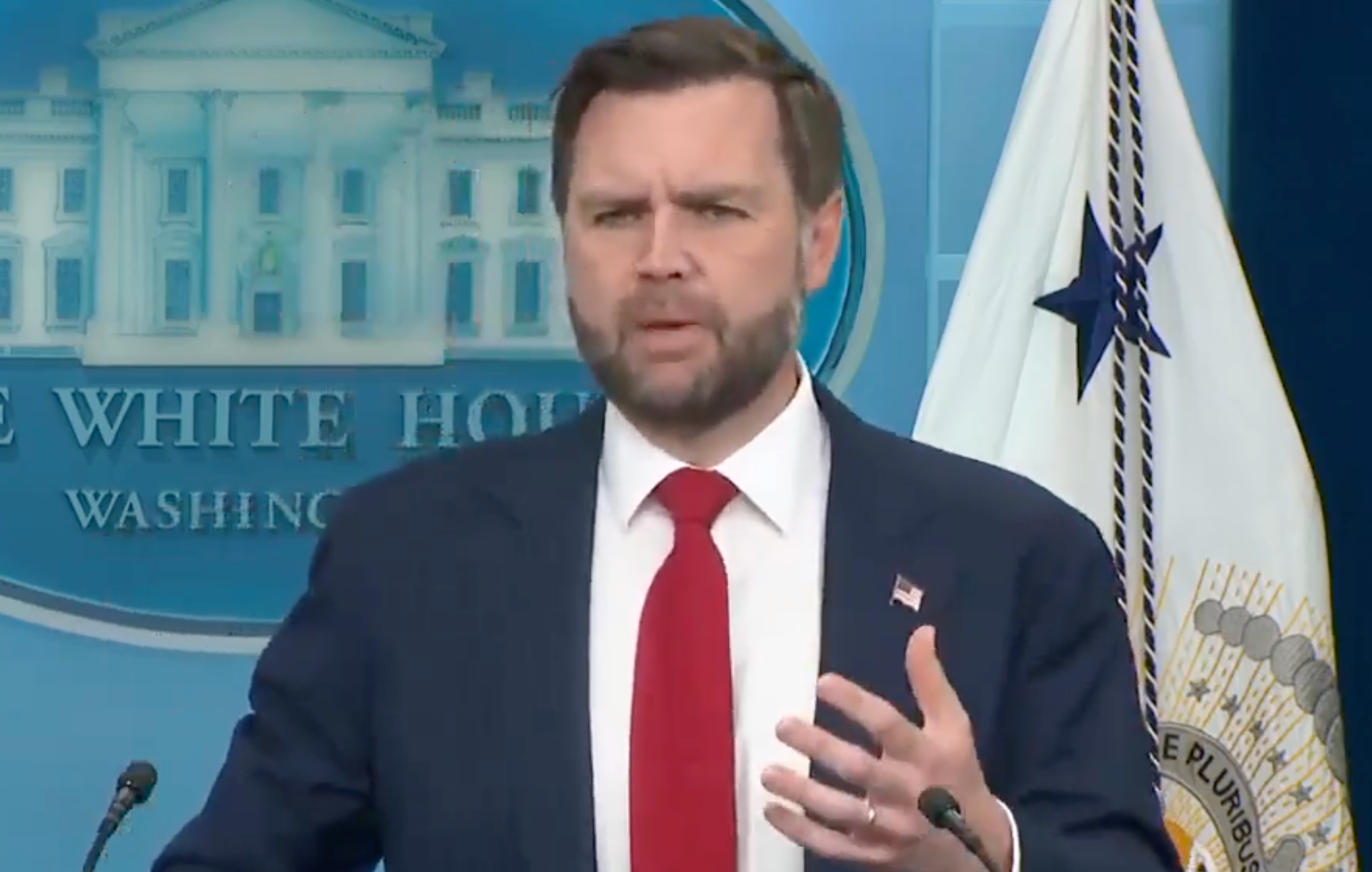
On Thursday, he took the relatively unusual step of appearing at the White House to defend the initial deal to extend the ceasefire 60 days and allow for more negotiating — arguing that while it offers concessions, Iran first has to comply with U.S. demands.
Vance also offered a blunt warning to Israel, saying Trump was “the only head of state in the entire world who is sympathetic to the nation of Israel at this moment in time.”
___