


HUTCHINSON, Kan. — A mix of unseasonably warm temperatures and uneven precipitation patterns shaped drought conditions across the central United States this past week, with Kansas seeing both improvement and deterioration depending on the region.
According to the latest weekly drought summary, much of the country experienced above-normal temperatures throughout April, with the southern Midwest and central Plains — including Kansas — recording temperatures as much as 9 to 15 degrees above average. Central Kansas saw some of the most significant warmth during the period.
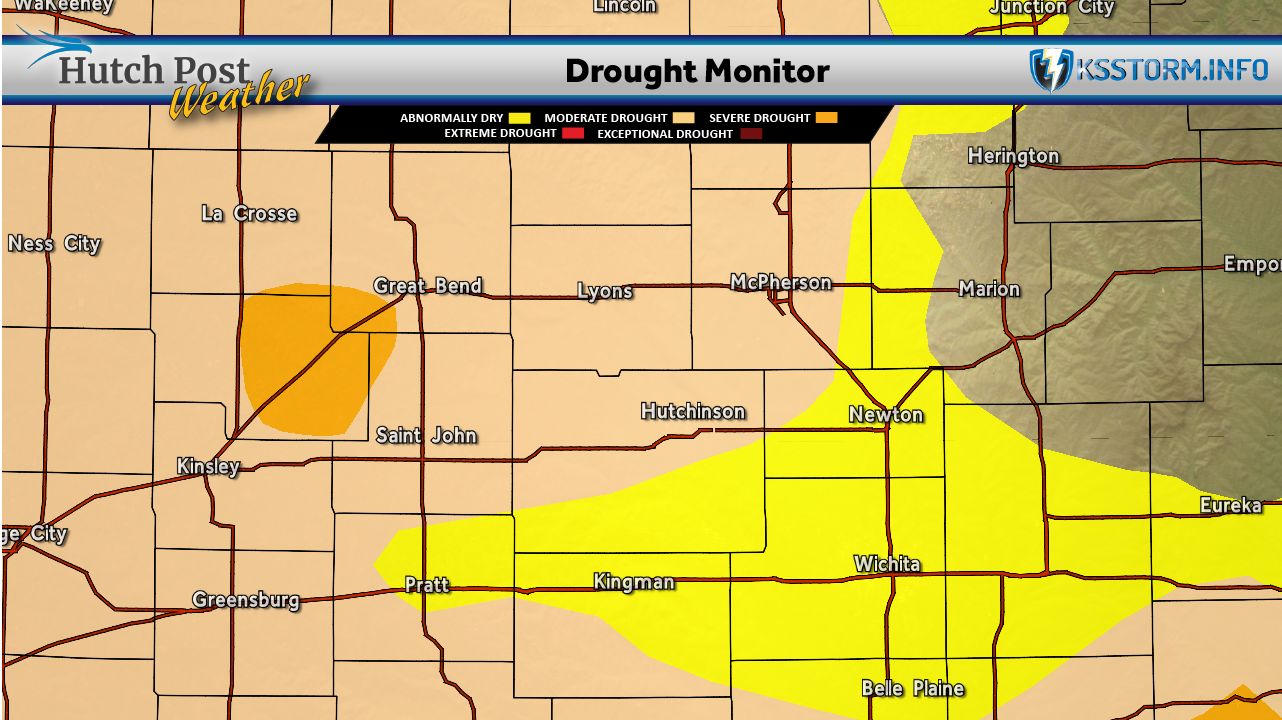
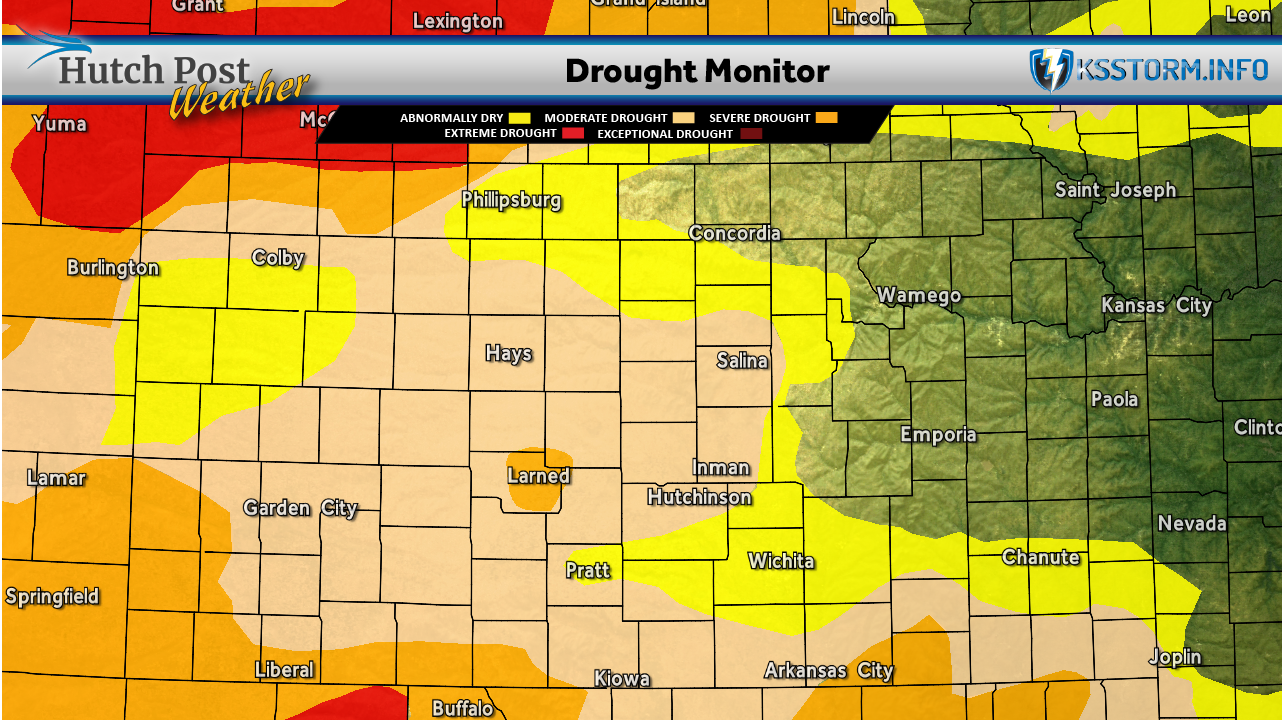
Despite the heat, parts of Kansas also received much-needed rainfall. Northeast Kansas, in particular, saw significant precipitation, with some locations recording more than 400 percent of normal rainfall. That moisture helped improve areas previously classified as abnormally dry or in moderate drought. Similar improvements were noted in portions of southeast Nebraska and parts of south-central Kansas.
Kansas was among the most active weather regions in the High Plains over the past week, with frequent spring thunderstorms contributing to above-normal precipitation in both southwest and eastern parts of the state.

However, not all areas benefited from the rainfall. Drought conditions worsened in western portions of the region. Extreme drought expanded across northwest Kansas and into southwest Nebraska, while severe drought grew in southwest Kansas. These worsening conditions reflect ongoing dryness and continued stress on soil moisture in those areas.
Across the broader High Plains, conditions remained mixed. While some northern areas saw above-normal precipitation, much of the region continues to deal with persistent dryness. In eastern Colorado, drought conditions deteriorated significantly, with widespread expansion of moderate to extreme drought categories.
Nationally, dry conditions persisted across parts of the Southeast, South, Northeast, and much of the High Plains. Meanwhile, more active weather patterns brought beneficial rainfall to areas such as the Great Basin, northern California, the Midwest, and portions of Texas.
The latest report underscores the variability of spring weather across the Plains, where short-term rainfall can bring localized drought relief but may not be enough to reverse longer-term moisture deficits.
The U.S. Drought Monitor is jointly produced by the National Drought Mitigation Center at the University of Nebraska-Lincoln, the United States Department of Agriculture, the National Oceanic and Atmospheric Administration and the National Aeronautics and Space Administration. Map courtesy of NDMC.