


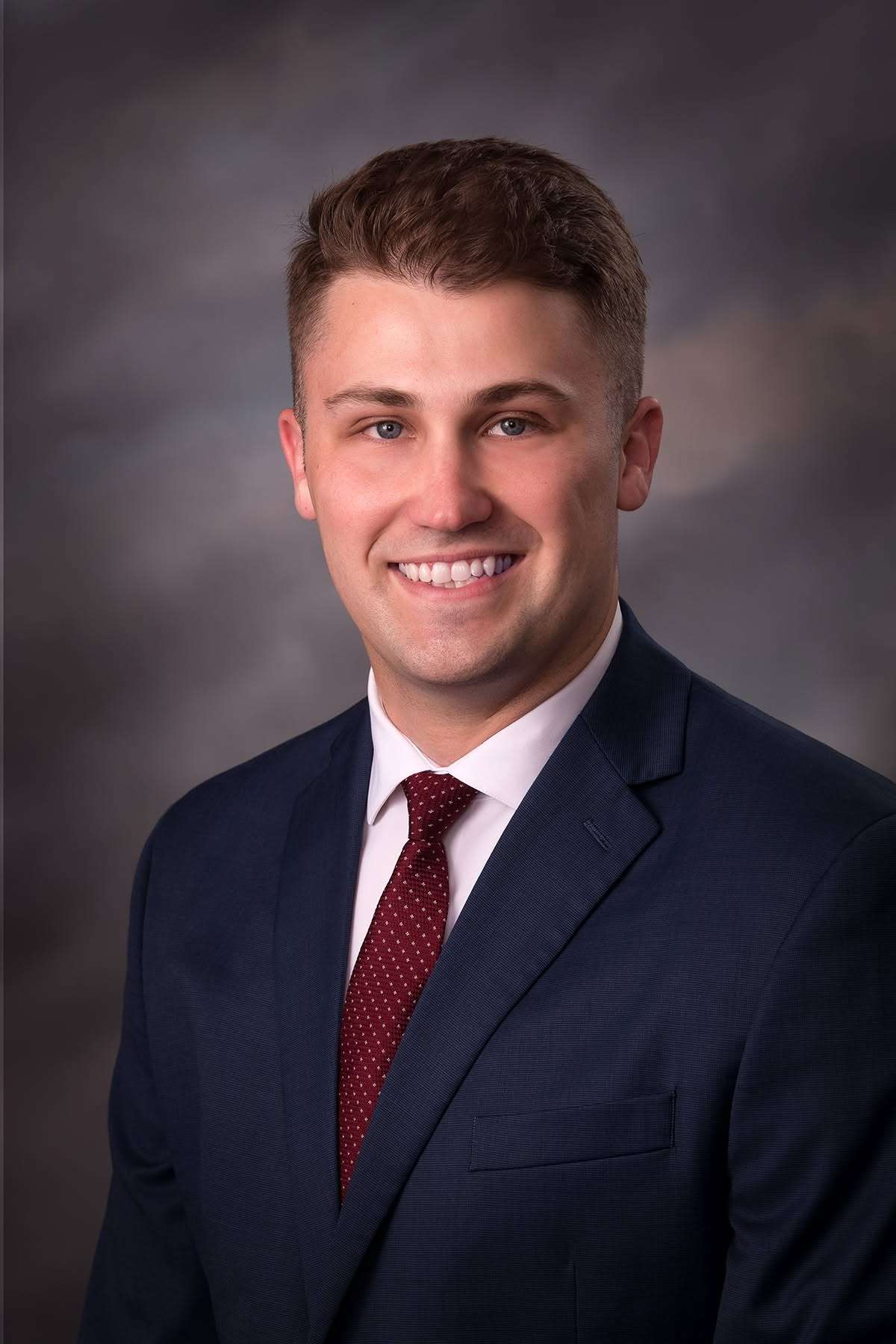
Ed. Note: Below is the transcript of the interview with Rep. Kyler Sweely. He is running for re-election in Kansas House District 102.
Marc Jacobs: So, tell me about your first term.
Kyler Sweely: No, I think it flew by. It feels like two years went by in a couple weeks. I think we've gotten a lot of good stuff done. Been super busy, but obviously we're back now on the campaign trail and talking to a lot of folks and got a lot of stuff done the first two years, and just excited to continue going on.
Marc Jacobs: Let me ask you a question because you had a primary opponent. How does having a primary opponent prepare you for moving forward?
Kyler Sweely: Honestly, I don't think it's a necessarily a bad thing at all. It kind of forces you to get out there earlier and work a lot harder, and I think that obviously benefits me. I know a lot of people would prefer not to have primary opponents, but you know, I think that thing is good. I think the more people that run for office, the better, and I think that's where we get our best elected officials.
Marc Jacobs: So, what do you think is the most pressing issue for people in your district?
Kyler Sweely: Yeah, so I mean, I've knocked 1000s of doors within the last two and a half years, and I think the main two issues is affordability and property tax. And I think there's a little bit that can be done with property tax right now at the state level, but obviously with affordability, I think the biggest thing is controlling state spending and being fiscally responsible, so you know this year the Republicans in the House cut $200 million from the state budget. I think that's a really good step with going in favor of affordability and with a property tax plan. So, I voted in favor of eight out of eight property tax relief plans, and I mean I think I did what I was sent up there to do, and I held true to my word.
Marc Jacobs: So, let's talk a little bit about property taxes because they are major concern. Are there changes that can be made that everybody can agree on to get it out of the House and out of the Senate and onto the governor's desk?
Kyler Sweely: Well, you said it right there. The key word was, can everyone agree on it? So, there's two plans right now, or the last two years, excuse me, and one was what they call revenue neutral, and then one was a property assess or appraisal value cap for going forward year to year at 3% So I voted in favor of both those plans. The Senate's plan was the property cap or property appraisal cap, and then the House's plan was a revenue neutral. So, I mean, I would say a very high percentage of the property taxes people pay for are from local taxes and local entities. The state charges a little bit for property tax; it goes directly into school funding, and we actually cut that down. We had a little bit extra in there in 2025, and we cut that down. But still, maintaining the fully fund public schools is a big thing for me. And then, obviously, like a lot of people saw, you know, we did actually have a tax plan, you know, pass the House and the Senate, and it went to the governor, and the governor vetoed it, and we didn't have enough votes to override that. And it's unfortunate. I think the governor should have listened to constituents in Kansans and seen that this is the biggest problem we face in Kansas and done the right thing.
Marc Jacobs: You said a little bit there. You talked about school funding, and that's the next topic. The large school district USD 308 in your district is reporting declining enrollment because I know that state funding and school education funding is based upon enrollment. How, because of some of the economic situations in your district, how can you help keep the district funded when student numbers are falling.
Kyler Sweely: Yeah, I think it's obviously a huge thing. I think Governor Kelly agreed with us, and she made a press release in the seventh and eighth year of her administration. The legislature has fully funded public schools, and I think that's a big thing. I'm very proud to do that. There has never been more money in public schools and special education than there is in today, and I voted actually to put more money into special education as due to or declining enrollment. I think we see that a lot of places in Kansas. I think you know there's two massive places in Kansas, Wichita and Johnson County, and that kind of seems what everyone seems to care about, and that's unfortunate because you know Hutch is just as important, and I think obviously there's a lot of things to do this, but you know you need to have good schools, you have to have low taxes, you need housing for people to come in here with new jobs. Obviously, they want to raise families here too, and I think that's part of it. We need to bring in new businesses, we need to bring in people that want to raise their families here, and that's a problem that I think that the legislature is looking at. I think we've solved a lot of the housing problems, and I think I implemented a plan that should be able to bring up some houses this year. So, obviously, it's a problem with you know declining enrollment, but continuing to fully fund public schools and special education is at the top of my priority list.
Marc Jacobs: Is it a issue where it's declining enrollment, or is it an issue where it's declining population? Are people moving out and taking their families with them, or are there just fewer? Is the birth rate lower?
Kyler Sweely: I think it's a mixture of both. I really do. I think you see places like Hutch that people leave for bigger opportunities or better opportunities, whether it's jobs or lower taxes, and they move to cities like Topeka, Lawrence, Johnson County, which. I think that's part of both of it, but also, I mean, I think the birth rates down a little bit, but I think that obviously public schools will stay important and then stay kind of the highest percentage of where kids go to school, and I think that Hutch is just declining population a little bit, which is declining enrollment.
Marc Jacobs: I think we need to touch base a little bit on the economy because I know that it seems like every time you turn around, it's not just you know it's not just a local issue. It's more of a statewide issue, or even you know a nationwide issue where governments want to throw money at big corporations, the big corporations come into town, and then the money doesn't stay in town because they're not based in, say, they're not based in Hutchinson. They might be based in Boston or Kansas City or Omaha. So, the money leaves, whereas the small businesses in town are the ones that are driving the economy.
Kyler Sweely: Yeah, of course, and I do think that's a big problem. I think I don't want to say there's favoritism, but I think at the state level, when you see like that, they see a massive company come here with X amount of jobs and can bring so much revenue and taxes to the local economy that they kind of oversee the local businesses and they get overlooked. And I think that's part of the problem that we see is due to the economy. I think responsibly spending is the biggest thing that people want with government right now, and I think that they see that we get involved with a lot of stuff that the government shouldn't, and we're spending money at an abnormal rate that is going to run astride at some point. And like going back to you know the bigger businesses coming to local areas like that, and I think you have to prioritize local citizens. You have to prioritize your citizens and your constituents over some big tech company or some big company that's going to do this or that.
Marc Jacobs: You know, we talk about you know the economy. We talk about the small businesses, and I want to touch base a little bit on this. What about giving tax incentives and property tax relief to businesses that come in just to lure them in to get the jobs is that something that needs to be relegated or regulated a little bit more, or is that something that you see as an issue based upon not having enough funds in the coffers?
Kyler Sweely: No, I think that's a major problem. I think in today's world, it's more about a competing bid system than anything, and I think that massive companies get a lot of breaks, and they continue to do this. But then it goes into state by state, or county by county, or city by city that we're all competing against each other to get these massive corporations or massive businesses here. And obviously, I do think you said right there. I think that there's two things that we should do: it should be regulated more. I don't think it should just be a free giveaway system for sales tax or property tax exemptions. I mean, we voted to lower sales tax exemptions for a lot of these big companies coming into Kansas. There was a lifetime sales exemption for a certain amount of money, and we lowered that to actually 20 years. So, I think that's a big priority for mine, and it's something I take very seriously.
Marc Jacobs: You know, another thing that you took very seriously during your first term was affordable housing, and you managed to sponsor a bill, get a bill through, get it signed by the governor on affordable housing. Tell me a little bit about that manufacturing housing bill.
Kyler Sweely: Not to go back to this, but I think you said it in the title right there. I think the biggest problem is about having affordable housing. I think that's the biggest problem that we face here, even in places like Hutchinson or even some of the bigger cities. Hutch right now is losing about 11 year or 11 houses per year to foreclosure or being demolished, just not living in or inhabitable. And that's one of the big priorities I brought to the legislature is trying to get a different system of how we can get actual affordable homes with price points that you know Hutch residents can actually afford, and we're talking you know anywhere from $100,000 to $200,000. It seems like any new development that comes here in Hutch is on the very north side of town, and it's you know price point to $250,000 or higher, and obviously, you know that's great. I'm glad for the north side of Hutch, but also the south side of Hutch matters as well. So, I think trying to get single family homes and creating a program where we can actually get benefits from the prisoners that we have at the prison to actually pay them a fair wage, also with getting affordable housing here in Hutch and just bringing up new ideas. And that was a bipartisan plan. I mean, I got 111 votes in the House, and arguably, I kind of say this, but I should have got 125 votes. I should have got a vote from every single member, but there was a small group that voted against that bill because they were against giving prisoners a fair wage.
Marc Jacobs: Yeah, that's that seems like one. Those that's when a hot button issue. One thing I want to touch on because with the current everybody talking about data centers and talking about water use and agriculture and water use, how do you vision the state balancing the budget or not balancing the budget but balancing water usage between say data centers that are coming in in agriculture because water is a precious commodity because of the agricultural importance of the state of Kansas.
Kyler Sweely: Of course, yeah, no, I think it's super important. I think data centers is one of the bigger issues right now, and I actually voted in favor of regulating data centers to they have to have a closed loop system. So, once the water goes in, it cuts off from any city or county hookups, and obviously that water has to run through a closed loop. That it can't just be. I know a lot of the concerns are right now that data centers are going to drink the city or the county dry, and it's a real concern. I agree with it. I'm not necessarily pro data center or anything like that, but I mean, I think we should be realistic, and I think the state's job is to set guardrails for certain industries like data centers, and then it's up to the local community to decide if it's whether if it's right whether the city or the county decides or the local if they give it to the constituent or just local citizens for a vote. I think it's a major thing. I think the state needs to take it very seriously, and that's what we're doing with this water plan that we've done for the last couple years. And you know, obviously Hutch has it a lot better when it comes to water than a lot of other western county or western parts of Kansas. I mean, western Kansas is a lot worse off right now with water, right? Or just with everything going to water, and we're lucky right now to be in Hutch and have the reuse plan that we're, you know, this potentially going to come up in the next couple years, and it's exciting to do this.
Marc Jacobs: So, one quick question what is one state spending priority that you would increase?
Kyler Sweely: Just one overall state spending.
Marc Jacobs: What's your biggest priority one?
Kyler Sweely: I think right now, I think one of the biggest priorities that we should be taking seriously is the CTE (Career and Technical Education) funding with the local community college and high school, I think for a long time, 20, 30, 40, years ago, every single parent told their kid that you couldn't be successful unless you went to college, and everyone had to have a college degree. And we started to lack in these trades of plumbing, welding, you know, auto technicians, all the nursing. I mean, that's another big one. And I think, I mean, that is the workforce right there. The more money you put into CTE is the more people that are getting ready to get jobs right outside of high school and get high paying jobs. So, I think that's one of the bigger things. And I've worked a lot with President Paramore Community College on this. I think she is the example for CTE funding at the state level. I think Hutchinson Community College is the example for CTE at the state level as well. All
Marc Jacobs: I appreciate your time this morning. We have been talking with Representative Kyler Sweeney.
Kyler Sweely: Thank you. I appreciate. Thanks for having me.