


MARC JACOBS
Hutch Post
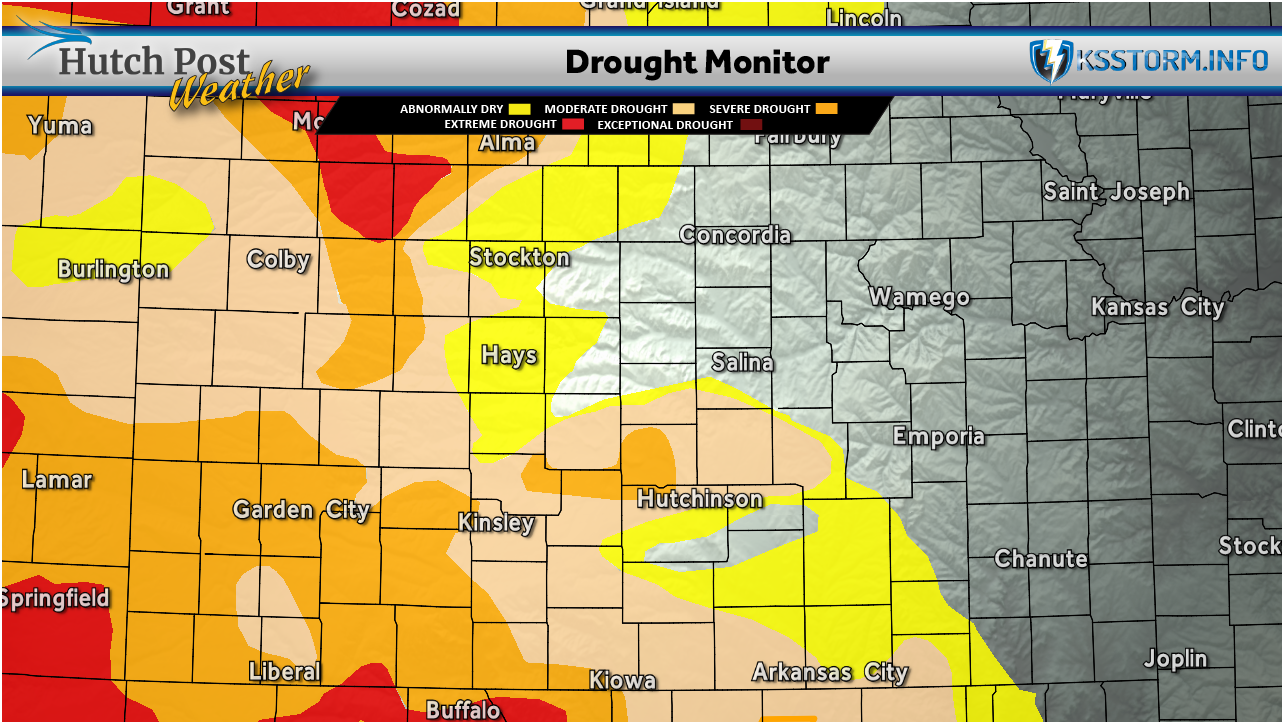
The latest U.S. Drought Monitor, released Thursday by the National Drought Mitigation Center at the University of Nebraska-Lincoln, shows drought conditions continuing to worsen across western Kansas and eastern Colorado, while portions of Nebraska received enough rainfall to see improvements.
According to the report, the most significant precipitation over the past week fell across the Midwest and southern Plains, where persistent rainfall has led to widespread drought relief in many areas. Portions of Illinois and Indiana recorded rainfall totals 4 to 5 inches above normal, while flooding rains also developed from south Texas into the Gulf Coast region.
Despite those improvements elsewhere, drought remains a concern across the High Plains. Western Kansas continues to experience drought conditions, with some of the most severe drought stretching from eastern Wyoming through western and northern Nebraska and into far southern South Dakota.
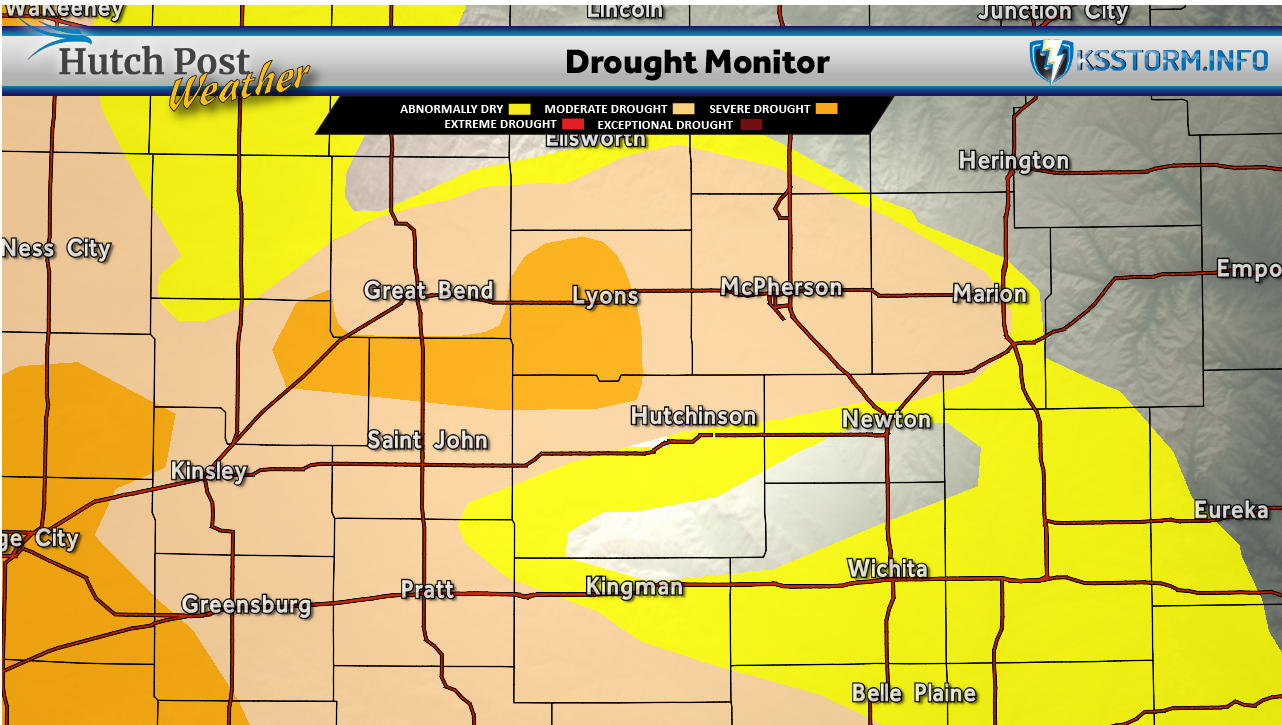
Drought analysts noted that continued dry weather and above-normal temperatures led to worsening conditions across parts of eastern Colorado and northwestern Kansas. The report highlighted expanding drought impacts tied to a lack of rainfall and ongoing moisture deficits.
Exceptional drought—the most severe category on the Drought Monitor scale—was expanded in three counties in the Nebraska Panhandle. Officials cited poor pasture conditions and dryland wheat crops, describing conditions as among the worst seen in decades following a record warm and dry winter and limited spring rainfall.
Elsewhere in the High Plains, drought conditions also deteriorated in western North Dakota, where moderate drought expanded southward along the Montana border. Areas of abnormal dryness were also introduced across portions of southwest and north-central North Dakota.

The only drought improvements in the High Plains occurred in central and eastern Nebraska. Several areas along the Interstate 80 corridor received 2 to 4 inches of rainfall during the past week, helping eliminate drought and abnormal dryness across much of southeastern Nebraska.
Temperatures across much of the nation were near to above normal during the reporting period. The coolest conditions were observed from the central Plains into the northern Rocky Mountains, while parts of New England experienced temperatures 8 to 10 degrees above average.
The U.S. Drought Monitor is updated weekly and combines data from federal, state and local sources to assess drought conditions and impacts across the country.
The U.S. Drought Monitor is jointly produced by the National Drought Mitigation Center at the University of Nebraska-Lincoln, the United States Department of Agriculture, the National Oceanic and Atmospheric Administration and the National Aeronautics and Space Administration. Map data courtesy of NDMC.