


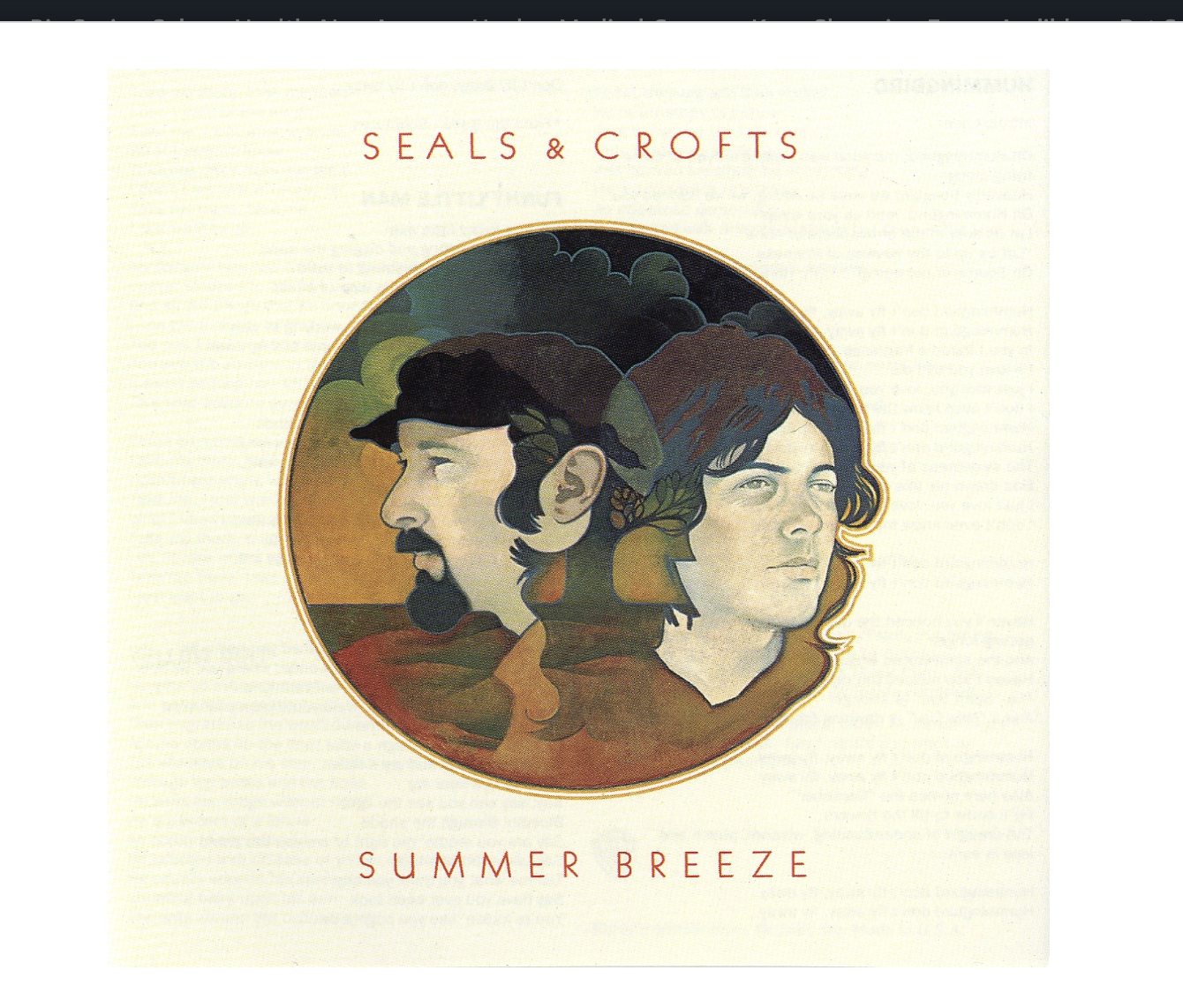
NEW YORK (AP) — Singer-songwriter Darrell “Dash” Crofts, who teamed with childhood friend Jim Seals for such 1970s soft-rock hits as “Summer Breeze,” “Diamond Girl” and “Get Closer,” has died. He was 87.
Crofts died Wednesday of heart failure at the Heart Hospital of Austin in Austin, Texas, said his daughter, Lua Crofts Faragher. She said her father had been suffering heart issues for several years and had been hospitalized for about a month.
Seals and Crofts were native Texans who had known each other since high school and played together in various groups before becoming a duo, Seals & Crofts, in the late 1960s. Blending pop, country, folk and jazz, they were part of a wave of million-selling soft-rock (or “easy listening”) bands that included America, Bread and Loggins and Messina.
“Summer Breeze,” “Diamond Girl” and “Get Closer” all reached the Top 10, while their other popular singles included “I’ll Play for You,” “Hummingbird” and “We May Never Pass This Way (Again).” The wide-eyed sentiments of the latter made it a favorite for high school yearbooks:
“Life / So they say / Is but a game and they’d let it slip away / Love / Like the autumn sun / Should be dyin’ / But it’s only just begun.”
Not always easy listening
Like many bands of the era, Seals & Crofts sang of love, peace, music and the natural world. But the inspirations were rooted less in the counterculture than in the Baha’i faith, a monotheistic religion advocating global unity that they both embraced in the 1960s.
“It became a driving force in their careers and the way they lived their lives,” Faragher said.
They worked Baha’i themes into their music — “Hummingbird” is a metaphor for the Baha’i prophet Bahaullah — distributed literature after their shows, and sometimes preached from the stage, including during a performance on “Tonight” with Johnny Carson.
“You start out writing songs like ‘the leaves are green and the sky is blue and I love you and you love me’ — very simple lyrics — but you grow into a much, much broader awareness of life, of love, and of unity,” Crofts told Stereo Review in 1971. “It’s really great to be able to say something real in your music.”
One Baha’i tenet, that the soul begins with the formation of the embryo, led to controversy. In 1974, the year after the Supreme Court’s Roe v. Wade decision established the right to abortion, Seals & Crofts released the ballad “Unborn Child,” the title song of their new album.
It was inspired by the wife of their recording engineer, who had seen a television documentary about abortion and wrote a poem with such lines as “Oh tiny bud, that grows in the womb, only to be crushed before you can bloom.” Numerous radio stations refused to play “Unborn Child” and protesters picketed Seals & Crofts, although the album was certified gold for selling 500,000 copies.
“I think we got more good results out of it than bad,” Crofts later told the St. Petersburg Press, “because a lot of people called us and said, ‘We’re naming our children after you, because you helped us decide to save their lives with that song.’ That was very fulfilling to us.”
By the early 1980s, soft-rock bands were out of fashion and Seals & Crofts had been dropped by its label, Warner Bros. They broke up for a time but continued to appear together at Baha’i gatherings, while also recording on their own. Crofts released a solo album, “Today,” in 1998, and six years later reunited with Seals for “Traces.” More recently, their music was revived by Faragher and Seals’ cousin Brady, who toured together as Seals & Crofts 2. (Jim Seals died in 2022).
“There’s not a time that we performed that we didn’t have hundreds of people coming up and expressing their love and often saying the music changed their life,” Faragher said.
“There were so many people who loved them,” she added. “They were a constant service to mankind.” She said that her father’s death, a few years after that of Seals, marked the end of an era.
“That’s what makes it so painful — that it’s the end,” she said. “But the music will always, always live on.”
Long-awaited breakthrough
Darrell George “Dash” Crofts was born in Cisco, Texas, in 1938 and was singing and playing music from an early age, eventually learning piano, guitar, drums and mandolin.
He met and befriended Seals when both were teenagers and in a local rockabilly band, the Crew Cats. By the end of the 1950s, they had moved to Los Angeles and joined The Champs, best known for the early rock hit “Tequila.” Seals and Crofts would later briefly play in a band led by Glen Campbell, and join another California group, the Dawnbreakers, whose members included Crofts’ future wife, Billie Lee Day.
Although they performed on the same bill as Eric Clapton and Deep Purple among others, they were turned off by the volume and the lifestyle of hard-rock performers and honed a gentle sound. Seals & Crofts released their eponymous debut album in 1969, and soon followed with “Down Home” and “Year of Sunday.”
Their commercial breakthrough came in 1972 with “Summer Breeze,” which featured a chorus that ranked with a contemporary hit, the Eagles’ “Take it Easy,” as a definition of post-1960s escapism: “Summer breeze makes me feel fine/blowing through the jasmine of my mind.”
“That was the beginning of bigger concerts, bigger crowds and we kept getting hits in the Top 40,” Crofts told the podcast “Inside MusiCast” in 2021. “That cemented us in the music business.”
Crofts is survived by his second wife, Louise Crofts; his children Lua, Faizi and Amelia; and eight grandchildren, Faragher said. His first marriage ended in divorce.
—-
Noveck contributed from London.