


By: Tim Carpenter
Kansas Reflector
Property tax issues frustrate lawmakers who struck out in 2026 regular session
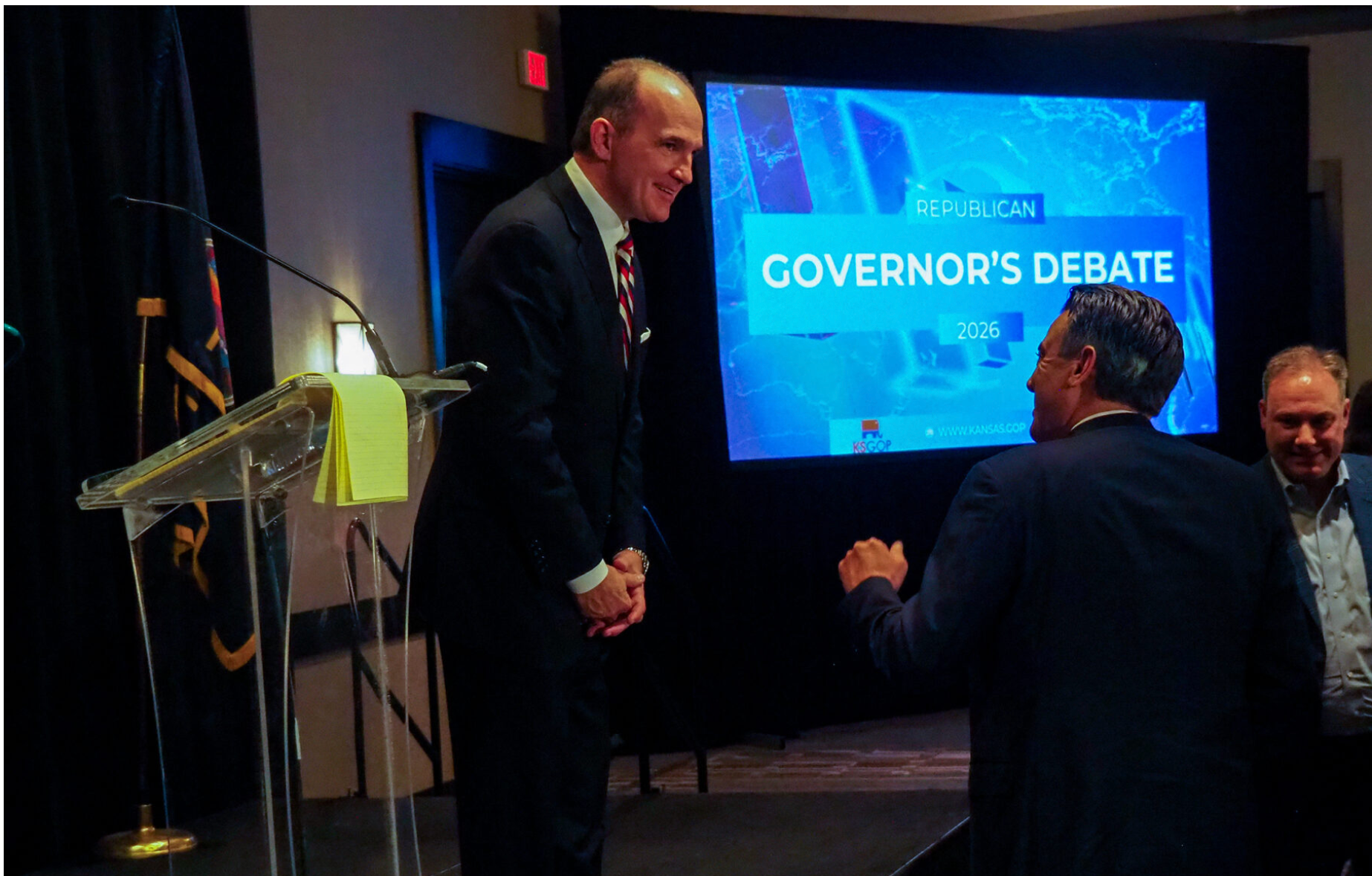
TOPEKA — Kansas governor candidate Philip Sarnecki wants fellow Republicans to call a special session of the Legislature to address the state’s property tax crisis.
Sarnecki, a businessman seeking the GOP nomination in August, said the Legislature’s failure to find consensus during the just-completed 2026 regular session required extraordinary action. During the regular session, the House and Senate held to distinct ideas for moderating growth in property taxation. In April, Democratic Gov. Laura Kelly vetoed the Legislature’s last-ditch bill that would have aggressively restricted spending increases by cities and counties and theoretically reduced pressure on property taxes.
“It’s time to get property tax reform done in special session,” Sarnecki said. “Seniors are getting taxed out of their homes, working families are having trouble making ends meet and young people can’t afford a house.”
Since the Legislature adjourned in April, several Republican senators raised the idea of a special session devoted to elimination of the 20-mill property tax collected by the state to fund K-12 public education. Property tax revenue for education would be replaced — in the middle of an election year — by adoption of a 0.75-cent increase in the statewide sales tax. Kansas’ current retail sales tax stands at 6.5%.
Instead of assessing property taxes on Kansans able to afford home ownership, public school funding would rely on a sales tax that disproportionately impacted low-income households.
The governor could call the Legislature into special session, which she did in 2024 for the purpose of cutting state income taxes. In the alternative, the House and Senate could gather signatures from two-thirds of members to force a special session at the Capitol. That would require signatures from 84 of 125 representatives and 27 of 40 senators.
It would be up to Senate President Ty Masterson, an Andover Republican running for governor, and House Speaker Dan Hawkins, a Wichita Republican running for state insurance commissioner, to secure those signatures.
“Fixing the property tax crisis is a priority for President Masterson,” said Garrett Henson, a spokesman for Masterson. “That’s why the Senate passed legislation dealing with it this session with veto-proof margins. We’ll say it again: If the House has the votes to call a special session, the Senate stands ready to act.”
Hawkins didn’t address the option of rallying his partisan majority for a special session, but he encouraged the governor to use her power to call all 165 legislators back to Topeka.
“While the 2026 legislative session is over, it’s never too late to take action,” Hawkins said in his May 1 newsletter. “Governor Kelly could call a special session at any moment if she wants to get serious about addressing the property tax crisis in our state.”
Hawkins added: “Republicans remain ready to deliver real action on property taxes, not the dismissive, half-hearted proposal put forth by the governor and her Democrat colleagues.”
Alternative package
In April, Kelly proposed the Legislature deliver property tax relief for vehicle owners, incentivize local governments to moderate spending and replace a portion of property tax collected for public education with dollars drawn from the state treasury.
The package included a proposal endorsed by Sen. Ethan Corson, a Johnson County Democrat running for governor, that offered a one-time $250 tax credit to vehicle owners. Cash for the tax credit would be withdrawn from the state’s budget stabilization fund, Kelly said.
She proposed creation of a $60 million fund to incentivize cities and counties to hold spending increases to no more than 3% annually. The funds would be distributed to local governments meeting the cap.
Finally, the governor wanted to raise the exemption on a home’s appraised value when determining property tax obligations under the 20-mill tax for public schools. The idea would be to double the current exemption to $150,000. Lost revenue would be made up with transfers from the general state fund so school financing met constitutional standards, she said.
Portions of Kelly’s recommendation were debated by the House and Senate, but none of it was passed by the Legislature.
Before adjourning the regular session, the House and Senate approved a property tax bill that would have limited local government spending increase to 3% or the rate of inflation. Kelly vetoed the measure and recommended the Legislature find a way to “partner with our city and county officials to develop a strategy to reduce the property tax burden on their constituents.”
During a special legislative session, there would be no boundary on what ideas could be considered by the House and Senate.
Democrats’ response
House Minority Leader Brandon Woodard, D-Lenexa, said members of the House sent multiple property tax bills to the Senate that would have delivered meaningful relief. He expressed frustration with the Senate’s unwillingness to seriously compromise.
“Senate Republicans are panicking after campaigning on property tax relief and returning home empty-handed for their constituents two years in a row,” he said. “Calling a special session with no agreed-upon solution and pushing the same failed approach yet again is the definition of insanity.”
Senate Minority Leader Dinah Sykes, a Lenexa Democrat seeking the nomination for state insurance commissioner, said demands for a special session came less than one month after Republicans adjourned the shortest regular session in recent Kansas history.
“This newest attempt for a special session … is another push by select Republicans to force through their unpopular, half-baked policies that will bankrupt our local communities,” Sykes said. “Perhaps if we had not rushed through the legislative session, we could have had time to develop quality legislation that would have truly helped Kansans.”
“After using this issue to prop up their campaigns in 2024, the Republican supermajority has had two full sessions to address this problem, yet all they have to show for it is pointed fingers and excuses,” she said.
In October 2025, Senate leadership secured a supermajority of signatures to call a special session devoted to gerrymandering congressional districts for benefit of GOP candidates and to undermine the reelection of U.S. Rep. Sharice Davids, a Kansas Democrat. That special session didn’t occur because about 10 Republican representatives refused to sign the petition.