



Ed. Note: Below is the transcript of the interview with Lynnette Krieger‑Zook. She is the Democrat nominee running for the Kansas House District 104.
Marc Jacobs: Good morning. This morning we are talking with the candidates from House District 104. This is a position that is does not have an incumbent, as Representative Paul Waggner decided not to run. Good morning.
Lynnette Krieger‑Zook: Good morning.
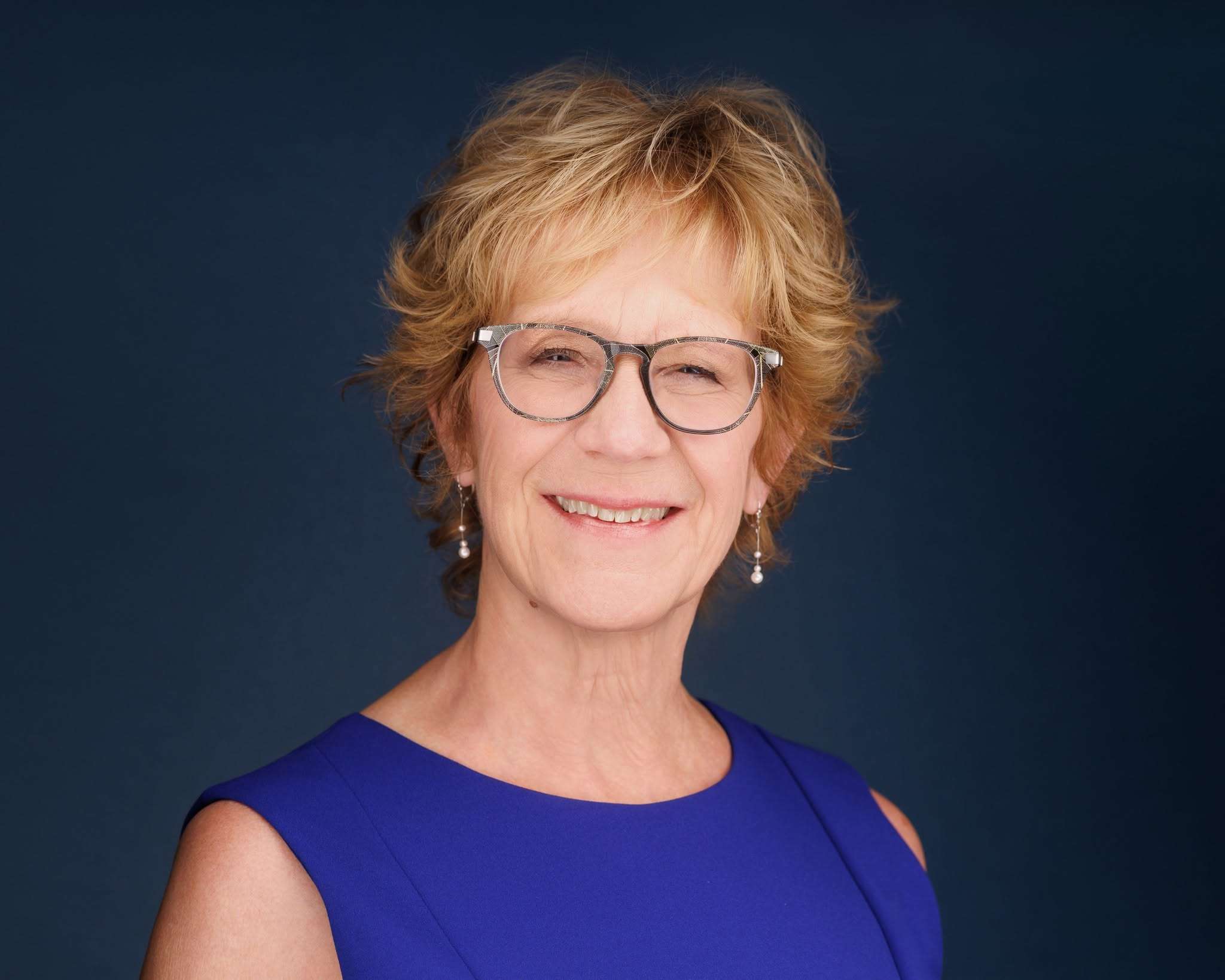
Marc Jacobs: Tell me a little bit about Lynette Krieger-Zook
Lynnette Krieger‑Zook: Yes, I am a retired special ed teacher from Hutchison. I moved here over 30 years ago to teach at the Early Ed Center. So, I've taught preschool, kindergarten, Head Start, special ed. So, as a retiree, I've been actively involved in various things in our community, local boards, and now this is my second run for running for Kansas House District 104.
Marc Jacobs: So, what do you see as the most pressing issue in your in your district, and what kind of specific legislation would you pursue to address that issue?
Lynnette Krieger‑Zook: Great question, and it's a question that I ask when I go to every door. So, I've been knocking on every door, no matter what their party is. We've done well over 3000. We're approaching 4000 houses, and what I hear consistently at every door is about affordability and accountability. People use the word integrity, honesty. They want to know that the candidate is going to do what they're saying they're going to do.
Marc Jacobs: You talk about integrity and issues of that need. Your district is a little bit diverse. Not only does it have the northeast corner of Hutchinson, but it's also got rural areas of McPherson County and northeast Reno County, and including the cities of Buhler and Inman, is there a difference between, say, the city portion of your district and the county portion of the district, and what their needs are?
Lynnette Krieger‑Zook: I would say individually, it's still about property taxes being able to afford, have a livable wage to be able to afford something more than just the basics is what people are wanting. There is a difference. There's certainly a difference between Hutch Public Schools, Buhler Public Schools, and Inman Public Schools. They all reflect their culture. So, Hutch, of course, is considerably larger, but they still have the same issues of meeting state standards, providing a quality education, and making sure that their dollars stretch that are given to them to support their public education, rural areas are concerned more about agricultural. I'm hearing more about data centers when I'm in the rural areas. In the city, they're worried more about roads, accessibility to different places, more city living kind of questions than I am finding in the more rural areas.
Marc Jacobs: I think one of the most one of the biggest hot button issue is the property taxes and appraisals. And so, it's like, what would you, what can you, what do you think that can be changed about property taxes to say protect the interests of your constituents, but also protect those issues of the school districts because you're a former educator and you know that that tax money, that property tax money, is channeled into to education help.
Lynnette Krieger‑Zook: I have two responses to that. First is that property taxes 20, 30 years ago, homeowners like you and I only carried 35% of the property tax bill. We now carry nearly 60% of the property tax bill, and that is solely due to what I call corporate welfare, giving tax incentives to large corporations. I'm not talking about our small businesses that really fund and make our communities viable and an exciting place to live, but large corporations that come in, they're not paying property taxes, they're not paying sales tax. So, then that is falling all onto the homeowners. The other thing about property taxes is the state legislature is required by statute to attempt to fully fund special ed. That'd be at 92% is what the statute says. They're now funding it in the low 60s. What that means locally is that Reno County, which special ed, which is covered by Hutch Public Schools, and then Reno County Education Co-op covers all the other surrounding rural areas. They are collectively in a calendar school year pulling $5 to $7 million out of their general fund to cover special ed, and special ed is everything from gifted too severely multiply handicapped. I will tell you also, as a special ed teacher, we also do serve private schools, and we also serve homeschool students that may have speech needs, occupational needs, whatever their needs are. The public school is required to be accountable to meeting those needs. So, just if they would fully fund special ed, would release that money and burden on the schools, then the schools wouldn't be in turn asking for more money, mill levy from our cities and counties.
Marc Jacobs: You know, looks like it's one. It's one hand feeding the other when you talk about you know the districts, and I've had conversations with those superintendents and say, "Hey, we have to pull from the general fund to cover that. Now, what happens is we have to go back to the taxpayer and ask for more money because we don't have that because we're having to fund what the state's not funding them.
Lynnette Krieger‑Zook: That's correct.
Marc Jacobs: You know, I we talk about you know education, and I wanted. Take a look at you know there were some bills that were passed and there was there was a law change regarding high school students and their participation in college you know college classes college college credits because a lot of schools including the ones in your district particularly Buhler High School when they talked about the fact that that their senior junior and senior class-they have 138 students taking college classes at Hutchinson Community College. But now there's a change in how that is worked. Is there any chance that we can take a step back and rethink about that because that gives those students a chance to get a leg up once they graduate?
Lynnette Krieger‑Zook: Absolutely. The bill came out initially just this year. It caused a lot of consternation and required lawyers visiting between Hutch Community College and our local public schools. So, absolutely, the higher education committee at the state legislature needs to relook at that and how it is directly affecting, particularly communities like Hutchison, where we have our own community college and we have such a robust program where our high school students can earn college credit, they can learn trades, they can do welding, auto repair, become a CNA. Those are all critical things to create a positive workforce here in Reno County and in Inman. Indeed, Inman, Buhler, all the surrounding rural areas come to Hutchison's Public Schools Career and tech building to do many of those. When it comes to English history, speech, college classes, we're taking college professors from Hutch Community College, and they're delivering the services right there at the high school. So, the bill was intended to be fiscally responsible. I can appreciate that conservative fiscal, but it has also caused a lot of harm in the funding, and we do not want to eliminate those opportunities for our students here in Reno County and Inman.
Marc Jacobs: You talked a little bit earlier about when you talked about the differences in your district and how the agricultural area is concerned about data centers, and from what I get, a lot of people in the city of Hutch are concerned about data centers. What's your feeling on data centers and how they should be controlled?
Lynnette Krieger‑Zook: Thank you. That's a great question, and it's a question that is pretty passionate for many people. And I have attended multiple area conversations about that. So, because I'm important to listen to what voters want when it comes to data centers, I think at the minimum we need a moratorium and to make sure that we, as a city and a county and a state, are in the driving seat, the driver seat. That we are not letting them come in and absorbing all of our resources. No property taxes. They're not paying property taxes or sales taxes, but they are actual supporting and bringing in an income for our communities that would be at the minimum that we would need. When it comes to water, actually, water is a pretty big topic. As we all were grateful for the rain that came. Data centers, there are different ways of using water, but I think it brings a bigger question. People are more aware of water use. In Buhler, we have exceeded that the town had exceeded what the state allotted it, so we have had to spend one or $2 million to pump water. A farmer sold a water site, a water well, and we're now getting water because we couldn't even add another household because we were such. So, water restrictions are becoming more important for many of us. So, whether you're in a city, a town, the agriculture, looking at data centers, I do think looking at water resources, how to use them responsibly, and be able to have access to good, clean water is very important.
Marc Jacobs: I think another thing they want to talk about on data center is the state in the past year has passed regulations or passed a law giving certain things to data centers to keep to invite them in, and it seems like I've heard a lot of discussion that we gave up too much to bring them in.
Lynnette Krieger‑Zook: I again would agree with that statement. We need to be in the driver's seat. We need to make the decisions if they're coming and what size it is, what land use they use, what is the electricity, what is the water, and what are they going to benefit and bring in money for our community, so that our homeowners can have lower property taxes. That's why you seek out businesses is to support and increase the activity and the income in a community.
Marc Jacobs: You know, you talk a little bit about you know local control versus state control, and I know there's a big concern out there that the state has too much control over local government, where, in your opinion, where should the state back off a little bit and give the cities and the and the counties more control?
Lynnette Krieger‑Zook: It is an interesting phenomenon that the Republican supermajority wants less control. They do approve of more local control, and yet continually we see legislation every July come into effect with more and more control. Over local decisions, I am absolutely for local control. Let the cities, let the towns, let the communities make the decisions. The state legislature funds major roads. They take have the overall view, and that's what their role is. It is not to micromanage our communities.
Marc Jacobs: Yeah, you look at you know the micromanagement effects there because you know I've talked to a number of representatives and I've talked to a local a number of local representatives and the state representatives say hey it's not us that's driving the property tax values up it's the locals but the local the local governments say well it's because they won't allow us to do certain things is there a balance between property tax and appraisements between local and state government?
Lynnette Krieger‑Zook: Well, I think the premise that we have no control is not correct. I would call it corporate welfare. Again, we are giving way too many tax incentives of large corporations because I will always support small businesses. They keep our communities vibrant and going, we've got to look at large businesses, the amount of tax cut tax write-offs they have, and see if that business actually does support our community. That's how we're going to lower property taxes.
Marc Jacobs: One last question: What state spending priority would you increase, and what would you cut or delay to pay for it?
Lynnette Krieger‑Zook: Well, I think when it comes to increasing public schools, except all children, while we have student numbers are decreasing, and the schools have to make hard decisions about how they're going to handle smaller enrollments, we also need to fully, again, fully fund public education. That would be a one that I would not ask to be continually cutting. Where we need to increase is back again to corporate welfare, not the lobbyists. I'm not working for lobbyists. There is now my money comes from individuals or union members that are paying their dues, paying out of their own pocket towards their own pack-that's the only money I'm accepting. So, corporations are buying our legislators, and they are following that. I am working hard to walk every door in Hutchison, Buhler, and Inman. We've walked well over 3000. I'm listening to people. I'm watching what's important to them. That's what I'm going to bring to Topeka. Is not who is giving me the money to run my campaign, but who are the people that live in District 104? What are their needs, and how can I go to Topeka and represent you?
Marc Jacobs: All right, we have been talking with Lynette Krieger Zook this morning. She is the Democrat nominee for Kansas House District 104. Thank you for your time this morning.
Lynnette Krieger‑Zook: Thank you. Appreciate the opportunity.