


By CRISTINA JANNEY
Hays Post
Fort Hays State University said the Sternberg Museum of Natural History will remain open after Dec. 18, but it needs a new business model.
Although Mason said the museum will remain open past Dec. 18, she added, “This is not a rescue of the status quo. It's breathing room, the year we need to develop a sustainable business plan, and it's within reach because our community partners have changed the picture.”
Mason said the decision to close the museum was a decision of last resort.
When the Kansas Legislature issued $2.4 million in cuts to the university, she said she had to look at the university services that directly affected students.
Although the museum serves the public, she said it does not directly affect student success.
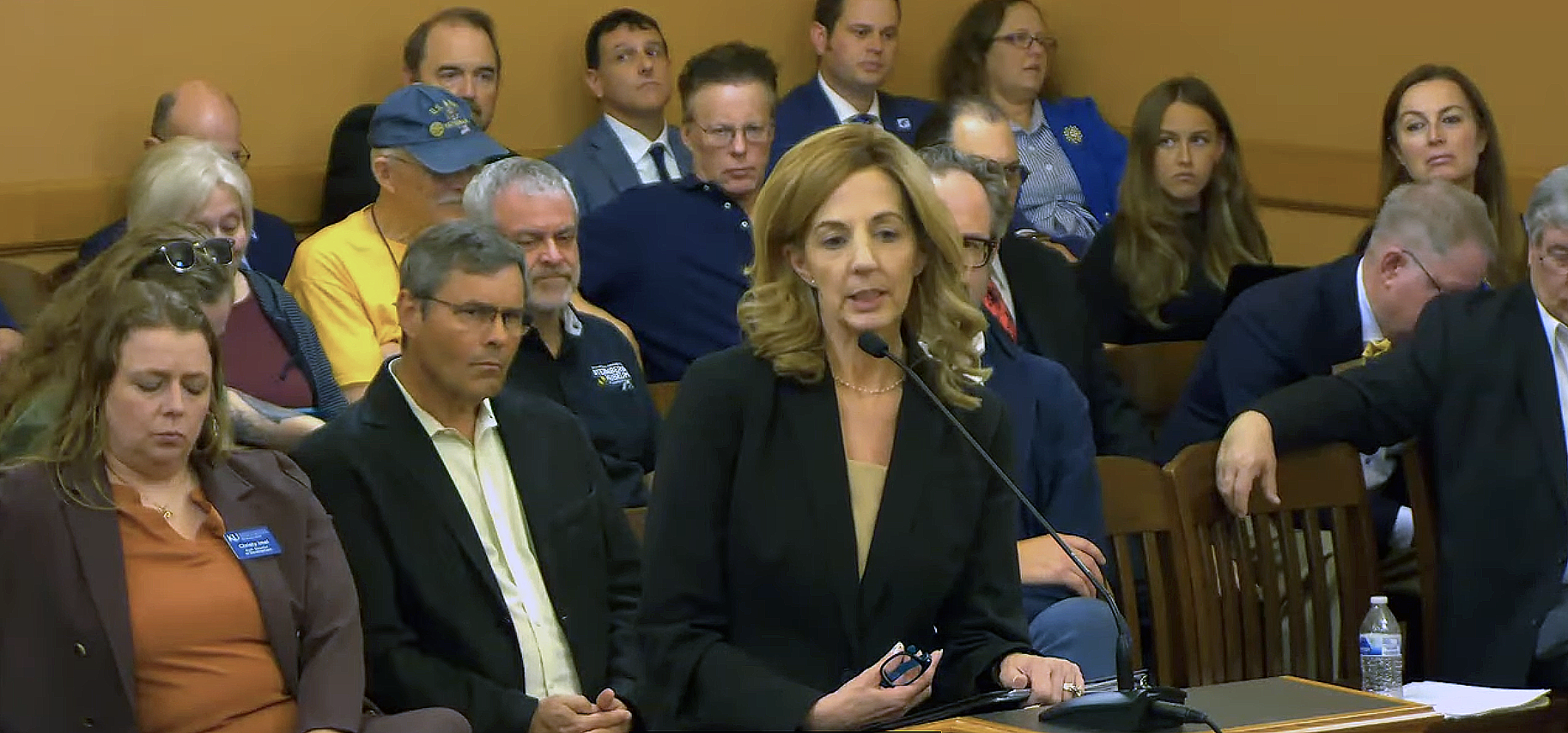
“I made the decision to close Sternberg to address the legislative budget cut, and I'm not asking the Legislature to own my decision. I am asking, however, that you recognize the constraints of the inequitable funding that served as the context for this decision,” Mason said during the hearing.
She said FHSU has faced $7.4 million in budget cuts and a reduction of 55 faculty positions during the past five years.
The museum’s budget is $1.3 million, with a $856,000 shortfall last year.
Mason said the museum can’t rely on university dollars alone, and committee members agreed.
Rep. Kyle Hoffman, R-Coldwater, said $1.3 million seemed like a large budget for a museum. He also questioned whether the museum did any other fundraising during the last 10 years.
“You had to have known that it was costing you that much every year, and so that really is a little disappointing,” he said.
Mason said another charitable fund supports the museum, along with camps and conferences.
“When we're as lean as we are with a proportion of funding and taking a deep cut, we have to make tough choices, and again, it wasn't a cut that I wanted to make, but it was what I felt I needed to do at the time,” she said.
Hoffman said, " I just think that this probably should have been done quite a while ago because I don't believe that the museum should be totally funded by the university. I think that there ought to be some philanthropy, some outside groups helping with the museum.”
Mason said the current donations will give the Sternberg one year to develop a sustainable plan for the future.
Mason concluded her formula remarks by saying, “Fort Hays remains with the most efficient, affordable and resilient institutions in the state, and I'm grateful for the many ways the state continues to invest in us.
“I'm not here today asking the state legislature to fund the museum, but I am asking you to please hold Fort Hays harmless from further reductions in the budget process when the Legislature convenes next session. Please honor our strong stewardship of dollars that you have invested in us.”
Mason answered some critical questions from legislators.
Vice chairman Rep. Troy Waymaster, R-Bunker Hill, asked Mason why the Legislature was not notified during the budget process that closing the museum was a possibility.
Mason said she had not delved into the budget when the discussion of the cuts was ongoing.
“If we had this discussion during the legislative session, and if you would have told me that [was] one of the possibilities of this cut, or as you said, casualty of this cut, would be the closing of the Sternberg Museum, I would have done something different in conference [committee],” Waymaster said.
He said he thought there were outlets that could have been used to preserve the Sternberg, including possible resources from the Department of Commerce.
Although committee member Rep. Kristey Williams, R-Augusta, said she supported the Sternberg Museum, she had questions about the university’s budget.
She said FHSU has had declining enrollment but could not withstand a 1% budget cut.
FHSU had an increase of about 500 students this fall. But has seen a decline of almost 19% in full-time equivalent enrollment in the last five years.
“And at the same time, in the last five years, the state has fulfilled their obligation and has increased total expenditures over 35.9% in five years, whereas the rate of inflation, [consumer price index], is like 24% in the same time. So the state of Kansas has really been there for you,” Williams said.
Mason said the dollar per student spent at FHSU is less than the other state universities.
“When you give one person $5, one person $10, and one person $15, and you say everybody, we need $1 back, it's much more difficult for the person with $5 than $10, $15, $20, and that's how we're feeling. But we are managing it,” Mason said.
Individuals and organizations interested in supporting the Save Sternberg campaign can visit foundation.fhsu.edu/save-sternberg. Donations are tax-deductible and will support the Sternberg Museum of Natural History.