


MARC JACOBS
Hutch Post
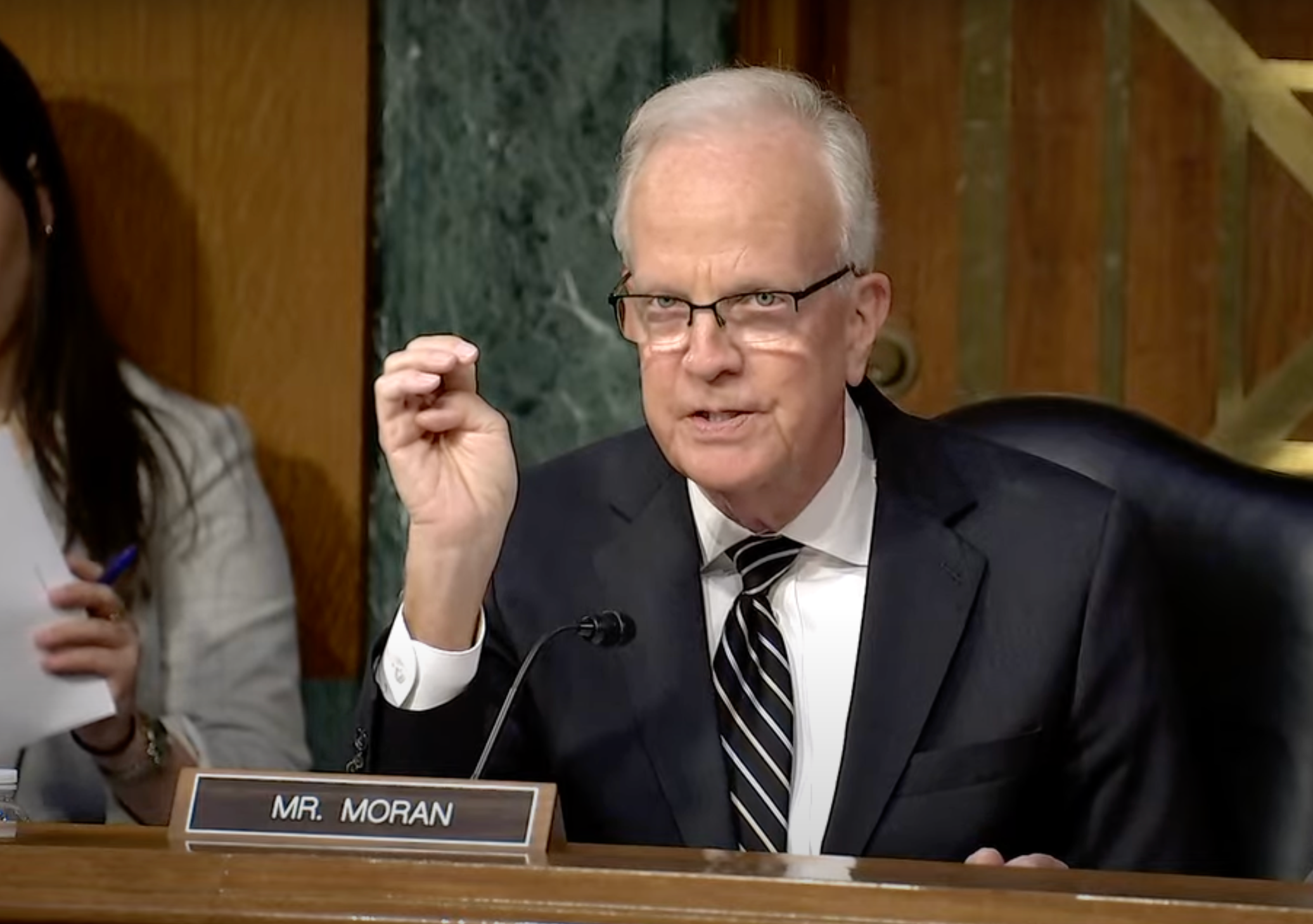
Kansas farmers are facing one of the most difficult economic periods in years, even after producing record crops during the 2025 growing season, according to U.S. Senator Jerry Moran.
Moran said timely precipitation last summer led to exceptional yields across much of the state, particularly for grain sorghum and corn. Producers in western Kansas reported especially large milo crops following years of persistent drought. While the rainfall created an ideal growing season, the resulting surplus has created new challenges.
“The output costs are less than the input costs,” Moran said, explaining that while crops were plentiful, the cost of producing them has skyrocketed. Fertilizer, fuel, seed, and other inputs remain high, while commodity prices have dropped due to excess supply. As a result, farmers are often selling crops at a loss.
Moran said that in his years representing Kansas producers, current conditions rank among the most difficult he has seen. He noted that the strong harvest followed three to five years of significant drought across much of the state, leaving farmers financially weakened and ill-positioned to withstand another tough year.
“Farmers are not in a position financially to take on more difficulty,” Moran said, adding that weakened balance sheets make it harder for producers to secure financing from lenders.
The senator also pointed to the loss of international markets as a major contributor to the crisis. Kansas produces far more agricultural commodities than it can consume domestically, making exports critical to farm profitability. Moran highlighted the absence of China as a buyer, particularly for grain sorghum and soybeans.
Kansas is the nation’s leading producer of grain sorghum, and China was once a major purchaser. However, Moran said China has shifted its buying to Brazil, and without regaining that market, it is difficult to see how global demand can absorb Kansas’ surplus production.
Moran said federal officials are working to address the issue through trade negotiations. He chairs a committee that funds the U.S. trade ambassador and said hearings have focused on reaching agreements that would reopen markets for American agricultural products.
In addition to trade efforts, Moran said renewable fuels could provide an additional outlet for Kansas crops. He also pointed to global hunger programs as another opportunity, saying surplus grain should be used to help feed people worldwide rather than sitting unused in Kansas.
“We don’t want grain piled on the ground in Kansas while people are starving around the globe,” Moran said.
Ultimately, Moran said resolving trade disputes and securing agreements that allow U.S. agriculture to compete globally is essential to restoring farm profitability.
“The goal has to be to sell,” he said. “We need trade agreements that allow us to sell what we produce here in Kansas and across the country.”