


MARC JACOBS
Hutch Post
HUTCHINSON, Kan. — A lengthy and often technical appeal hearing this week highlighted an ongoing dispute between a local property owner and the City of Hutchinson over redevelopment efforts at 3405 East 4th Avenue, focusing on whether construction can proceed in phases or must be reviewed as a complete project.
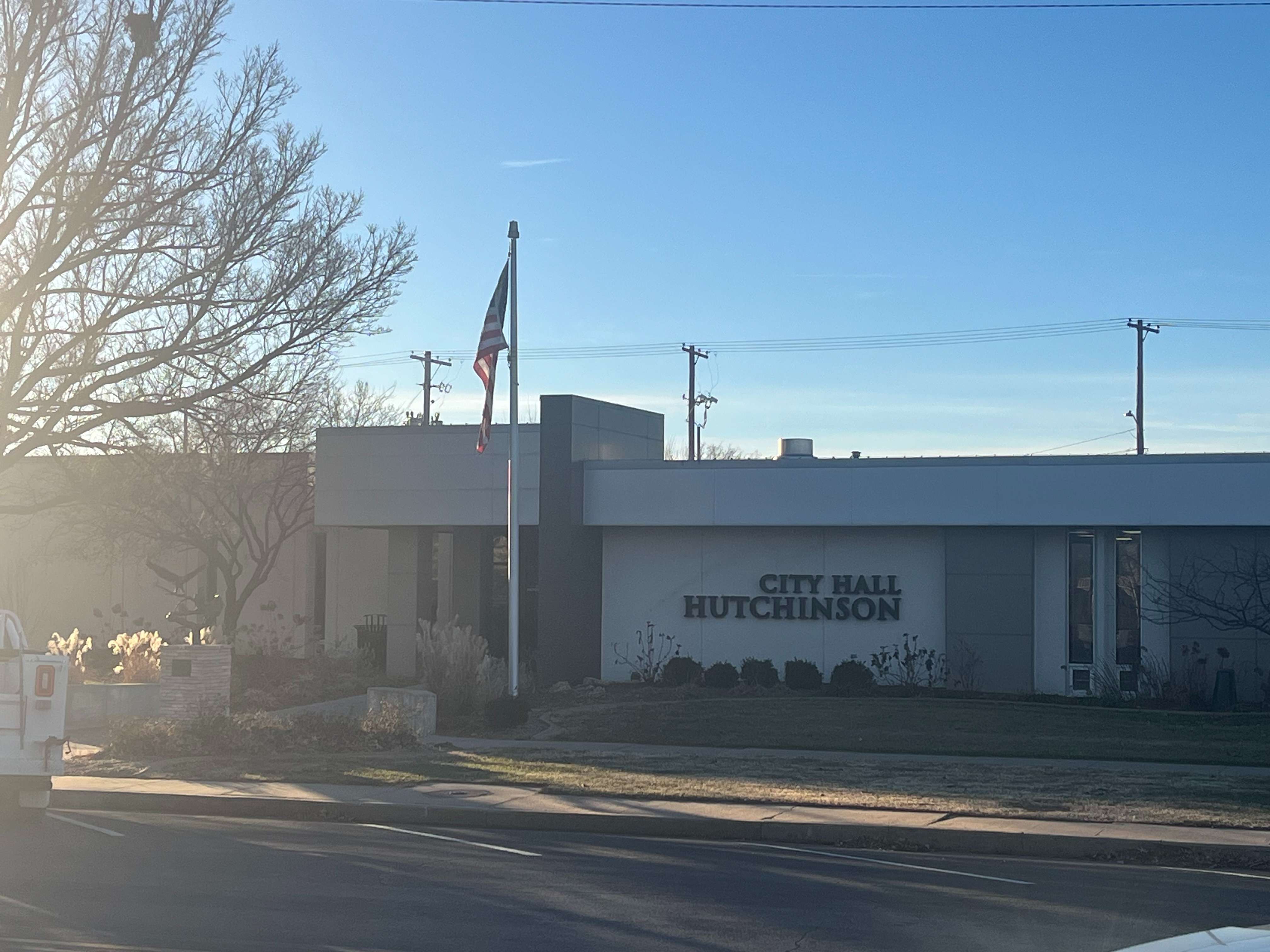
The case came before the city’s Building Trades Board, which was tasked with determining whether the city’s building official correctly interpreted and applied building codes—not whether the project itself should ultimately move forward.
Background of the dispute
The appeal stems from the city’s denial of a phased building permit requested by property owner Dan Rasure. The request would have allowed structural repairs and interior demolition to proceed independently, rather than requiring a full set of construction documents covering the entire project.
Rasure argued the structural work—particularly on the south end of the building, which partially collapsed during a 2025 windstorm—is necessary to stabilize the structure and reduce safety risks. He said the plans had previously been approved and that contractors are ready to begin work.
He also maintained that no specific code violations were cited when the permit was denied, describing the decision as administrative rather than technical.
City's position
City building official Jason Lady defended the denial, citing both procedural and safety concerns. He told the board the project has a documented history of incomplete permits, expired approvals, and limited follow-through on prior work.
According to Lady, the city had previously allowed incremental progress in hopes of moving the project forward, including permits for shoring, demolition, and structural work. However, those efforts did not result in substantial completion, prompting a shift in approach.
“We’re at the point where a complete and coordinated set of plans is required,” Lady said, referencing direction from the Hutchinson City Council following a March 3 update on the property’s status.
City officials also emphasized that the building has never received a valid certificate of occupancy for its current use and has been deemed unsafe under the property maintenance code. The structure has remained unlawfully occupied at times, and a vacate order was issued earlier this year.
Code interpretation at the center
At the heart of the appeal is a key question: Does the building official have the authority to deny phased permitting and instead require a full set of plans before any work proceeds?
City staff cited provisions in the 2018 International Building Code stating that phased permits are discretionary and may be denied if adequate information for the entire project is not provided.
They also argued that allowing phased construction in this case would create additional administrative burdens and could compromise oversight of safety and code compliance across the project.
Rasure and his representatives countered that phased permitting is a common practice—particularly for existing buildings—and that the International Existing Building Code allows for more flexibility when dealing with renovations and structural repairs.
They further argued that the requested work is corrective in nature and necessary to bring the building into compliance, not to bypass code requirements.
Broader issues raised
The hearing also touched on several related issues, including:
- Whether the building requires a new certificate of occupancy due to a change in use
- The distinction between requirements under the International Building Code and the International Existing Building Code
- The role of safety improvements already completed, such as egress planning and removal of hazardous materials
- Concerns about financial risk if work proceeds without assurance of final approval
Board members acknowledged the complexity of the case, noting that multiple code frameworks—including building, fire, and property maintenance codes—apply simultaneously.
Throughout the discussion, board members emphasized that their decision is narrowly focused.
“This isn’t a vote on whether the project moves forward,” one member said. “It’s whether the building official has the authority under code to deny the phased approach.”
The board rejected the appeal made by Rasure.