


MARC JACOBS
Hutch Post
As May marks National Stroke Awareness Month, local healthcare professionals Olivia Kite and Barbara Starks of Hutchinson Regional Medical Center are encouraging residents to recognize stroke symptoms quickly and seek emergency medical treatment immediately.
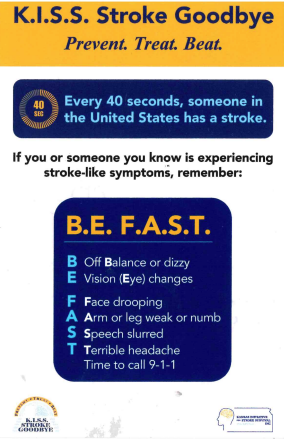
According to the Centers for Disease Control and Prevention, someone in the United States has a stroke every 40 seconds, and someone dies from a stroke every 3 minutes and 14 seconds. Stroke remains the fourth leading cause of death in the country, claiming about 162,000 lives each year.
During a recent interview, Olivia Kite, Disease Specific Certification Coordinator at HRMC explained that a stroke occurs when blood flow to part of the brain is interrupted, either by a blood clot or a ruptured blood vessel. Without oxygen-rich blood, brain cells can quickly begin to die.
Kite said one of the biggest misconceptions about stroke is that it only affects older adults. However, recent data from the American Stroke Association show strokes among people younger than 44 have increased by roughly 40% over the last decade, with about 25% of strokes now occurring in younger adults.
Barbara Starks, Clinical Educator at HRMC said lifestyle factors such as obesity, inactivity, smoking and untreated medical conditions are contributing to the increase. High blood pressure, diabetes and atrial fibrillation — an irregular heart rhythm that significantly increases stroke risk — remain among the leading risk factors.
Nationally, the CDC estimates nearly 795,000 people suffer a stroke each year, including about 185,000 recurrent strokes in patients who have previously experienced one. Stroke is also a leading cause of serious long-term disability, often affecting mobility, speech and daily living activities.
Both providers stressed the importance of rapid treatment, repeating the phrase “time is brain” throughout the discussion.
Kite noted that if patients arrive quickly enough, healthcare teams have medications available that can dissolve blood clots and potentially prevent lasting damage. She said the ideal treatment window is within about three and a half hours after symptoms begin.
Healthcare teams encouraged residents to remember the acronym “BE FAST” when identifying stroke symptoms:
- Balance problems
- Eye or vision changes
- Facial drooping
- Arm or leg weakness
- Speech difficulty or slurring
- Time to call 911
Starks emphasized that stroke symptoms typically appear suddenly and should never be ignored.
The providers also urged residents not to drive themselves to the hospital. Calling 911 allows emergency medical crews to begin assessments immediately and notify hospital stroke teams before arrival.
Kite and Starks said stroke treatment has improved dramatically in recent years. In addition to clot-dissolving medications, some patients may qualify for advanced procedures that physically remove clots from blood vessels in the brain. Rehabilitation programs involving speech, occupational and physical therapy can also help patients regain function and independence.
The two healthcare professionals noted that recovery can continue for up to a year after a stroke, especially when patients consistently participate in therapy and rehabilitation programs.
They also warned residents not to ignore transient ischemic attacks, commonly called TIAs or “mini-strokes,” where symptoms briefly appear and disappear.
Starks said those episodes can serve as an early warning sign that a larger stroke may follow, encouraging anyone experiencing symptoms — even briefly — to seek medical evaluation immediately.