


BY MORGAN CHILSON
Kansas Reflector
TOPEKA — Projected increases in electricity load growth are as high as 99% by 2035, a data point that pushed regional energy regulators to create a plan to stabilize and expand grid capacity and transmission, a legislative committee learned Thursday.
Part of that process includes building a controversial transmission line that will travel through four Kansas counties.
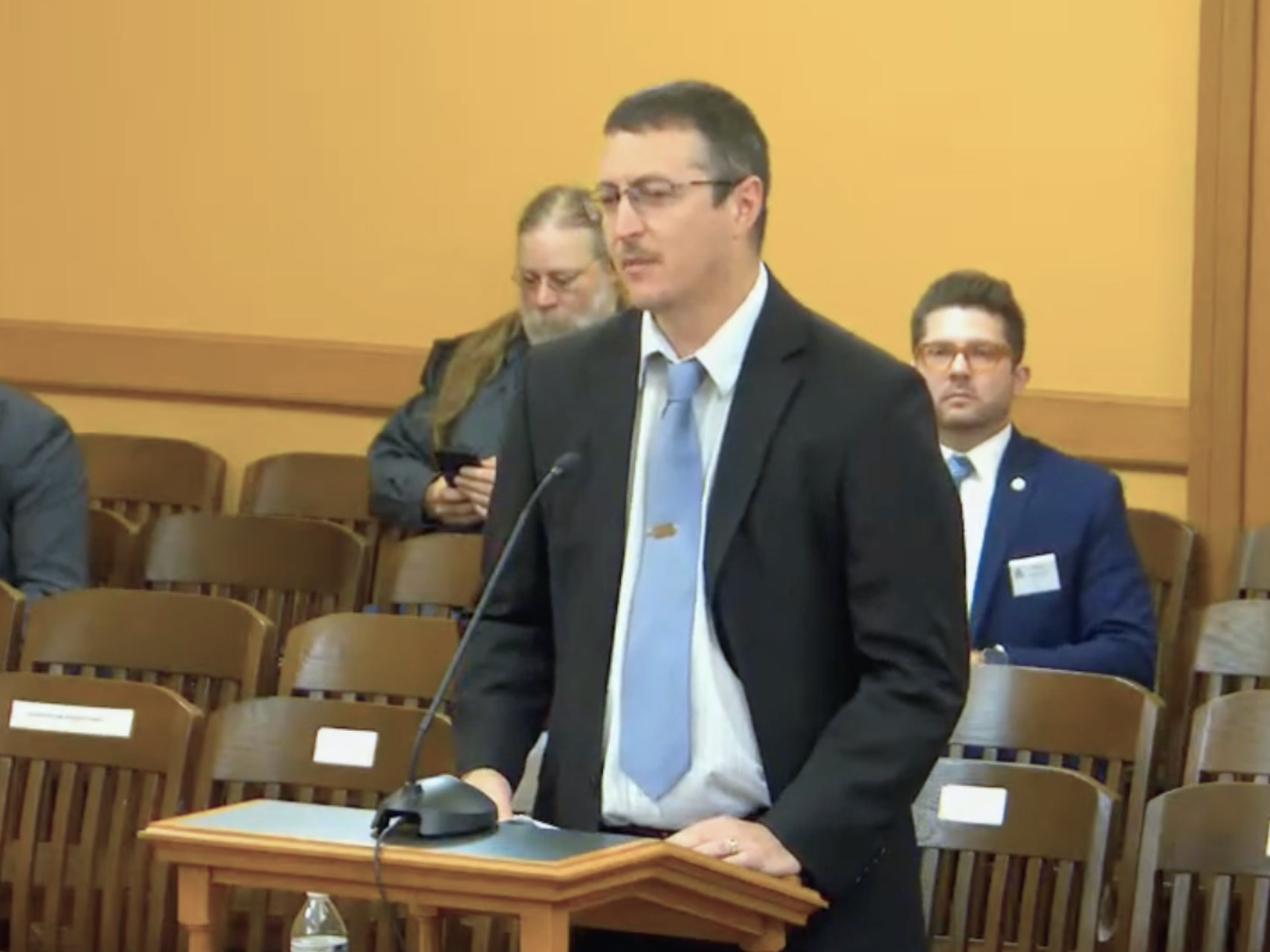
Justin Grady, director of utilities for the Kansas Corporation Commission, told the House Energy, Utilities and Telecommunications Committee that a proposed 133-mile, 345 kilovolt transmission line to be built by Evergy will travel through western Sedgwick, Sumner, Cowley and Chautauqua counties.
The project is part of Southwest Power Pool’s annual plan to support projected growth in electricity usage across its 14-state coverage area, Grady said. SPP is one of seven nonprofit organizations approved by the Federal Energy Regulatory Commission to oversee transmission infrastructure, ensure utility system reliability and manage the wholesale electricity market.
Grady said the original SPP transmission plan included $18.1 billion of transmission projects to handle expected grid expansion, but KCC and others in the state’s energy industry met with SPP and agreed on fewer projects in the immediate future.
“The projects that ultimately got notices to construct were the consensus, essentially, of the stakeholders, that these are the projects we cannot afford to delay,” Grady said. “These are reliability projects.”
Transmission projects are challenging to implement because people don’t like them, he said.
“It’s not easy to site a transmission line,” Grady said. “By and large, landowners do not like it, and I understand completely. It carves a scar basically across the state of Kansas.”
Landowners on the planned transmission route showed up at two public hearings on Jan. 8 and 9 to voice concerns and objections to the transmission line.
John Timmerman said he has a contract for a wind energy project on his Sumner County land where the transmission line will cross. He told Evergy and KCC at the hearing that he stands to lose as much as $250,000 if he loses the wind contract.
“This line for the height and the position that it’s in will negate that windmill project,” he said at the public hearing.
Grady told the Energy committee the transmission project is necessary to support additional generation that will be added in upcoming years. Electricity needs in the region have been emphasized by storms in the past few years, including storm Uri in winter 2021 and storm Elliott, a 2022 winter storm, when the grid was stressed, he said.
“Last year during pretty mild weather, there were actual controlled load shed events in the southwest portion of the systems,” Grady said.
Load shed refers to a purposeful, controlled shutoff of electricity in order to avoid a larger collapse of electric reliability, Grady said in an email after the meeting.
“When that one day of load shed comes in an 80-year period of time, which was winter storm Uri, then all we talk about for three years is, why did the lights go off?” he said. “Reliability is obviously job No. 1 for electric utilities and regulators, mixed in with affordability.”
Grady said load growth projections are almost “unbelievable,” showing growth in two years that previously would have been projected for 10 years. The SPP’s plan projected how many load shed events would occur if no changes occurred, he said, and the estimate is 114 days a year in 2034.
“The standard is one day in 10 years — that’s the legal standard FERC requires them to uphold,” Grady said.
In the most conservative SPP models, the $8 billion transmission project will pay for itself by 2034.
“At its worst, when this $8 billion of transmission is built at the highest price it will ever be, in 2034 that will cost an average residential customer $2.99 a month,” Grady said, adding that models that include economic benefits show a $5.31 benefit to Kansas customers.
Looking outside of transmission to need for new electricity generation resources, Grady said SPP’s projects show adequate capacity for 2025, with a 20.7% reserve margin. However, if new generating resources aren’t added by summer 2027, the reserve margin will fall to 11.8%, and by 2030, that margin would be -1.6%.
Grady said one of the questions that came up at public hearings about the proposed transmission line was whether the addition supports Kansas electricity needs or is only about shipping electricity outside the state.
“That line was engineered and designed to correct for the severe reliability issues that occurred during winter storm Elliott,” Grady said.
Elliott occurred just after Uri and resulted in millions of people losing electricity on Christmas Eve, he said.
“We avoided load shed in SPP, mainly because there was 20,000 megawatts of wind online,” Grady said. “We are connected electrically to the entire eastern United States. Sometimes major reliability events that are happening in North Carolina can even ultimately affect what happens in southeast Kansas. The reality is that’s the reason this transmission line was designed and built. My position is that certainly that line will benefit Kansans.”
KCC is holding a third public hearing on the proposed transmission line at 6 p.m. Wednesday, at the Hutchinson Community College Stringer Fine Arts Center. The meeting can be attended by Zoom or in-person, but residents wanting to make public comments on Zoom should register by noon Tuesday.
This story was updated to correct the date of the public hearing to Wednesday, Jan. 21.