


MARC JACOBS
Hutch Post
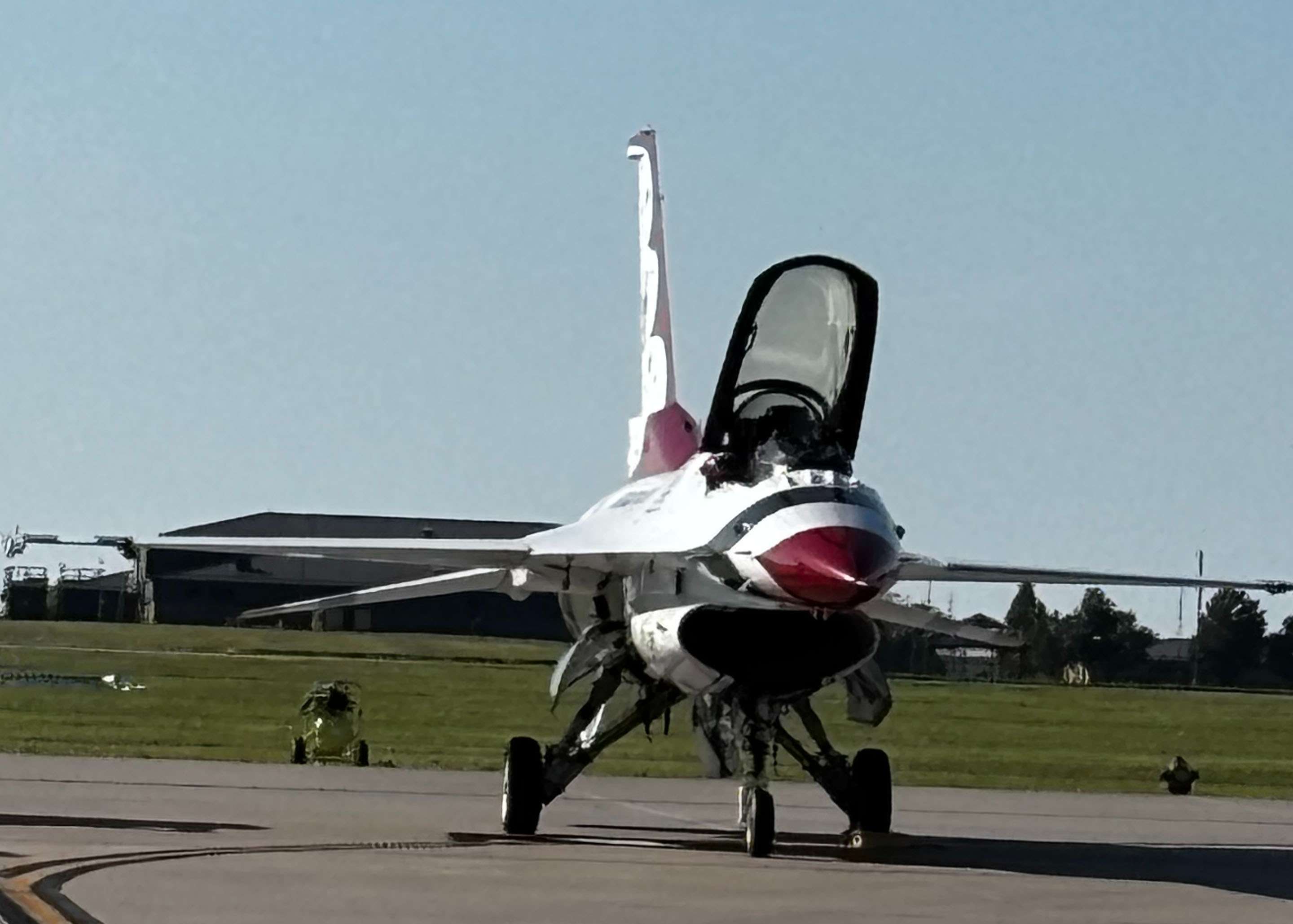
MCCONNELL AIR FORCE BASE, Kan. — Air Force Maj. Lainey "Rouge" Schol’s path to becoming a fighter pilot and a member of the U.S. Air Force Thunderbirds started on the other side of the microphone.
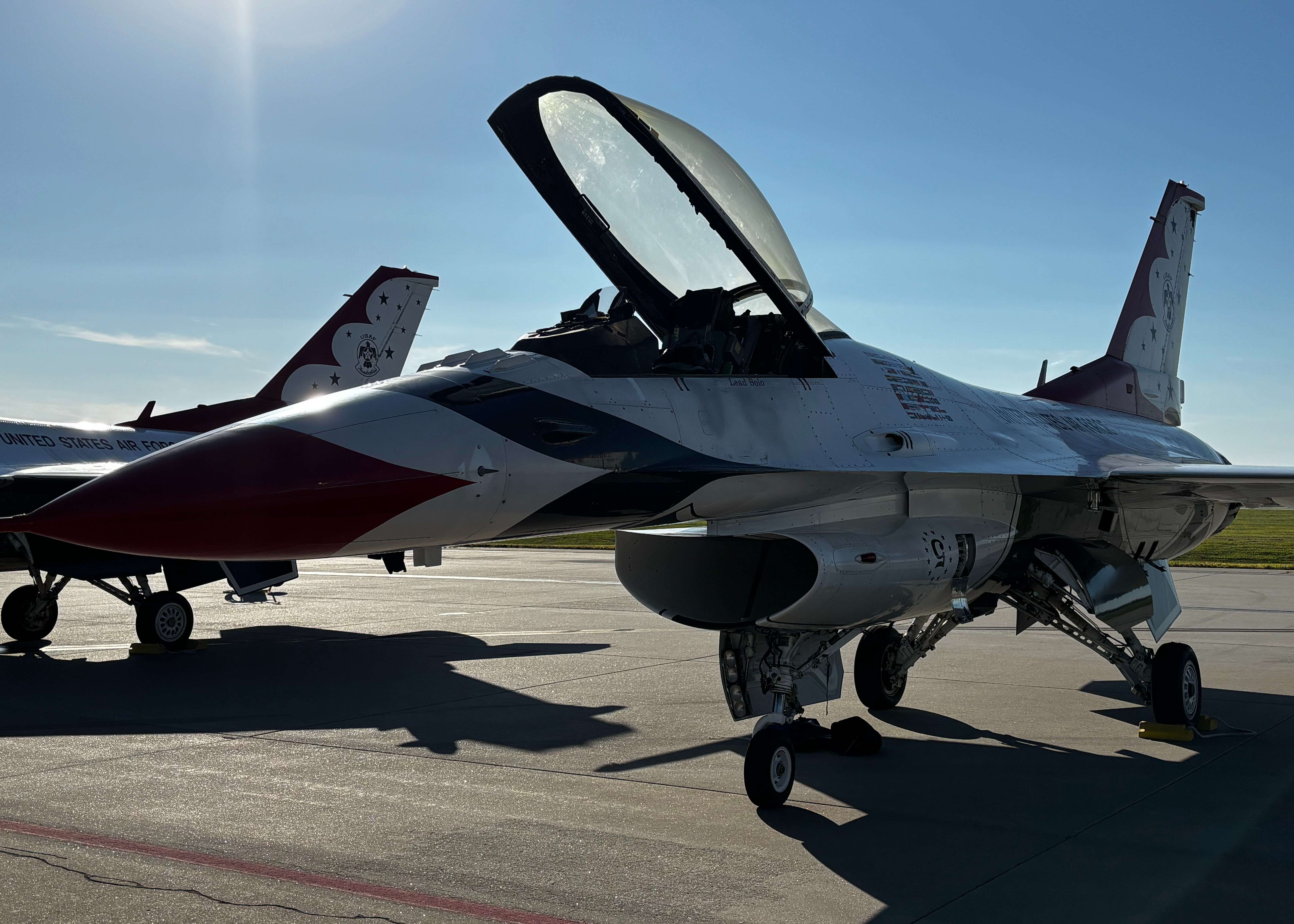
Now in her second and final year with the Thunderbirds, Schol serves as Thunderbird 5, the team’s Lead Solo pilot. She flew as Thunderbird 6 during her first season with the demonstration squadron. She is the only woman in the Thunderbirds' 72-year history to date.
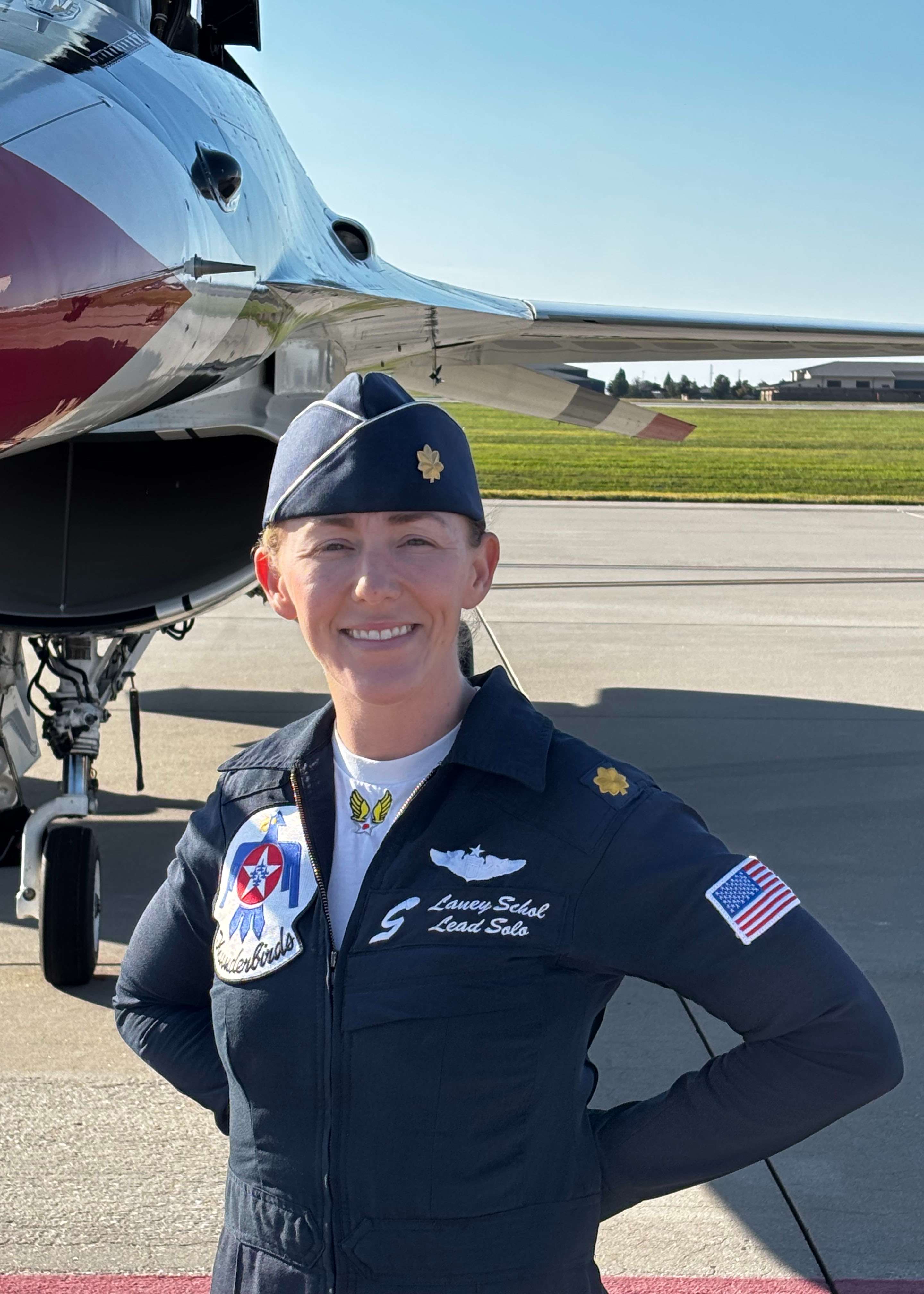
Schol said joining the Thunderbirds gave her an opportunity to give back after reaching a point in her Air Force career where she had accomplished many of her operational goals.
“I felt like the Air Force had given me so much that this would be a really great platform to give back to the Air Force,” Schol said.
The Thunderbirds’ mission is to recruit, retain, and inspire, and Schol said that mission extends beyond encouraging people to join the military.
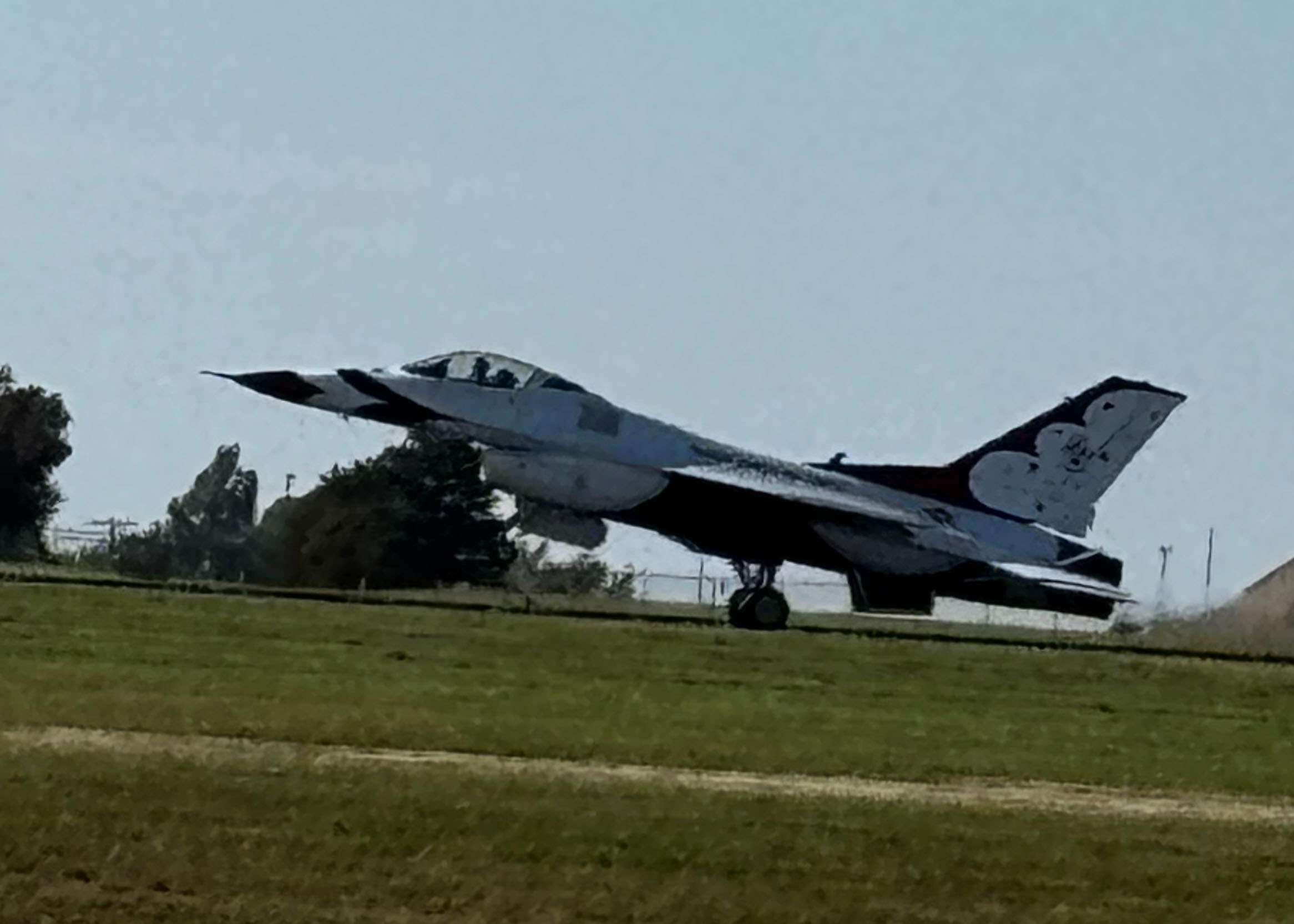
“We’re trying to recruit the next generation of warfighters, retain those that are already in the forces, and then inspire everybody,” she said. “We’re looking to inspire them to reach for the stars, dream big, work hard and really strive for excellence in all that they do.”
Schol’s own journey toward the cockpit was not necessarily the one she envisioned when she entered college. She studied radio, television and film and participated in ROTC.
Then an air show changed the direction of her career.
During her junior year, Schol interviewed a Thunderbird and received an incentive flight in a civilian aerobatic aircraft.
“I just went back to my ROTC detachment, and I was like, ‘I want to fly. What do I got to do?’” Schol said. “Then it just kind of took off from there.”
After graduating, Schol earned a pilot training slot and completed the yearlong training program. She went on to fly the A-10 for about four years, including a deployment, before transitioning to the F-35. She later became an F-35 instructor pilot before applying to the Thunderbirds.
Schol said pilots generally need eight to 10 years of operational flying experience before meeting the minimum qualifications to apply for the team.
The selection process is demanding. Schol said pilot candidates are even placed in the back seat of an F-16 and asked to demonstrate maneuvers despite potentially having no previous experience flying the aircraft.
But the Thunderbirds are much more than the pilots seen performing in the sky. Schol said the team includes about 135 people, including enlisted Airmen, officers, civilians and contractors. Many of the maintenance professionals and other members are handpicked from their respective career fields.
Once selected, the work needed to prepare for show season is extensive.
Thunderbirds training begins in November and continues through March. Schol said the pilots can fly twice a day, up to six days a week, as the team develops the precision and coordination needed for its demonstrations.
“It’s all about the reps,” Schol said. “We will get 100 flights together as a team before we ever do our first show.”
The team must then complete certification before beginning its show schedule.
With Schol preparing to leave the Thunderbirds after this season, some of the transition to the 2027 team has already taken place. She said she has trained the current Thunderbird 6 to take over the Thunderbird 5 position next year.
Departing members remain for a short period during the training season to assist the incoming team, including serving as safety observers and helping demonstrate formations and maneuvers.
Schol said the transition is designed to allow the new team to quickly become its own unit.
After leaving the Thunderbirds, Schol plans to return to the F-35 while transitioning into the Air Force Reserve. She is also considering what she wants to pursue in civilian life — potentially returning to the field she studied in college.
“I really enjoyed TV, so we’ll see what the future holds,” she said.
For Schol, however, one of the most important parts of being a Thunderbird is reaching young people watching from beyond the flight line — especially those who might see a career they had never considered possible.
Her advice is simple: Find what excites you and pursue it.
“Find your passion, and whatever that is, whether that is flying, whether that is taking pictures, whatever it is, find your passion and then go for it,” Schol said.
She also encourages young people to find mentors who have already achieved what they hope to accomplish and learn from them.
“Put 110% every single day, and the sky isn’t even the limit anymore,” Schol said.
She has similar advice for the new Thunderbirds preparing to begin their own journey with the team: mistakes are part of getting better.
“Don’t get down on yourself,” Schol said. “The mistakes are just part of the process.”
Progress, she said, may be difficult to recognize from one training flight to the next. Looking back several weeks, however, can reveal just how far a pilot — or anyone pursuing a goal — has come.
“You can’t see it day to day because it’s so small,” Schol said. “But if you go back and look, you’ll see the big picture. You’ll see the progress.”