


By SEAN BOSTON
Hutch Post
HUTCHINSON, Kan. — From living on the streets of New York City as a teenager to earning a degree from Harvard University, Liz Murray has spent much of her life showing that a person's past does not have to determine their future.
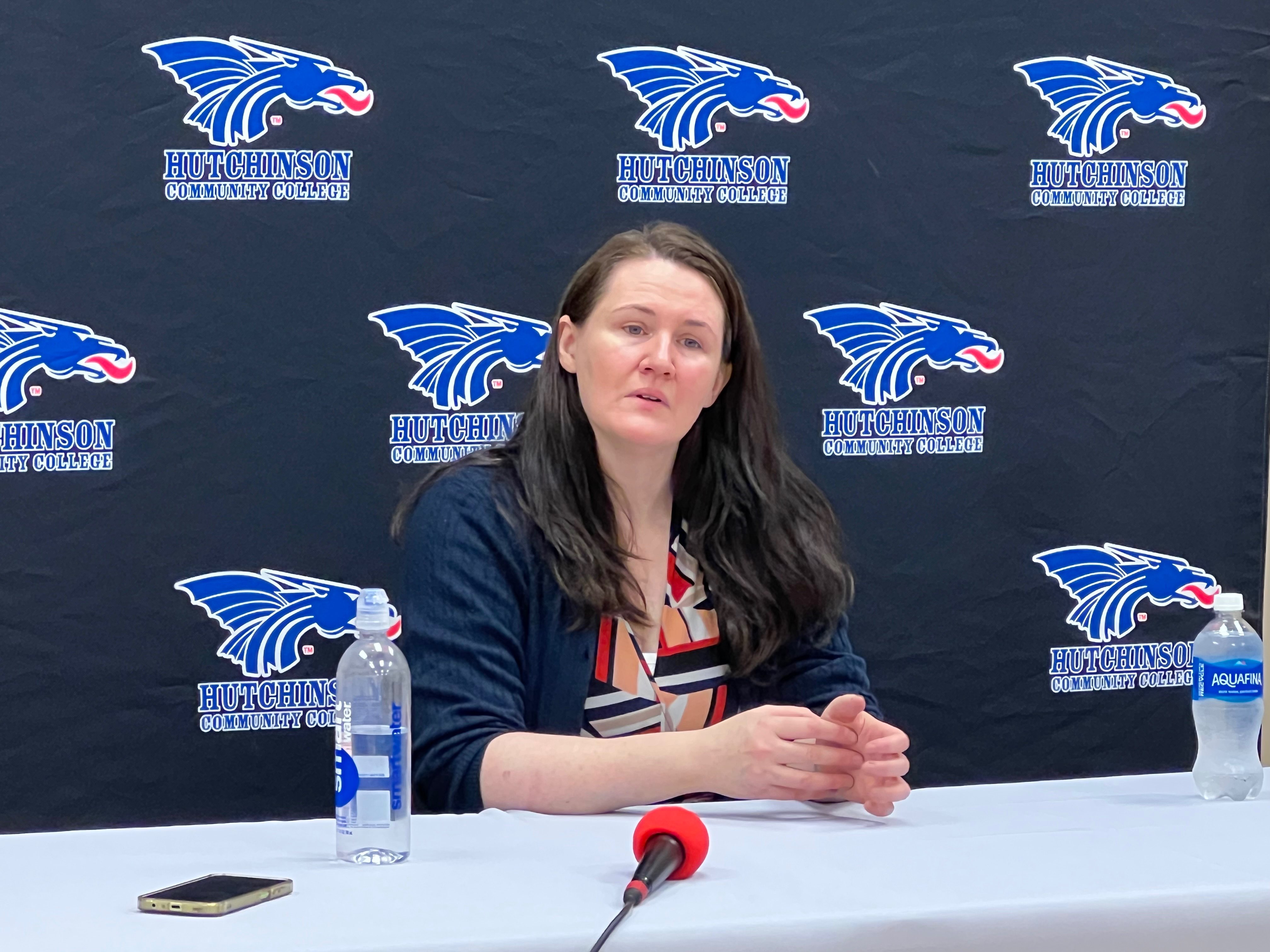
Murray, an author, motivational speaker and advocate for underserved youth, shared that message Tuesday morning at the Hutchinson Sports Arena ahead of her presentation at the Dillon Lecture Series. Her appearance marked the conclusion of the series' 45th season.
Murray became homeless at 15 after growing up with parents who struggled with drug addiction. She often searched dumpsters for food and slept in subway stations before deciding education could provide a path toward a better life.
She completed high school in two years, earned a scholarship to Harvard and graduated in 2009. She later earned a master's degree in the psychology of education from Columbia University.
But Murray said that her journey is about more than overcoming difficult circumstances. She hopes others recognize that their lives can change, regardless of the challenges they face.
"Yesterday doesn't have to determine today," Murray said. "It's a new moment. It's a new opportunity."
Murray credited the teachers who supported her during some of the most difficult years of her life, saying their encouragement helped her recognize her own potential.
"I had teachers who loved me. They loved me back to life," she said.
Her story gained national attention through the Lifetime television film "Homeless to Harvard," which earned an Emmy nomination. Murray said watching filmmakers recreate her childhood apartment and difficult family experiences was surreal and, at times, emotionally overwhelming.
However, she said the most rewarding part has been hearing from people whose lives were affected by watching the film.
Some viewers have written to Murray about reconnecting with estranged family members or finding motivation to make changes in their lives.
Still, Murray cautioned against interpreting her story as proof that everyone should be able to overcome adversity on their own.
She said she sometimes receives letters from people who feel guilty about not accomplishing more despite their own struggles. Murray emphasized the importance of showing compassion toward oneself rather than measuring personal success against someone else's experiences.
Murray also reflected on the challenges she encountered after arriving at Harvard.
Although she was grateful for opportunities that once seemed unimaginable, she acknowledged that understanding the importance of networking, internships and professional relationships was difficult because of her upbringing.
She encouraged college students to develop relationships with people pursuing similar careers, seek internships early and connect with professionals who can offer guidance.
"Get good at something and cultivate it and put down the roots in that," Murray said. "It's all the relationships."
Murray also addressed how colleges can better support students experiencing homelessness, financial difficulties or other personal challenges.
She encouraged institutions to establish welcoming spaces where students can connect with counselors, housing officials and other support services before their circumstances become overwhelming.
Rather than relying entirely on individual faculty members to recognize students in need, Murray said colleges should invest in systems that make resources readily accessible.
Today, Murray is the co-founder of The Arthur Project, an organization focused on helping underserved young people through relationship-based learning and efforts to break cycles of generational poverty.
When asked what advice she would give her 15-year-old self, Murray said she would emphasize self-worth, particularly after experiencing an abusive relationship during her teenage years.
She said she would remind her younger self that difficult experiences do not diminish a person's value and that many people face struggles others cannot see.
As she prepared to address the Dillon Lecture Series audience, Murray stressed that her story is not necessarily more important than anyone else's.
"Everyone has a story," she said, adding that everyone has experiences and lessons that could benefit another person.
For young people uncertain about their futures, Murray said her hope is to help them recognize that setbacks do not mean their opportunities have disappeared.
"You're just getting started," Murray said. "Tomorrow's a new moment; it can be a new opportunity."