


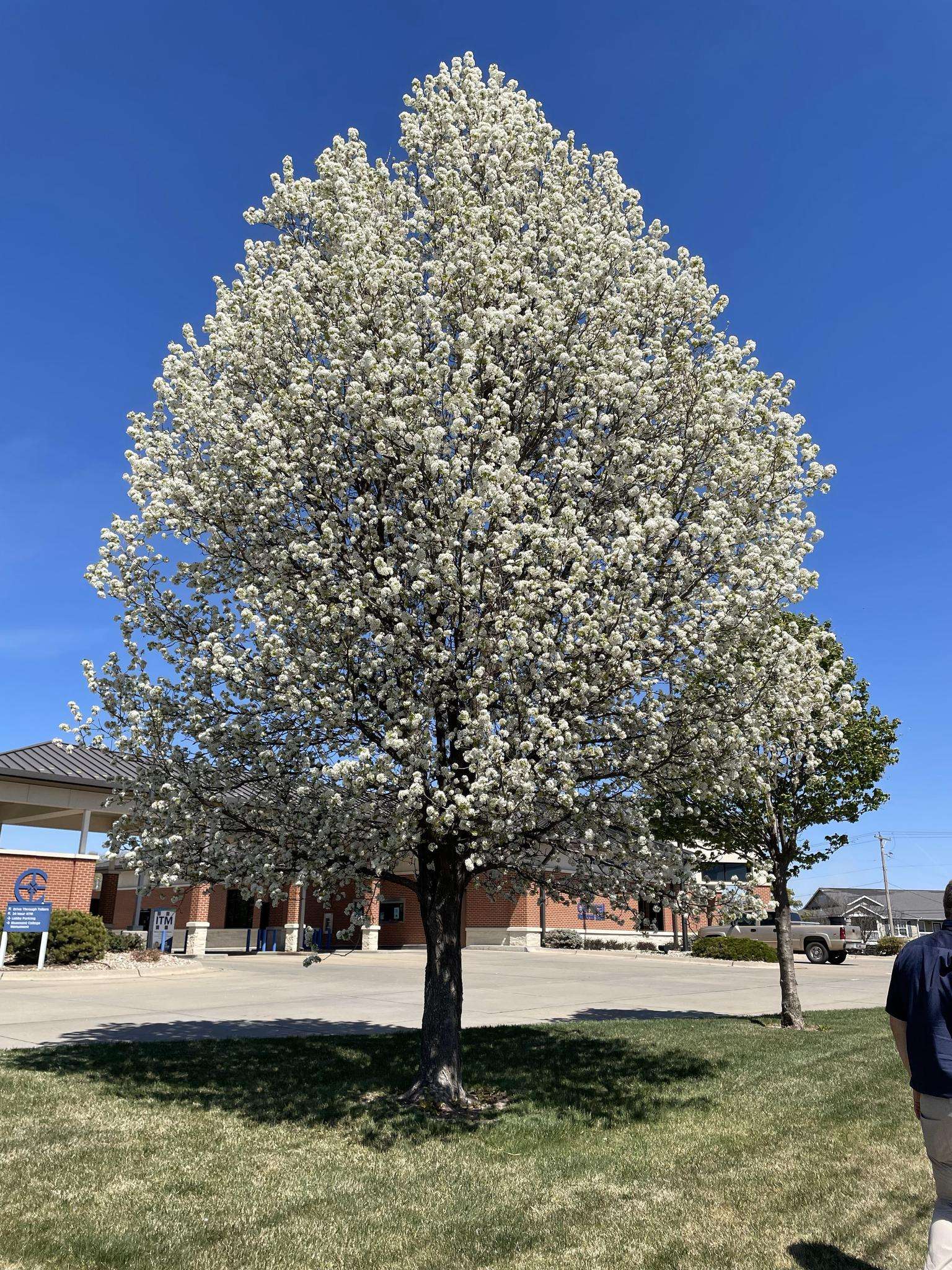
MANHATTAN, Kan. — Kansans who remove invasive Callery pear trees from their property will have an opportunity this spring to receive a free native replacement, as part of a statewide tree buyback initiative scheduled for May 2026.
The program, coordinated by the Kansas Forest Service in partnership with local extension offices and other organizations, is aimed at reducing the spread of Callery pear trees — a fast-growing but invasive species known for its weak structure and aggressive reproduction.
Residents who participate must provide proof that a Callery pear tree has been removed from their property. Eligible documentation includes a before-and-after photo showing the tree standing and the remaining stump, or a receipt from a certified arborist confirming removal. Trees removed in either 2025 or 2026 qualify for the program.
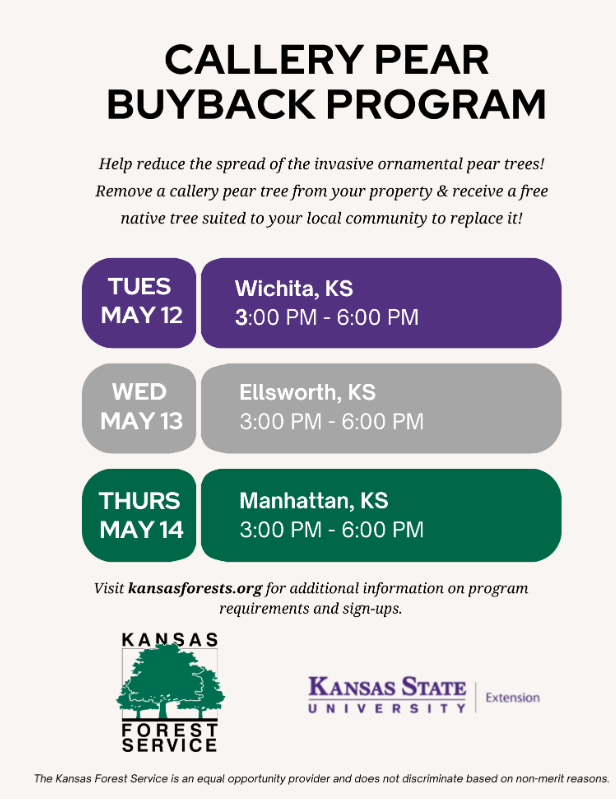
While the initiative offers a free replacement tree, it does not cover the cost of removing the invasive species. Officials encourage residents to work with Kansas Arborist Association or International Society of Arboriculture-certified professionals to safely complete removals.
The program applies to Callery pear (Pyrus calleryana) and several of its common cultivars, including Bradford, Cleveland Select and Aristocrat varieties. These trees, once widely planted for ornamental use, have become problematic due to their tendency to spread rapidly and outcompete native vegetation.
Participants who meet program requirements will receive a native tree species suited to their region, with availability varying by location. Species offered in 2026 include bur oak, Kentucky coffeetree, eastern redbud, serviceberry and Sargent crabapple. Trees will be distributed on a first-come, first-served basis, and organizers say they will attempt to match participant preferences when possible.
The initiative is supported through funding from Evergy, with additional in-kind contributions from Forrest Keeling Nursery. Event logistics are being coordinated by the Kansas Forest Service in collaboration with Riley County Extension, Sedgwick County Extension and the Midway Extension District.
Organizers say the effort is part of a broader push to restore native ecosystems and encourage more sustainable landscaping practices across Kansas.