


MARC JACOBS
Hutch Post
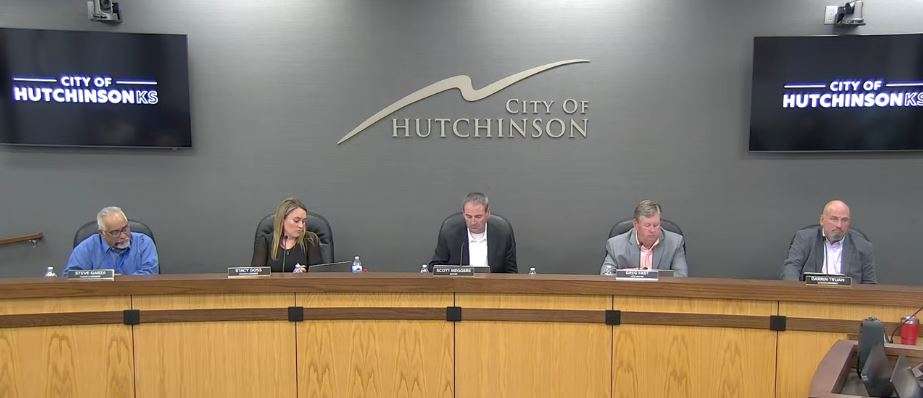
The Hutchinson City Council on Tuesday approved action on a long-vacant north Hutchinson property, delayed a proposed airport signage project for further review and heard details on a potential large-scale water reuse project aimed at reducing potable water consumption in Carey Park.
One of the most significant actions of the evening involved the property at 2100 North Jackson Street, which city officials say has remained in violation of city codes for years.
Following a continued public hearing, council members unanimously approved a resolution declaring the structure unsafe and dangerous and ordering the owner to either repair or demolish the building within 60 days.
Building Official Jason Lady told council members the property has been a recurring nuisance and compliance issue dating back to at least 2019, with multiple inspections and unresolved violations over the years.
Lady said the city had worked extensively with the property owner, including on-site meetings and permit approvals for selective interior demolition work, but no substantial progress had been made.
“This is still a continued public nuisance, which attracts crime, homelessness, visual blight, and then also has reinvestment effects on the goals in the local community,” Lady said during the meeting.
According to city staff, permits issued for interior work expired earlier this year without inspections or completed improvements. Officials also said the structure had continued to deteriorate since the original hearing in August 2025.
Council members also discussed a proposal from Airport Director Alex Singh to reallocate previously budgeted capital improvement funds toward a new signage project at Hutchinson Regional Airport.
The proposal included replacing aging airport signs and installing a new digital display sign near Fourth Avenue and Airport Road. Singh said the project would improve the airport’s visibility and public image while replacing damaged and outdated signage.
However, several council members requested additional public input and competitive bids before moving forward. The council ultimately agreed to revisit the proposal at a future meeting after further discussion with the airport advisory board and additional pricing information.
Another major presentation focused on a proposed water reuse initiative involving treated wastewater from the city’s wastewater treatment plant.
City utilities and parks officials outlined plans to pipe treated non-potable water nearly three miles to Carey Park, where it could be used to irrigate the golf course and other green spaces.
Officials estimated the golf course alone currently uses more than 42 million gallons of potable water annually for irrigation.
Utilities Director David Gwinn said the project would help reduce demand on the aquifer while positioning Hutchinson ahead of future statewide water reuse initiatives.
“We’ve already pumped it out. Let’s see what else we can do with it,” Gwinn said during the presentation.
The proposal could also include expanded recreational amenities in Carey Park, including additional walking trails, water access and possible future boating opportunities.
Staff said the city is pursuing state revolving loan funds and federal grant opportunities that could significantly offset project costs.