



MARC JACOBS
Hutch Post
HUTCHINSON, Kan. — Ticks and mosquitoes are creating growing health concerns for pets across Kansas this spring, according to Dr. Jon Austin of Hutchinson Small Animal Hospital, who says warmer weather and a mild winter may be contributing to an increase in tick-borne illnesses in both dogs and cats.
Austin said veterinarians are seeing more cases of diseases spread through tick bites, including a potentially fatal condition in cats known as bobcat fever.
The disease, formally known as cytauxzoonosis, is caused by a protozoal parasite transmitted by ticks that have fed on infected bobcats. While bobcats often show no symptoms, domestic cats can become seriously ill after being bitten by an infected tick.
Austin said symptoms of bobcat fever include lethargy, weakness, high fever, anemia and jaundice, which can cause a cat’s skin and gums to appear yellow. Without treatment, the disease is often fatal.
“If your cat’s hot, if your cat has a temperature, you need to talk to your veterinarian,” Austin said during the interview.
Austin emphasized that the disease is not related to cat scratch fever and only affects cats.
Dogs are also at risk from tick-borne illnesses. Austin said his clinic routinely tests dogs for heartworm disease and four different illnesses spread by ticks. One of the most common illnesses they are currently seeing is ehrlichiosis, a bacterial infection that can damage the liver and kidneys if left untreated.
Symptoms in dogs often include fever, lethargy and anemia. Austin said treatment typically involves the antibiotic doxycycline.
Austin said pet owners should pay close attention to changes in their animals’ normal routines because pets often do not show obvious signs of illness.
“You have to be able to be aware of what their routine is and what they normally do on a daily basis, and if that changes, that’s the red flag you’re going to get,” Austin said.
He said pets with fever often become extremely sluggish, stop eating or drinking and show very little energy.
Austin also warned that mosquito populations can quickly increase after rainfall, raising the risk of heartworm disease in dogs.
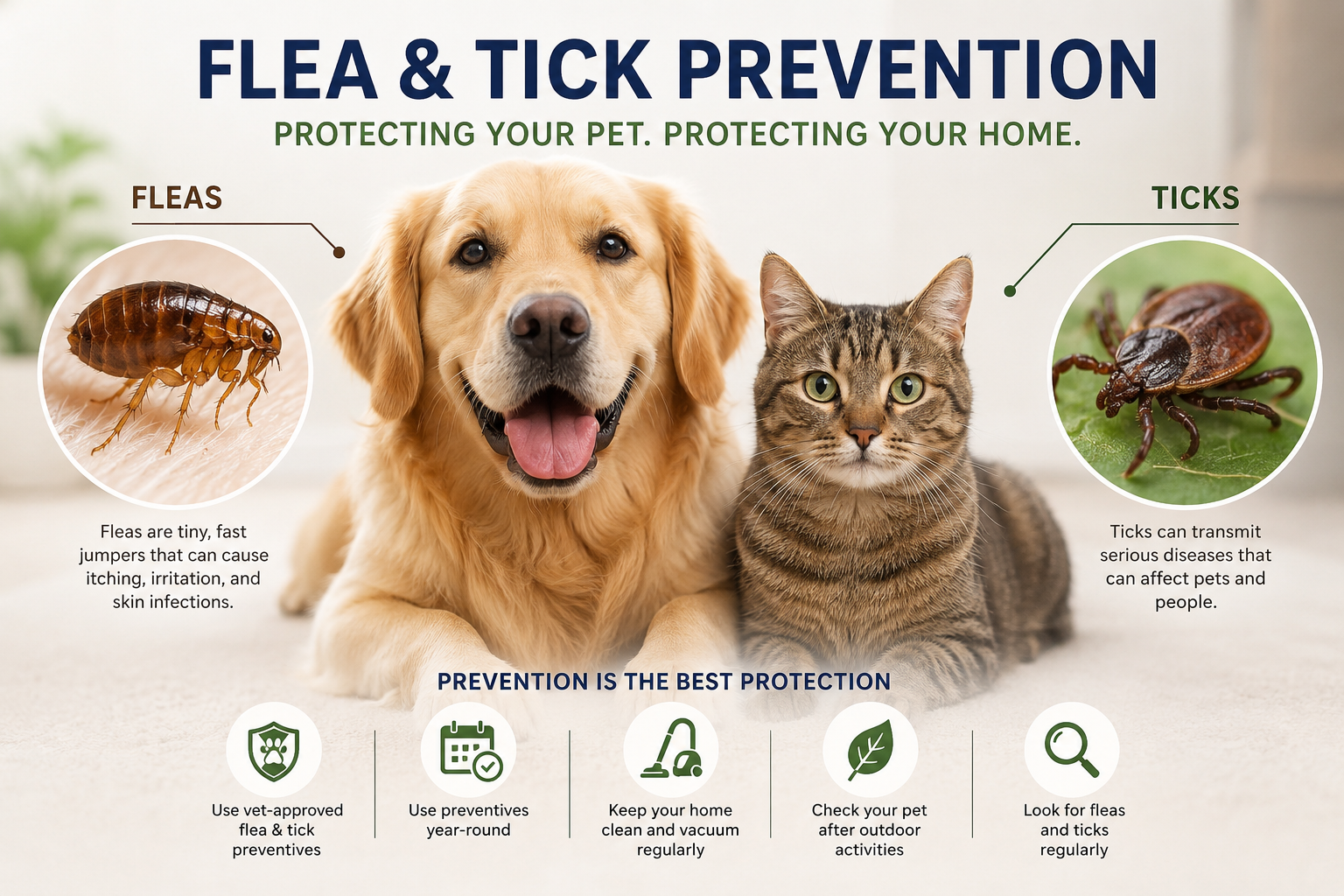
To help protect pets, Austin recommends using veterinarian-approved parasite prevention products. He mentioned several options for cats, including Bravecto, Frontline, Revolution Plus and other tick preventatives.
Austin encouraged pet owners, especially those with outdoor or barn cats, to speak with their veterinarian about the best prevention plan for the season.