


MARC JACOBSS
Hutch Post
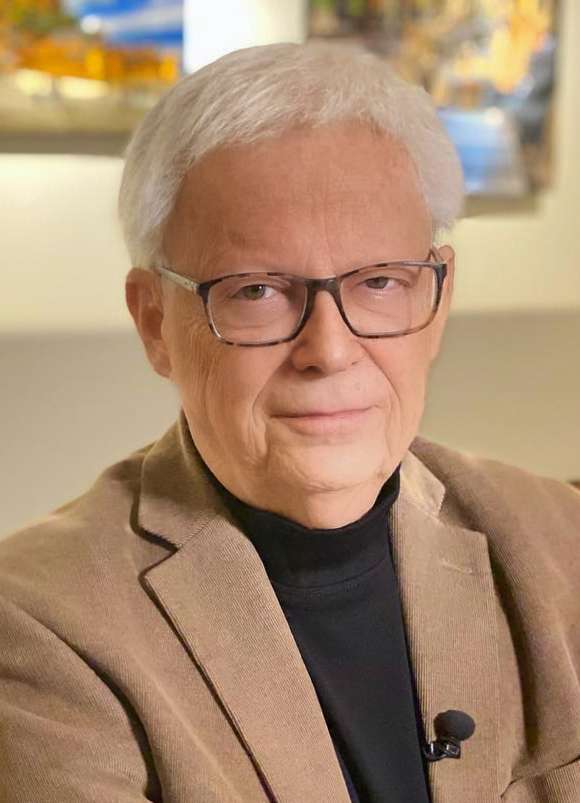
After 51 years in television news, longtime photojournalist Larry Hatteberg says he has witnessed a transformation in journalism that began with a single day in 1963.
Hatteberg, a veteran of KAKE-TV in Wichita, spoke during a lecture at Hutchinson Community College, reflecting on his career, the evolution of broadcast technology and what he calls the enduring responsibility of journalists to listen.
He began working at KAKE in May 1963. Five months later, President John F. Kennedy was assassinated.
“On that day, there was a sea change in the news business,” Hatteberg said.
Before Kennedy’s assassination, newspapers dominated the news landscape and television was often seen as secondary. But as Americans tuned in for live updates on Nov. 22, 1963, Hatteberg said it became clear that television offered something newspapers could not — immediacy.
“People found that they liked getting the news immediately,” he said. “You could feel something had changed.”
That shift, he said, contributed to the long-term decline of evening newspapers, particularly in small communities. Hatteberg lamented the disappearance of local papers, recalling a now-defunct weekly in Protection, Kansas, run by an editor who covered everything from basketball games to café conversations.
“When he died, the paper died with him,” Hatteberg said. “It’s the small communities who miss the newspaper the most.”
From film to digital
When Hatteberg entered the industry, television news was shot on 16-millimeter film. Cameras had no built-in recording devices, requiring photographers to carry separate equipment that could total more than 80 pounds.
“You’re hauling equipment,” he said. “I don’t miss that.”
Stories required film development before editing and airing, slowing the process considerably compared with today’s digital workflows.
Now, journalists can shoot and edit stories on smartphones or lightweight cinema cameras, often filing reports from their vehicles or coffee shops using Wi-Fi connections.
“It makes it quick,” Hatteberg said. “It also makes it quick and dirty.”
While he praised modern editing platforms such as DaVinci Resolve — widely used in both broadcast and film production — he cautioned against sacrificing craftsmanship for speed. He noted that expanding newscasts and digital demands leave reporters and photographers with little time to refine their work.
“In the afternoon, they have a 3 o’clock, 4 o’clock, 5 o’clock, 6 o’clock, 6:30 and 10,” he said. “You have to get your story ready for the web, TikTok, whatever social media is out there. Those guys are terribly busy.”
Hatteberg argued that investigative journalism in particular requires time and institutional support — something he believes has diminished in many modern newsrooms.
“If you’re going to do an investigative story right, you may need a year,” he said. “That’s tough in today’s environment.”
A career built on listening
Despite technological advances, Hatteberg said the core of journalism remains unchanged: connecting with people.
Over decades of producing what became known as “people stories,” he developed an approach rooted in empathy. When covering tragedies, he advised journalists to approach victims first as human beings — not with cameras rolling.
“You approach them as a human being, not as a photographer,” he said. “You tell them how sorry you are.”
He discouraged the use of handheld “stick” microphones in sensitive situations, instead favoring small wireless microphones that allow subjects to forget they are being recorded.
“People are hungry for someone to listen to them,” he said. “When they know you are interested in their story, they will pour their heart out.”
Hatteberg described himself as a “medical listener,” saying some interviews required few questions once trust was established.
“I have a doctorate degree in life from the people who let me into their lives,” he said.
Hard work and mentorship
Hatteberg’s early years at KAKE were marked by long hours and modest pay — $1.50 an hour when he started, followed by a 5-cent raise. He often worked six-day weeks and remained on call overnight.
“I loved it,” he said. “If there was a cot in the newsroom, I’d have slept there.”
He credited mentors, including station founder Martin Umansky, with shaping his career. Umansky, who held a master’s degree in journalism from the University of Missouri, was known for strict but constructive critiques.
“He attacked the problem, not the person,” Hatteberg said.
Throughout his tenure, Hatteberg was sent around the world to report, often traveling alone to shoot, write and file stories — saving the station the cost of sending a second employee.
He recalled filming in Tokyo inside the residence once occupied by Gen. Douglas MacArthur during the post-World War II occupation of Japan. The experience, he said, was surreal for a young man from Winfield, Kansas.
“That could only happen in the television business,” he said.
Continuing to learn
Hatteberg encouraged aspiring journalists to embrace lifelong learning.
“Your education is just starting,” he said. “If you don’t keep learning, the business will pass you by.”
Although he acknowledged mistakes and difficult moments, he said he would not trade his career for anything.
“When you look back, you just smile,” he said. “Be kind.”