


MARC JACOBS
Hutch Post
Developers, State Officials Highlight Data-Center Opportunities for Rural Kansas at Hutchinson Forum
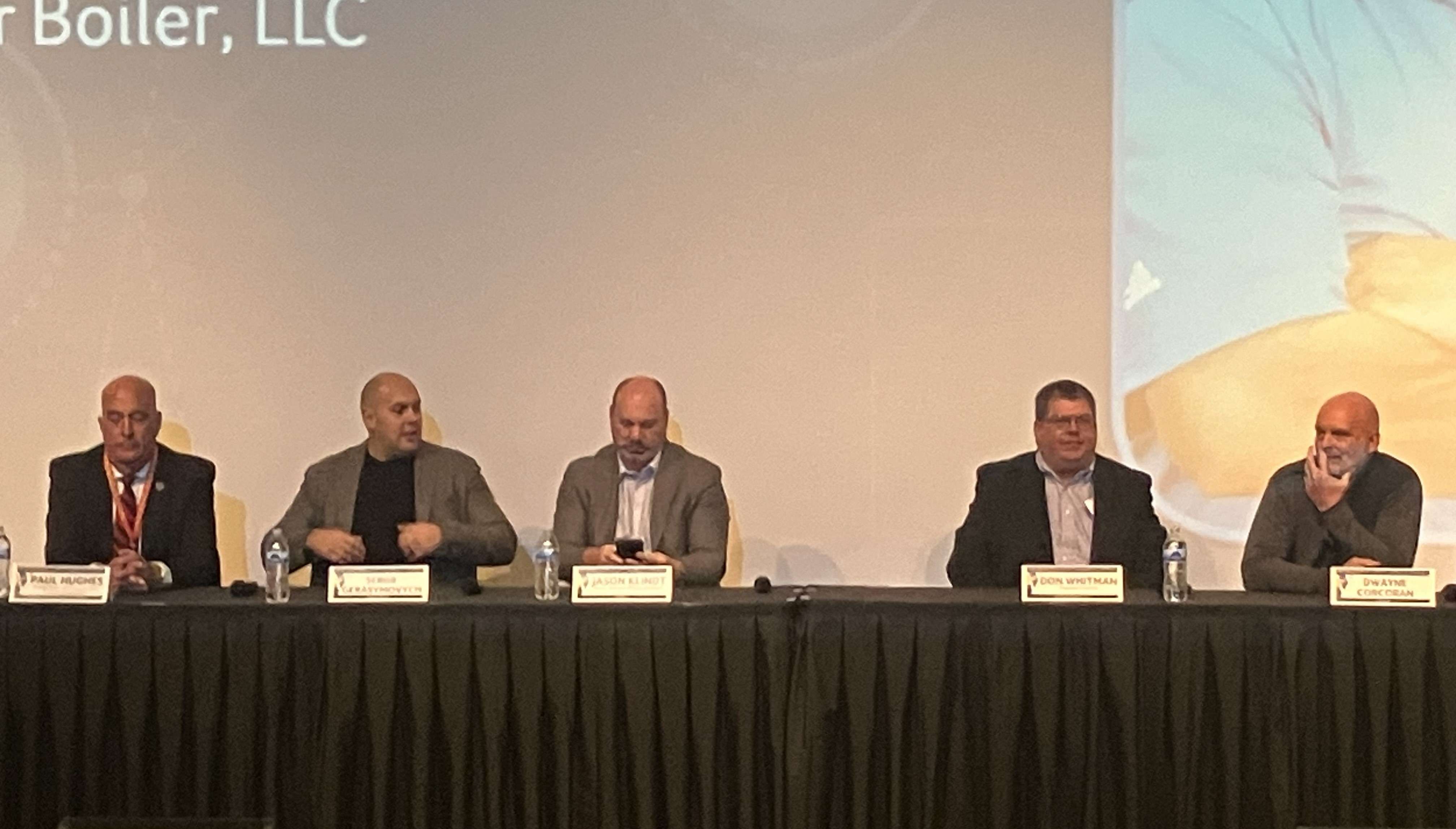
Rural communities like Reno County could play a significant role in the rapidly expanding artificial-intelligence infrastructure industry, according to speakers at a data-center development forum held Wednesday in Hutchinson.

The event brought together technology developers, state economic-development officials and utility representatives to discuss how growing demand for artificial-intelligence computing could shape economic development across Kansas.
Sergi Gerasymovych, founder of AI infrastructure developer Ramiform AI, said demand for computing power has surged as artificial intelligence becomes integrated into everyday technology.
AI data centers, he explained, are large facilities filled with powerful computers that process and store massive amounts of data, allowing users to access AI tools through phones, computers and other connected devices. The facilities operate continuously and require significant electrical power and cooling systems.
Gerasymovych said investment in AI infrastructure has accelerated dramatically since the rise of generative AI tools such as ChatGPT. He noted that major technology companies collectively committed roughly $500 billion toward AI infrastructure projects in 2025 alone, with additional growth expected in the coming years.
For communities that attract data-center development, he said the projects can create a wide range of economic benefits.
Large data-center campuses can generate thousands of temporary construction jobs and dozens to more than 100 permanent technical positions. Those jobs often pay $80,000 or more annually.
The facilities also typically operate for decades and sign long-term power agreements with utilities, generating property-tax revenue that can support schools, infrastructure and other local services.
Gerasymovych addressed common concerns raised by communities considering data-center projects, including electricity demand, water usage and grid reliability. He said many modern facilities rely on closed-loop cooling systems designed to limit water consumption and include backup power systems to prevent outages from affecting surrounding communities.
He also emphasized that data centers do not necessarily need to be located in large metropolitan areas and can be built on larger tracts of land outside city limits.
Kansas, he said, offers several advantages for developers, including available land, strong wind-energy resources and access to regional electric-transmission infrastructure.
“If a data center doesn’t come here, it will go somewhere else,” Gerasymovych said. “Communities that prepare for it have the opportunity to capture the investment, the jobs and the infrastructure that comes with it.”
Understanding the Industry

Paul Hughes, who works on large-scale development projects for the Kansas Department of Commerce, said communities considering data-center recruitment should first understand how the industry operates.
Unlike traditional economic-development projects that are measured by building size or number of employees, data centers are typically defined by the amount of electricity they consume.
Smaller facilities may operate at five to 10 megawatts of power, while “hyperscale” centers operated by companies such as Google, Meta and Oracle can require significantly more.
Kansas currently has about 20 data centers statewide, Hughes said. That number trails states such as Texas and Virginia, which have spent years building infrastructure and workforce pipelines designed to attract the industry.
However, interest in Kansas has increased recently as the state upgrades its electric-transmission system and adopts policies aimed at attracting data-center investment.
Hughes pointed to Senate Bill 98, which provides a sales-tax exemption for equipment used in qualifying large facilities and created an intelligence-fusion process designed to review potential operators and protect the state’s electric grid.
Water consumption is often one of the first concerns raised when communities evaluate potential projects, Hughes said. While traditional evaporative cooling systems can require several million gallons of water per day for a large facility, newer air-cooled and liquid-cooling technologies can reduce those needs significantly.
Construction of a data center can temporarily boost local economies through construction employment and spending at hotels, restaurants and other businesses. Once operational, Hughes said the facilities typically employ fewer workers but offer highly technical positions paying roughly $60,000 to more than $100,000 annually.
He added that Kansas law requires developers of large projects to pay for the electric-infrastructure upgrades needed to serve their facilities, meaning those costs cannot be passed on to residential customers.
Hughes encouraged communities to plan ahead by identifying industrial areas that could accommodate large projects and working with utilities to understand where power capacity exists. The Kansas Department of Commerce also offers free cost-benefit analyses to help communities determine whether a proposed project would provide a positive economic impact.
“Sites that meet all the requirements for data centers are difficult to find,” Hughes said. “Communities ultimately decide whether they want to pursue them.”
Rising energy demand
Growing interest from data centers and other large industrial users is also reshaping energy planning across Kansas and the Midwest.
Jason Klindt, senior director of external affairs for Evergy, said requests from companies seeking large amounts of electricity have increased sharply in recent years.
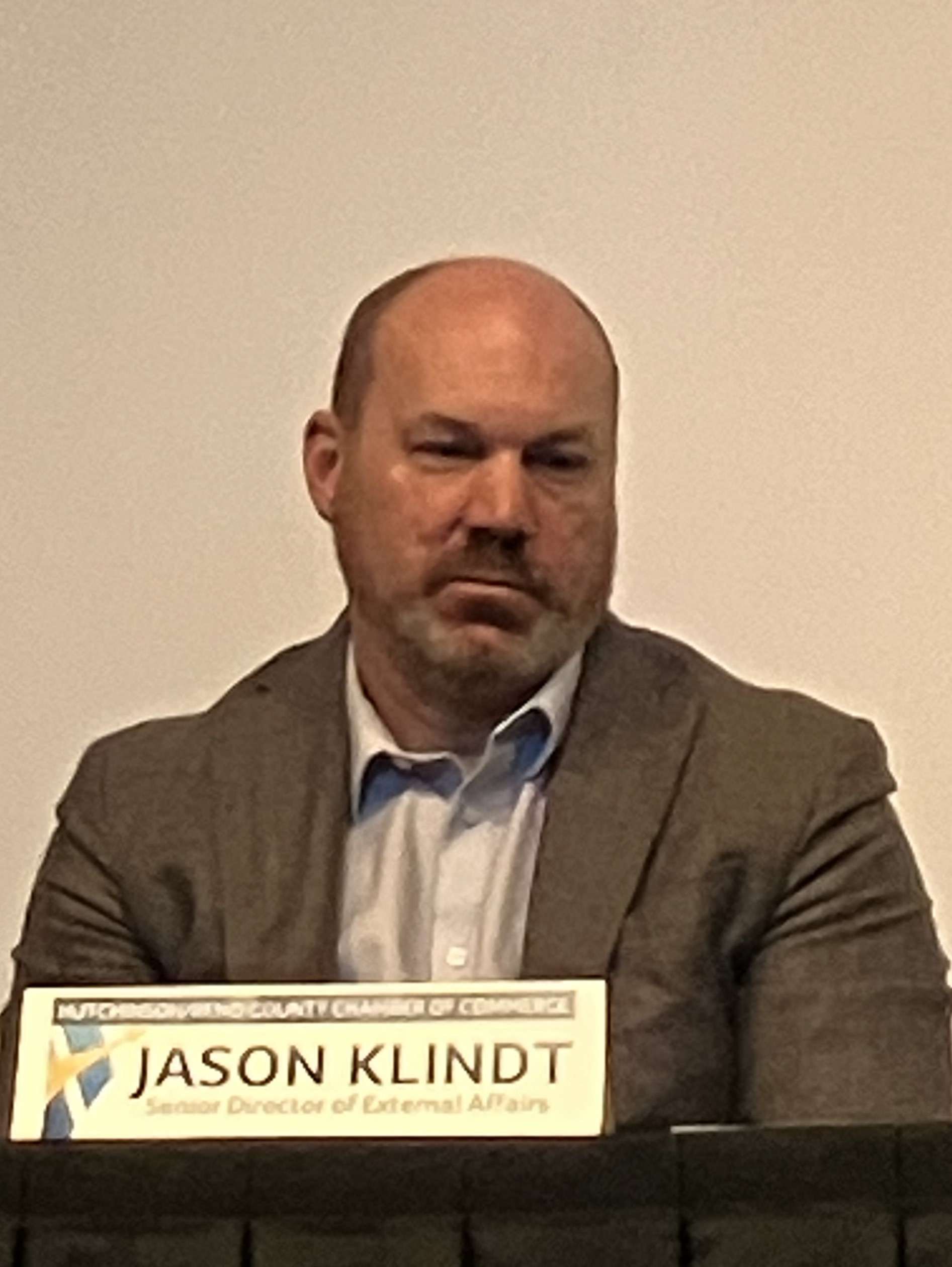
Projects requiring at least 10 megawatts of power have doubled annually since the early 2000s, he said, reflecting broader economic shifts such as advanced manufacturing, semiconductor production and companies relocating supply chains to the United States.
“We’re seeing more and more large users,” Klindt said. “What used to be a rare project is now something we’re tracking constantly because of the number and size of requests.”
Evergy serves approximately 1.5 million residential customers, 200,000 commercial customers and about 6,100 industrial users across Kansas and Missouri. Hutchinson and Reno County are part of the utility’s Kansas Central service area.
Klindt said the electric industry is undergoing a major transition. While coal once dominated Evergy’s power portfolio, the company now relies on a mix of resources that includes wind, natural gas and nuclear power generated at the Wolf Creek station near Burlington.
Maintaining a diverse portfolio is critical for reliability, he said, noting that severe winter storms have affected nearly every type of energy source.
“We had problems with nearly every fuel type during winter storms,” Klindt said. “That’s why it makes sense to have a mix of resources rather than relying on one.”
Evergy currently has about 10 gigawatts of potential projects in its development pipeline — roughly equal to the electricity needed to power the entire Evergy system today.
To prepare for that demand, the company is expanding generation capacity with new natural-gas facilities in Kansas and additional solar projects.
Klindt said large power users such as data centers can also generate significant revenue for communities through franchise fees, which cities collect as a percentage of electricity sales.
“These projects can generate tens of millions of dollars in new revenue for cities through the franchise fee alone,” he said.
To protect existing customers from higher costs, Evergy recently implemented a special “large load” tariff for customers requiring 75 megawatts or more of electricity. Those customers pay premium rates that are 15 to 20 percent higher than standard industrial rates and commit to long-term contracts lasting up to 17 years.
According to Klindt, the additional revenue helps offset system costs and reduce pressure on rates for residential and small-business customers.
“Those large users are paying a premium, and that helps protect everyone else on the system,” he said.
Speakers at the forum said the growing demand for digital infrastructure is likely to continue reshaping economic-development strategies nationwide — and could create new opportunities for rural and mid-sized communities willing to prepare for the industry.