


MARC JACOBS
Hutch Post
HUTCHINSON, Kan. — Local veterinarians are encouraging livestock owners and pet owners to stay alert as concerns grow over the spread of the New World screwworm, a destructive parasite that has recently been detected in several cases near the U.S.-Mexico border.
During a recent interview, Dr. Erica Miller and Dr. Logan Druecker of Apple Lane Animal Hospital discussed the threat posed by the parasite and why agricultural producers and pet owners should be aware of the warning signs.
The New World screwworm is spread by a fly that lays its eggs in wounds or body openings of warm-blooded animals. While the parasite was eradicated from the United States in the 1960s, recent cases reported in Texas and New Mexico have renewed concerns among veterinarians and federal animal health officials.
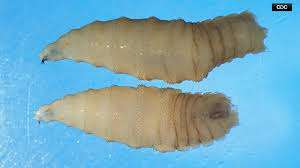
According to Dr. Miller, the danger comes not from the fly itself, but from the larvae that hatch from its eggs. Unlike common maggots that feed on dead tissue, screwworm larvae consume living tissue, causing severe wounds that can rapidly worsen if left untreated. In severe cases, infestations can be fatal.
The parasite primarily affects livestock such as cattle, but veterinarians emphasize it can infest any warm-blooded animal, including goats, dogs, cats and even humans. One recent case involved a dog that had traveled with its owner to Mexico before being diagnosed in Texas.
Dr. Druecker explained that the primary method used to control and eradicate screwworm populations is known as the Sterile Insect Technique. The process involves raising male screwworm flies, sterilizing them with low-dose radiation and releasing them into affected areas. Because female screwworm flies typically mate only once, mating with sterile males prevents future generations from developing and helps collapse the population.
Federal and state animal health officials closely monitor suspected cases. When veterinarians encounter larvae in wounds that appear suspicious, samples are collected and submitted for testing. If a case is confirmed, quarantine measures and additional monitoring are implemented, often including the release of sterile flies in surrounding areas.
Veterinarians are advising animal owners to carefully inspect pets and livestock for wounds that are not healing properly, unusual drainage, or signs of larvae around eyes, ears, umbilical cords or other body openings. Long-haired working dogs and farm animals may be especially difficult to monitor because wounds can go unnoticed.
The issue comes at a time when many livestock producers are preparing for county fairs, 4-H exhibitions and the Kansas State Fair, events that bring animals from across the region together. Dr. Miller expects veterinarians and event officials to be especially vigilant in conducting health inspections before animals travel or are exhibited.
While no cases have been confirmed in Kansas, both veterinarians stressed that early detection remains the best defense against the parasite's spread.
"If you see wounds that aren't healing normally or notice larvae in a wound, contact your veterinarian right away," Miller said. Early diagnosis and reporting can help prevent the parasite from becoming established in new areas.