


MARC JACOBS
Hutch Post
HUTCHINSON, Kan. — For more than two decades, a unique partnership between the Kansas Department of Corrections and the federal Bureau of Land Management has given incarcerated residents at the Hutchinson Correctional Facility an opportunity to train wild horses while learning valuable life skills that can help prepare them for life after prison.
The facility's wild horse training program currently employs 13 residents who work daily with horses gathered from public lands in the western United States. While the program focuses on gentling and training horses for adoption and public service, participants and staff say its greatest impact may be on the people involved.
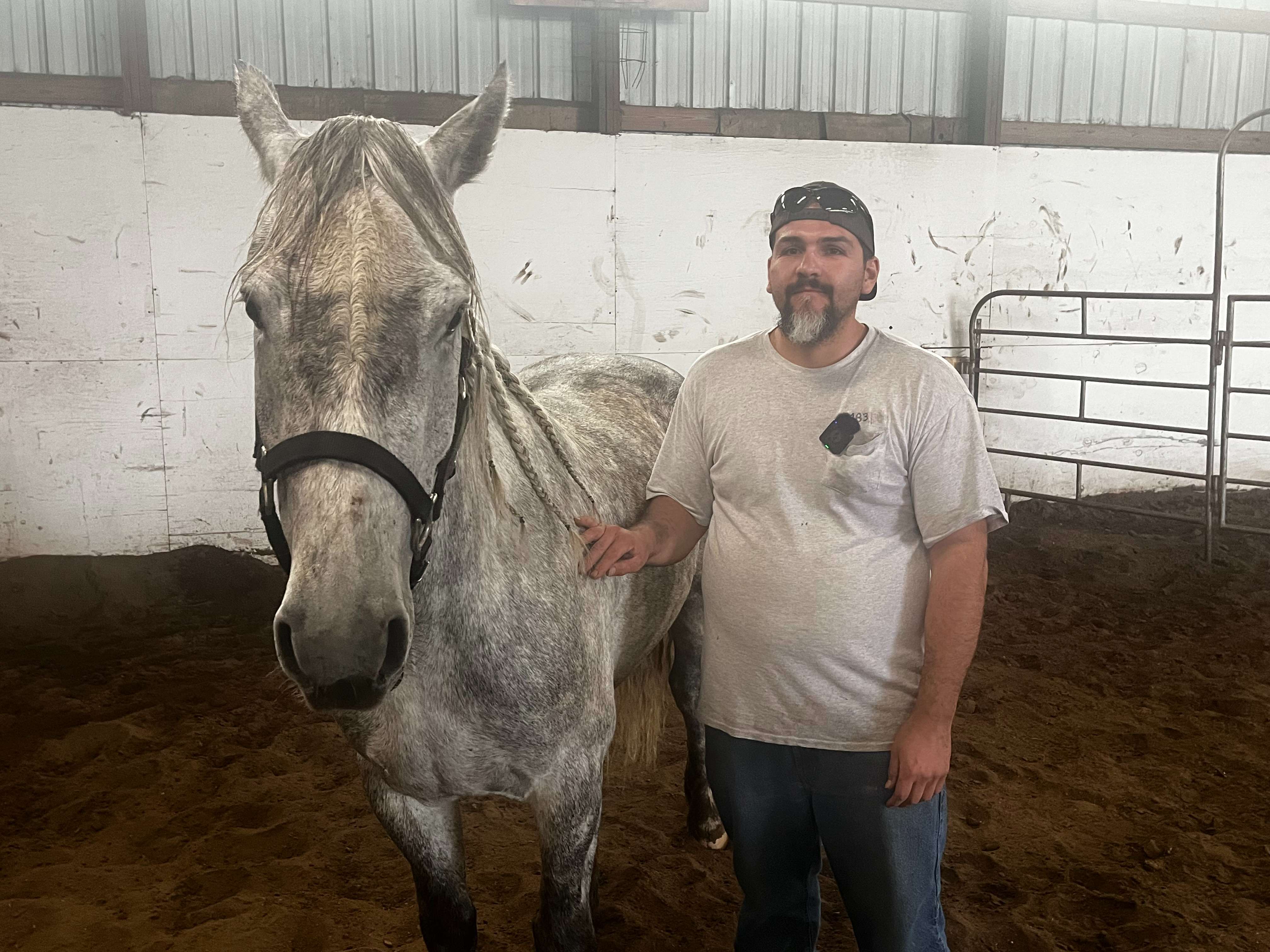
For resident Curtis Garcia, the program offers a sense of calm and purpose that stands apart from daily prison life.
"It's definitely easier than being in the dorms and being around everybody else," Garcia said. "You can just be alone with the horse and learn whatever it is you want to learn."
Garcia has worked in the program for more than two years and said the experience has taught him lessons that extend far beyond horsemanship.
"I get to play with the horses, and it's quite relaxing," he said. "There ain't nothing that beats it, for sure."
One of those lessons is patience.
Garcia is currently helping train a horse that arrived at the facility less than a month ago. Developing trust with a newly arrived animal takes time and consistency, he said.
"You definitely have to just go slow and take your time and have a lot of patience," Garcia said. "You've got to move slow and be cautious because he's just as wary of you as we are of him."
Rather than forcing progress, Garcia said successful training depends on building a relationship.
"You've got to gain his trust," he said. "It's really all about trust."
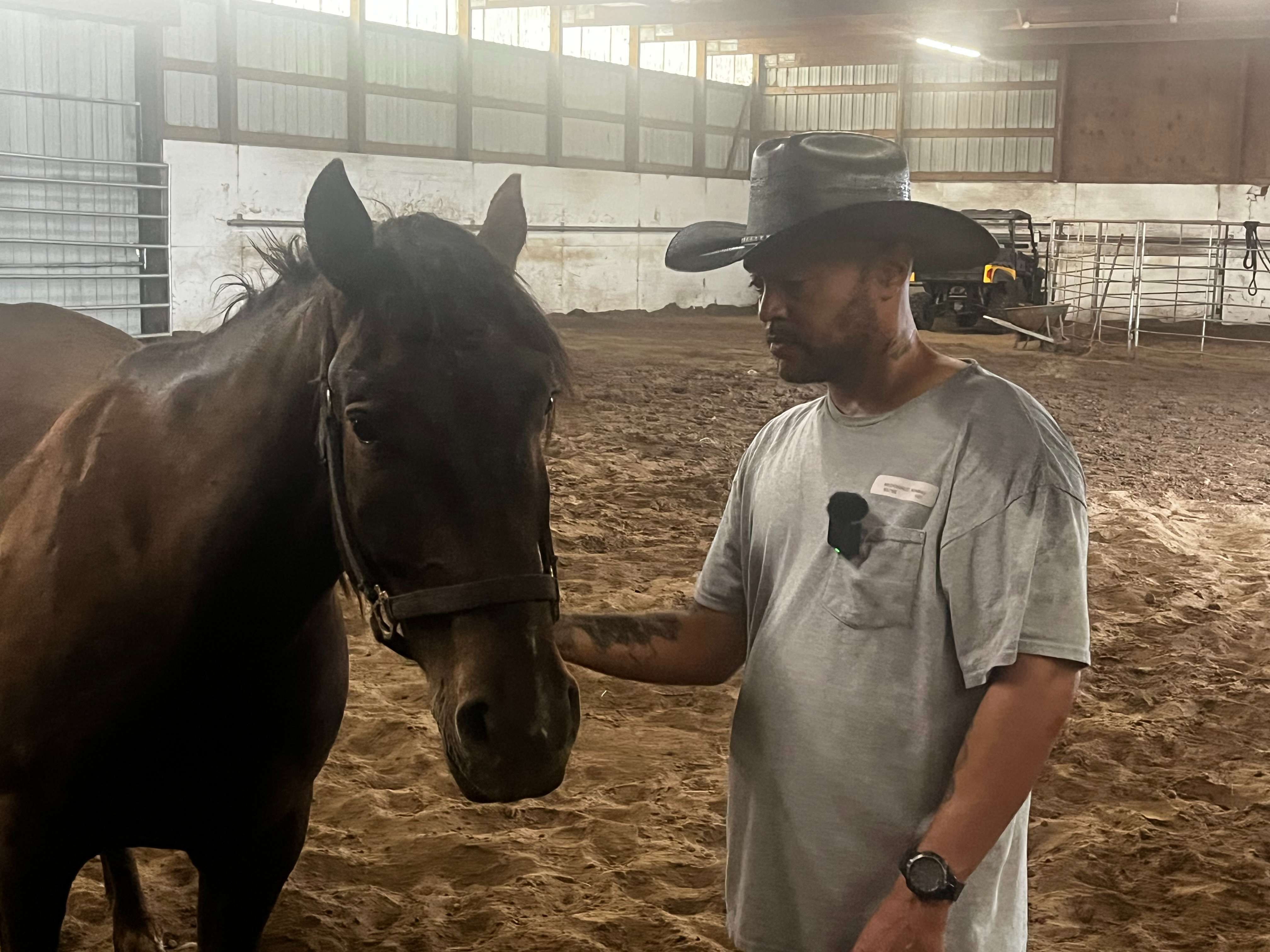
For fellow participant Andray McDonald, the horse program has become a form of therapy.
McDonald, a trainer and rider, first joined the program in 2021 before leaving to work in private industry. He returned about three months ago and now spends weekdays working with horses from early morning through early afternoon.
"It helps me with my mental health. It's like therapy for me every day," McDonald said. "I get to come out here, and it's a relaxation from prison, the redundancy of prison every day doing the same thing."
McDonald estimates he has worked with nearly 20 horses during his time in the program.
Training horses requires patience, a trait he said incarceration has helped him develop.
"A lot of patience, and that's something I learned from prison," McDonald said. "You have to be patient waiting on one day to go home."
He said horses often mirror the attitudes and emotions of the people working with them.
"The horse feeds off your attitude and your emotions," McDonald said. "Everything you put into the horse is what you're going to get out of the horse."
The program receives groups of untrained wild horses directly from the Bureau of Land Management. Staff and residents evaluate each animal's temperament before beginning the training process.
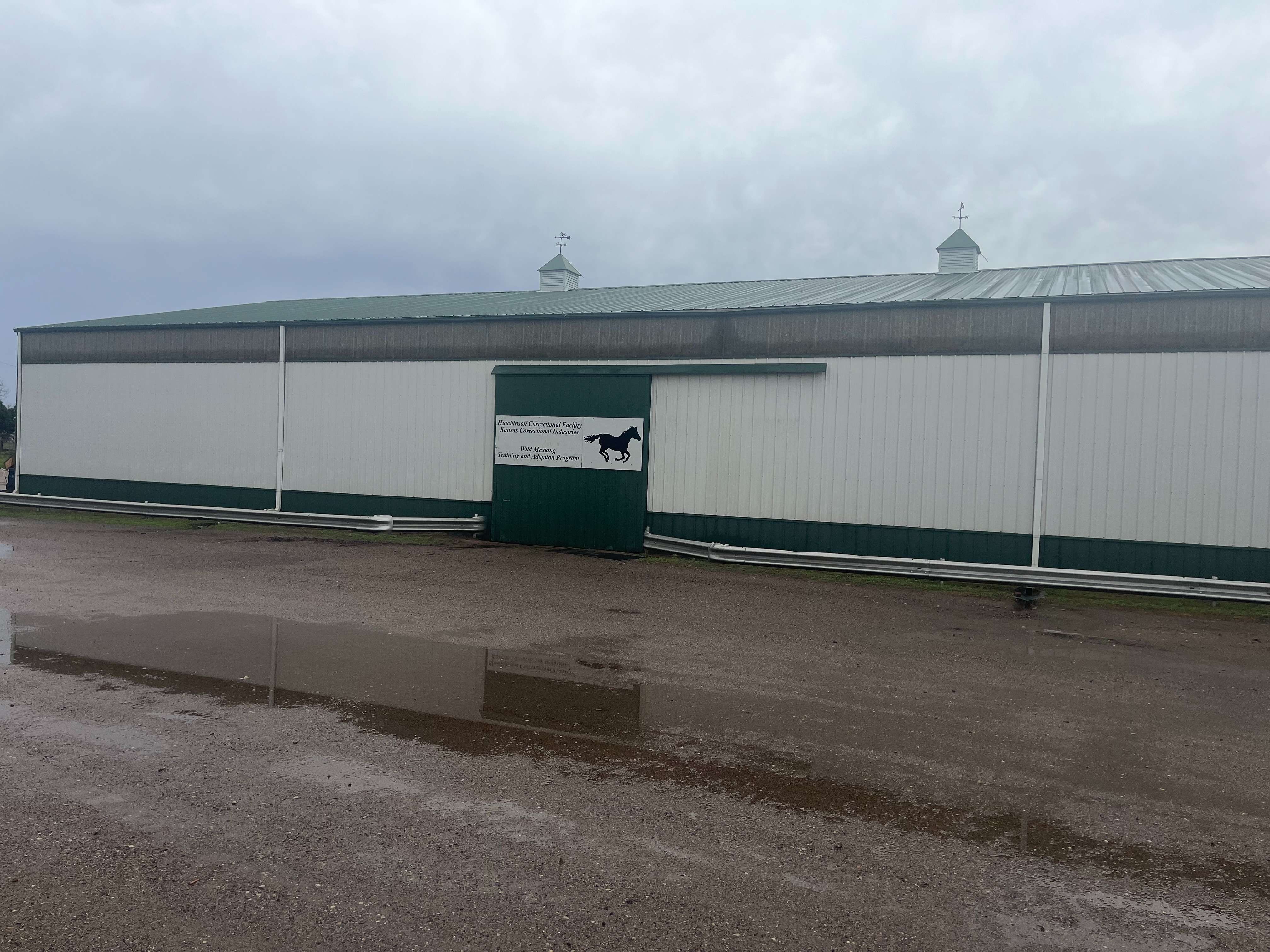
"We just get them, they send us a load of horses," said Corrections Manager II Stephen Dixon. "We'll kind of look at how they move and their general temperament and demeanor and see which ones would do well coming up front and getting gentled down and trained up."
The facility currently houses about 153 horses, though that number fluctuates as horses are adopted, sold or transferred.
Many of the horses eventually find homes with private adopters, while others are selected for government service. Some have gone on to work with law enforcement agencies in mounted patrol and search-and-rescue roles.
Dixon said horses destined for law enforcement work often undergo specialized training to prepare them for unpredictable situations, including exposure to obstacles such as tarps, mattresses and other unusual objects.
The program also serves as a workforce development opportunity for participants.
Residents interested in joining must apply and are evaluated on factors including prior experience with animals, farming backgrounds and their desire to improve themselves.
"What we're looking for is guys that want to better themselves," Dixon said. "We can always help people move up and give themselves better opportunities."
Over the years, Dixon said he has seen dramatic personal changes among participants.
"It's really interesting to see the changes that can go on with the residents just working with the horses," he said.
He recalled one participant who struggled with anger and communication before entering the program.
"Just working with the horses changed the whole way that he started to talk to people," Dixon said. "Usually he would just jump right into a disagreement, but then once he started working with horses, he would stop, take a step back, calm down and come back."
Facility officials say the program helps residents develop responsibility, discipline, communication skills and marketable experience that can lead to employment after release. Some former participants have found work in agriculture and horse-related industries, while others have returned to adopt horses from the program.
"The program not only benefits the horses, but just like any program that we have in the prison system here at Hutchinson Correctional Facility, it teaches these men traits and skills that they may not have," Dixon said. "So it produces a better man for society."
Despite its long history, the future of the program remains uncertain.
In January, the Bureau of Land Management informed Hutchinson Correctional Facility that it planned to discontinue the wild horse training program after the existing contract expired in February. At the time, prison officials said they were told the program had been defunded.
Following news coverage highlighting the program's impact on both the horses and the incarcerated men who train them, the federal government extended the contract through the end of May, allowing operations to continue while a long-term solution was explored.
Now, facility officials are seeking to secure the program's future.
Jordan Bell, director of security and public information officer for Hutchinson Correctional Facility, said the prison is applying for a new five-year contract with the Bureau of Land Management. The agency is accepting applications from programs across the country through June 22.
Bell said officials expect to learn sometime in July whether Hutchinson's bid has been successful.
"The facility and the Kansas Department of Corrections are cautiously optimistic about getting that bid," Bell said. "The work that we've done previously with the BLM, with a partnership of almost 25 years, goes a long way with that."
The Bureau of Land Management has extended the current agreement multiple times since the beginning of the year while the bidding process moves forward.
"We're gracious that the BLM has extended our contract since the beginning of the year a couple of times and that the program is still ongoing," Bell said. "We're hoping that we have the opportunity to get that contract once again."
Participants say losing the program would affect not only those inside the facility but also the broader community that adopts and utilizes the horses.
"If it does close down, it would be a loss for the whole community," McDonald said. "Because people benefit from coming to get the horses, and it helps us in here to train them and be able to work with them."
For now, the horses continue arriving, residents continue training and facility staff remain hopeful that a program credited with transforming both wild horses and human lives will continue for years to come.