


MICAH BRAY
Special to Hutch Post
TOPEKA, Kan. — Kansas lawmakers are considering legislation aimed at preventing potentially dangerous defendants from being released from custody after being found incompetent to stand trial and not meeting the standards to be involuntarily committed.
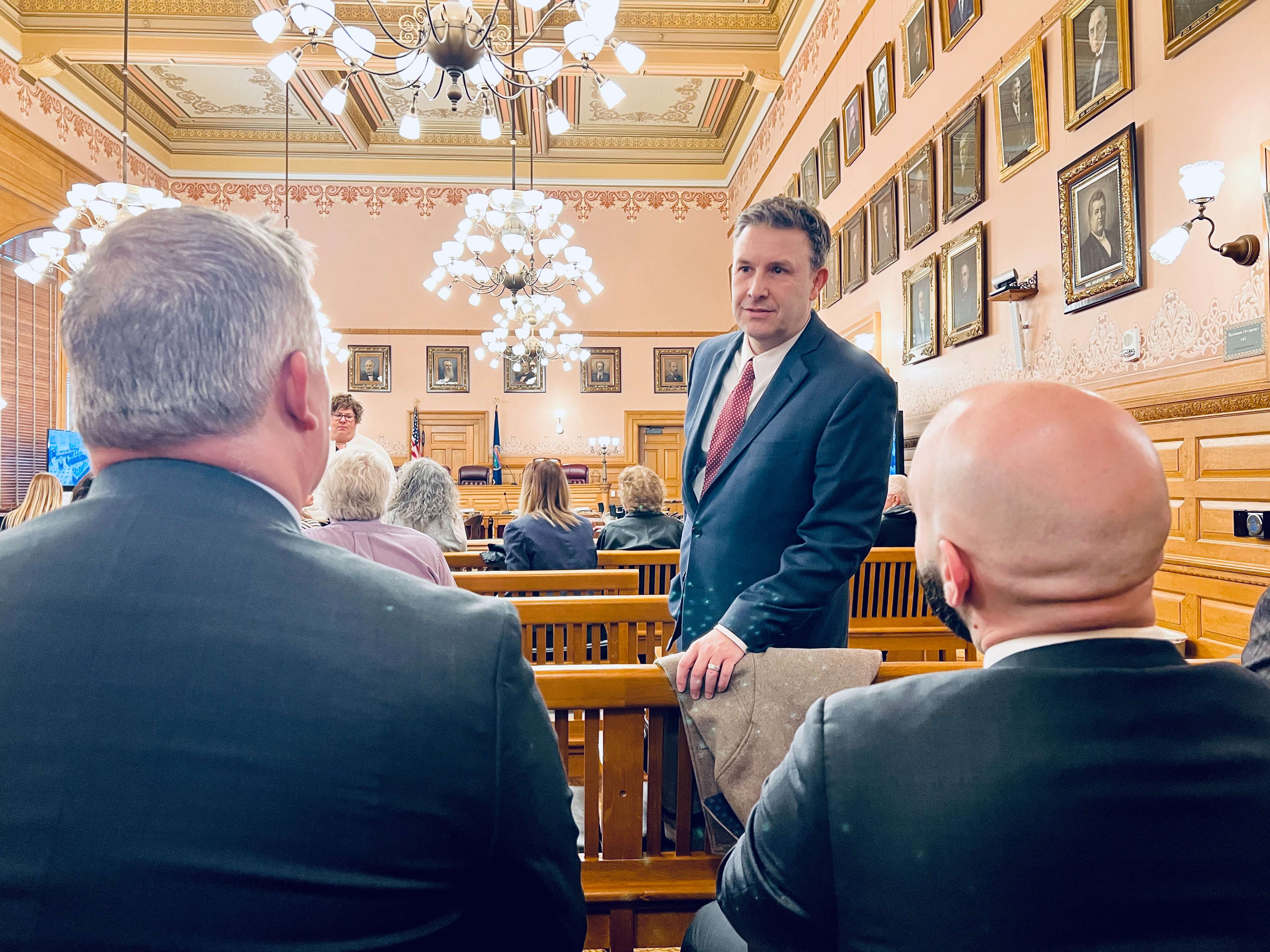
On Feb. 4, 2026, Leavenworth County Attorney Todd Thompson joined prosecutors, representatives of the Attorney General’s office, and lawmakers in testifying before the Senate Committee on Judiciary in support of Senate Bill 374. The measure would amend state criminal procedure laws governing how courts evaluate, treat, and monitor defendants ruled incompetent, including rules for inpatient and outpatient treatment, certification of competency, and involuntary commitment.
Supporters say the bill would close what has become known as the “competency loophole,” which can allow defendants facing criminal charges to be released because of gaps in existing commitment statutes. Addressing the issue has become a priority for the Kansas County and District Attorneys Association.
This bill is about putting public safety first,” Thompson said. “We have statutes that don’t always give courts the information and tools they need to keep dangerous individuals in custody to receive treatment.”
Prosecutors around the State have worked together for months to draft legislation to fix this problem. State Senator Jeff Klemp introduced the bill last week, relating to a case within his district.
The U.S. Supreme Court has found that defendants who are found incompetent to stand trial and it is not foreseeable that they will become competent can have their case dismissed. If a medical professional does not find that person to be a harm to self or others, that person cannot be involuntarily committed either. When those two things happen, a person pending serious charges could be released back to the public. Prosecutors argue that the gap creates a risk to public safety.
Supporters pointed out cases in other states where similar laws have been revised, as well as an incident in Riley County, Kansas, in which a defendant charged with attempted murder was released after being deemed incompetent and then ended up murdering someone.
“We don’t want to wait for another tragedy before we act,” Thompson said, “and we have several pending cases that this could happen if we don’t fix this loophole.”
Several prosecutors and state officials testified in favor of the bill, including Johnson County District Attorney Steve Howe, Sedgwick County Deputy District Attorney Aaron Breitenbach, Deputy Attorney General Jessica Domme of the Kansas Attorney General’s Office, and Shawnee County District Attorney Mike Kagay, who also submitted written testimony.
Supporters of the legislation say SB 374 would provide clearer legal authority for courts and mental health providers to treat defendants while protecting the public.
The bill remains under review by the Senate Judiciary Committee.