


MARC JACOBS
Hutch Post
The City of Hutchinson is moving forward with a proactive review of how large-scale data centers and utility-scale battery energy storage systems should be regulated within city zoning codes as officials work to address potential impacts tied to rapidly growing technology infrastructure.
As it stands now, Hutchinson’s current zoning regulations do not specifically define or regulate large-scale data centers or utility-scale battery energy storage systems, commonly referred to as BESS facilities. Under existing rules, those projects could potentially fall under broader commercial or industrial classifications depending on the nature of the proposal.
To address that gap, the Hutchinson City Council is considering interim zoning regulations while permanent standards are researched and developed. The proposed ordinance would formally define “Large-Scale Data Center” and “Utility-Scale Battery Energy Storage System,” require those projects to obtain a Conditional Use Permit, prohibit them in residential zoning districts and exempt smaller accessory server rooms or small-scale accessory systems from the regulations.
City officials said the interim approach is designed to ensure any future proposals receive additional public review while long-term regulations tailored specifically to Hutchinson are developed.
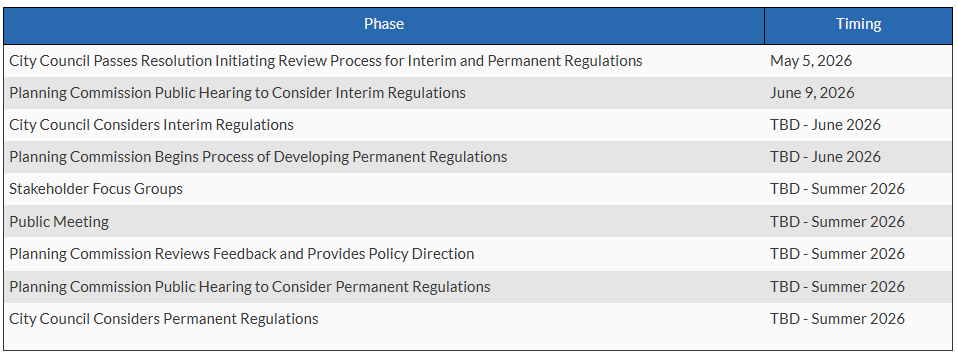
The city has outlined a tentative timeline for the review and adoption process. The Hutchinson City Council approved a resolution initiating the review process on May 5. A Planning Commission public hearing on the interim regulations is scheduled for June 9, followed by City Council consideration later in June. The Planning Commission is also expected to begin development of permanent regulations in June.
Additional stakeholder focus groups, public meetings and Planning Commission policy review sessions are planned throughout the summer before a separate public hearing on permanent regulations. Final City Council consideration of permanent regulations is also tentatively scheduled for summer 2026.
As part of the Conditional Use Permit process, developers could be required to provide information related to site design, electrical demand, utility coordination, water usage and cooling methods, fire and life safety systems, traffic impacts, noise, lighting, screening and eventual decommissioning or site restoration plans.
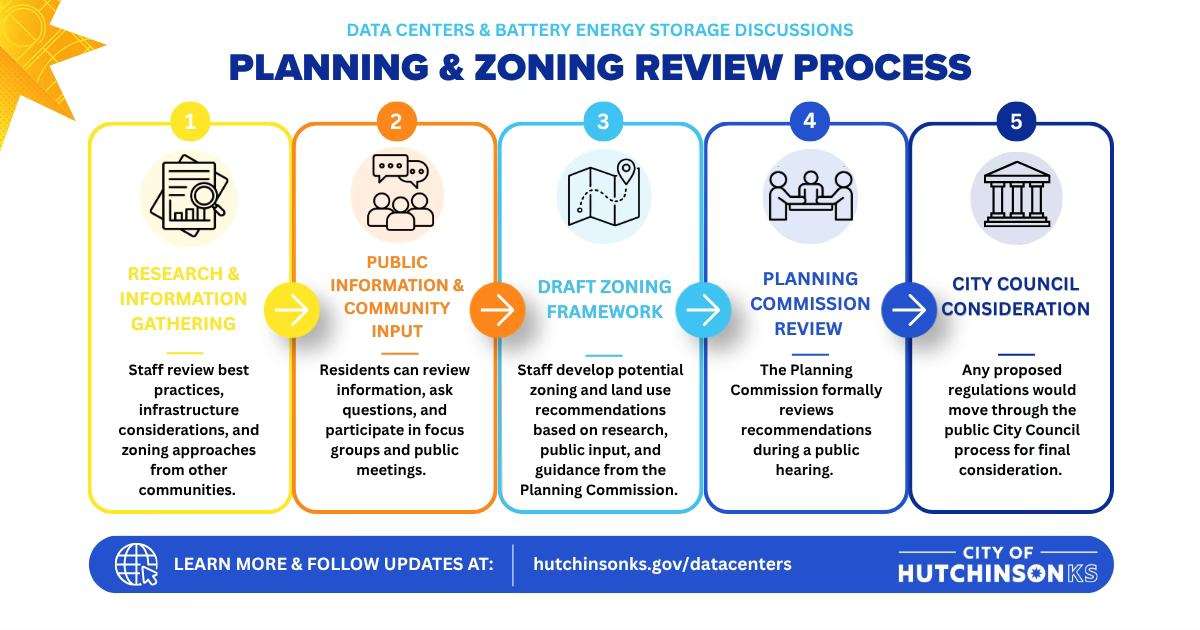
The city noted that a Conditional Use Permit process allows officials to review land uses that may be appropriate in certain areas but require additional evaluation to ensure compatibility with surrounding neighborhoods and infrastructure. The process includes public notice, opportunities for public input, review by city staff and technical departments, recommendations from the Planning Commission and final consideration by the City Council.
During the interim review period, Hutchinson plans to research how other communities regulate data centers and battery storage facilities while coordinating with utility providers, emergency services, technical staff and other stakeholders. Potential long-term regulations could address zoning districts, screening and buffering requirements, utility coordination, operational standards, fire protection and decommissioning requirements.
City officials also emphasized that public participation will be a major part of the process, including planned public meetings, stakeholder focus groups and future public hearings before any permanent regulations are adopted.
The city’s frequently asked questions section explains that large-scale data centers are facilities housing computer servers and related equipment used to store, process and transmit digital information, often supporting cloud computing, artificial intelligence and internet services. Battery energy storage systems store electricity in large battery units for later use to help stabilize the electric grid during periods of high demand or power fluctuations.
Officials said the city is reviewing the issue now because data centers and related technologies are becoming more common and can create significant demands on utilities, infrastructure and emergency response systems.