


MARC JACOBS
Hutch Post
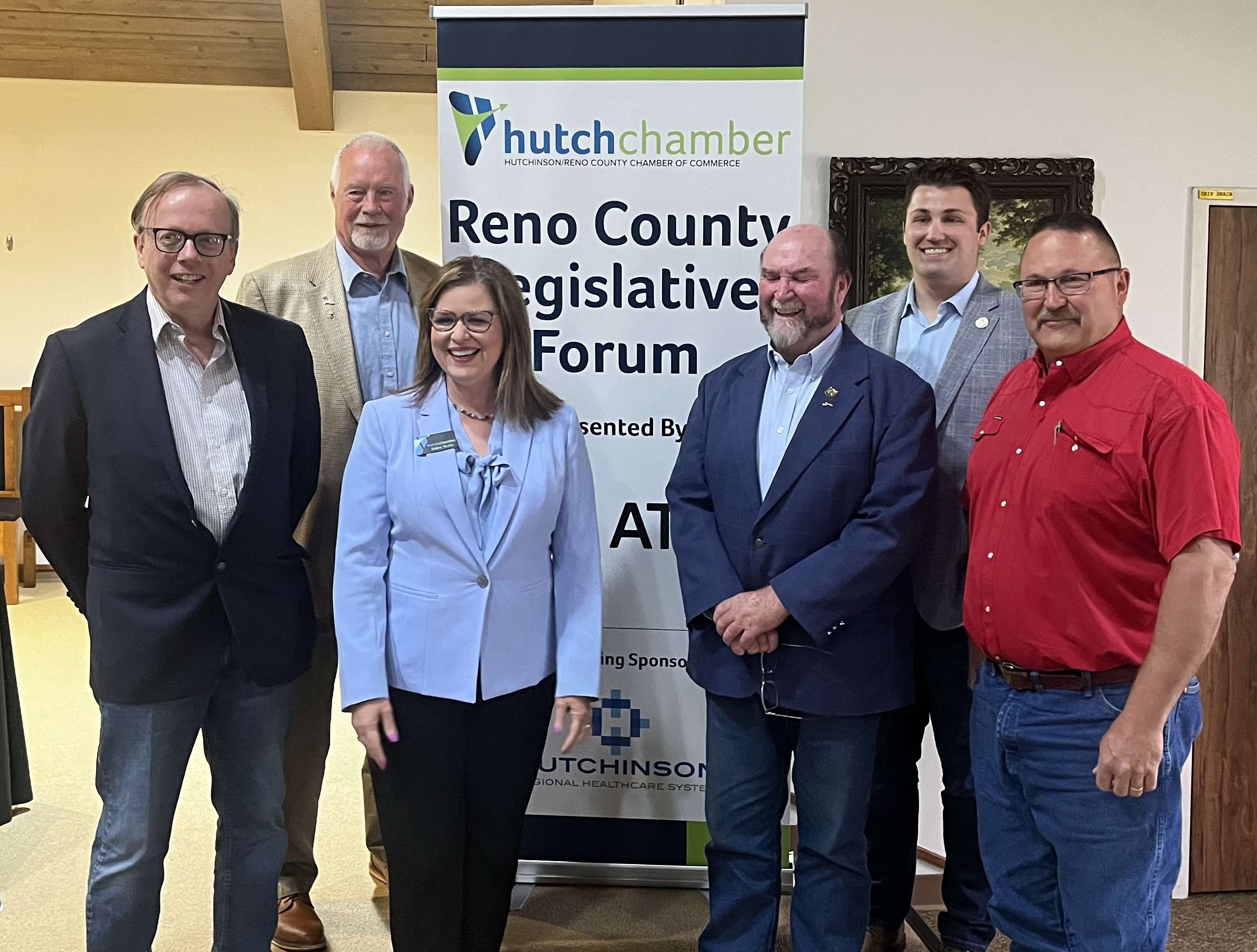
HUTCHINSON, Kan. — Property taxes, state spending, and key legislative wins dominated discussion Saturday as Reno County lawmakers, Rep. Joe Seiwert, Rep. Kyler Sweely, Rep. Paul Waggoner, Rep. Kevin Schwertfeger and state Sen. Michael Murphy met with residents for the final legislative forum of the 2026 session.
Hosted by the Hutchinson/Reno County Chamber of Commerce at The Wesley, the forum brought together area legislators to recap what many described as a historic and, at times, contentious session in Topeka.
Chamber President Debra Teufel opened the event by thanking lawmakers and sponsors, noting the session concluded earlier this month following a veto session that saw a significant number of gubernatorial vetoes and legislative overrides.
A “Historic” Legislative Session
Lawmakers pointed to the unusually high number of vetoes issued by Governor Laura Kelly, along with a large number of successful overrides, as defining features of the session.
“It was probably one of the most interesting sessions I’ve experienced,” Rep. Seiwert said, citing heightened debate, protests, and controversial policy decisions.
Despite the political tension, legislators said several meaningful bills advanced—particularly those tied to local economic development, healthcare costs, and public safety.
Housing, Healthcare, and Rural Issues Highlighted
Among the most notable measures discussed was a bill allowing Kansas Correctional Industries to partner with private developers to produce modular and manufactured housing.
Supporters say the initiative could help address workforce housing shortages in communities like Hutchinson by lowering construction costs and attracting developers to smaller markets.
Lawmakers also highlighted passage of Pharmacy Benefit Manager (PBM) reform, aimed at increasing transparency in prescription drug pricing and limiting the role of intermediaries in the pharmaceutical supply chain.
The issue has drawn attention in recent years as rural pharmacies face increasing financial pressure.
Agriculture also remained a focus, with lawmakers approving tougher penalties for theft of livestock, equipment, and other agricultural assets. One legislator described the measure as critical after cases where large numbers of cattle were stolen with limited consequences under prior law.
Water Concerns Raised
Beyond specific legislation, water resources emerged as a long-term concern, particularly in western and south-central Kansas.
Rep. Seiwert warned that declining aquifer levels and water supply challenges could pose a serious threat to the state’s future if not addressed.
“If we lose our water, we have nothing,” he said, emphasizing the need for conservation and long-term planning.
Property Taxes Dominate Forum
While lawmakers outlined several legislative accomplishments, the discussion repeatedly returned to property taxes—by far the most pressing issue raised by residents.
Legislators acknowledged that property tax bills have surged in recent years, driven largely by sharp increases in property valuations.
Data cited during the forum indicated property tax collections statewide have risen significantly faster than income or sales tax revenue in recent years.
However, lawmakers stressed that most property tax decisions are made locally, not at the state level.
“The state has a very small role in property tax collection compared to cities, counties, and schools,” Rep. Sweely noted.
Still, several state-level proposals were introduced this session to curb growth, including:
- A constitutional amendment proposal addressing property tax limits
- Legislation allowing citizen protest petitions if local tax increases exceed inflation
- Efforts to enforce “revenue neutral” budgeting practices
Despite multiple approaches, lawmakers acknowledged that no comprehensive solution ultimately passed.
“It’s an incomplete grade,” Rep. Schwertfeger said. “We made progress, but there’s more work to do.”
Debate Over Exemptions and Spending
Lawmakers also discussed the role of tax exemptions and government spending in driving property tax burdens.
Some argued that widespread exemptions—ranging from economic development incentives to renewable energy projects—shift more of the tax burden onto homeowners and small businesses.
Others emphasized the need to control local government spending, noting that rising valuations can automatically increase revenues for taxing entities without requiring voter approval.
Revenue neutral policies, which require public hearings or votes to exceed prior-year revenue levels, were highlighted as one potential solution.
Budget Veto Sparks Controversy
Another major topic was the state budget and the governor’s decision to veto portions of it, including funding tied to legislative operations.
Lawmakers said the veto effectively eliminated funding for the entire legislative branch, forcing them to override in order to maintain operations and pay staff.
Critics, however, questioned pay increases included in the budget, particularly a 4.4% raise for legislative employees compared to smaller increases for other state workers.
Legislators defended their votes, saying the override was necessary to keep government functioning rather than a direct endorsement of pay raises.
Looking Ahead
As the forum concluded, lawmakers agreed that while progress was made, several major issues remain unresolved—particularly property tax reform.
Many indicated that interim committees will continue studying the issue ahead of the 2027 session, with expectations that new proposals will be introduced.
The event wrapped up with additional audience questions, underscoring continued public interest in taxes, spending, and the direction of state policy heading into the next legislative cycle.