


RAFAEL GARCIA
K-State News and Communications Services
In an age where fast-moving, low-flying unmanned drones can spray crops miles away from a base station, Lukas Koch emphasizes that farmers still get their boots dirty.
Drones are simply the next frontier in agricultural technology, Koch said. Decades of advancements in farming technology, techniques, and tools enable one farmer to accomplish work that, less than a century ago, required dozens of people to do.

But it's still a farmer's calloused hands that sort through soil, steer a tractor's wheel or guide a drone's controls, highlighting the need to find the best ways to bring innovations into the hands of farmers.
That's why Kansas State University's Institute for Digital Agriculture and Advanced Analytics, or ID3A, is partnering with Kelly Hills Unmanned Systems to develop the next generation of precision agriculture alongside those who will implement it.
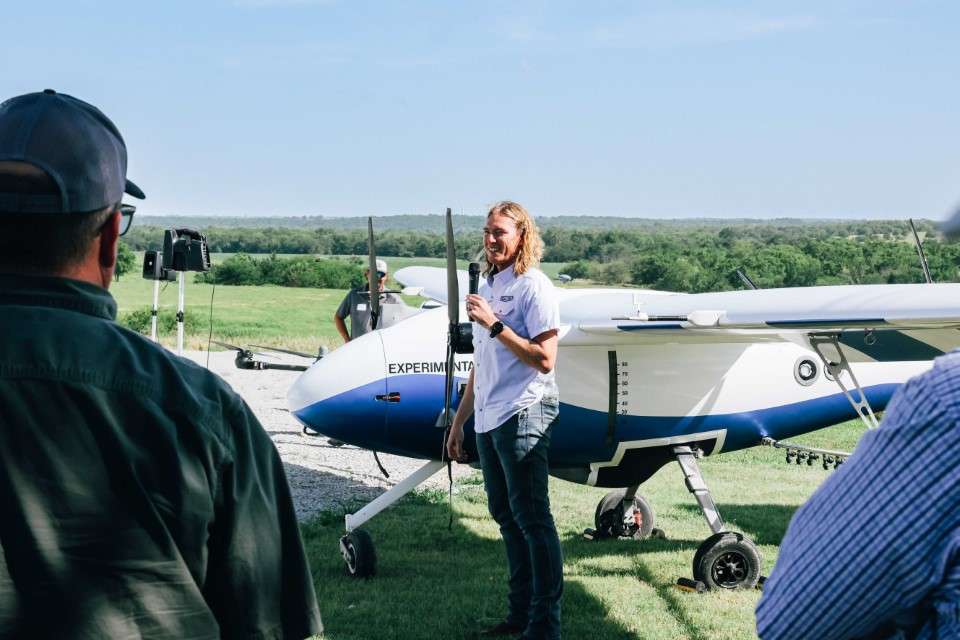
Kelly Hills, K-State ID3A collaboration builds research, engagement and commercialization
As CEO of Kelly Hills, established in 2024 by Heinen Brothers Agra Services and based in northeast Kansas, Koch has worked to grow the company into a national leader, building connections between the companies and organizations developing cutting-edge precision agriculture technologies and the farmers who can put them to valuable use.
"A fantastic place for that to happen is at the university level," said Koch, who is also a 2018 and 2019 K-State alumnus. "A public-private partnership between a company like Kelly Hills and a university like K-State allows for this sandbox where all of this can come together, leveraging the reach of K-State Extension and its research."
Matching the strengths of each organization, the collaboration focuses on three key pillars:
- Research and development — K-State and Kelly Hills will collaborate on unmanned aerial technology research for precision agriculture, focusing on areas like optimized aerial spraying for crop protection, remote sensing methods, data analytics integration and autonomous navigation, among other areas.
- Community engagement — The partners will work together to engage agricultural communities, policymakers and industry stakeholders through educational outreach, drone demonstration events and technology awareness programs — all aimed at promoting the safe, effective and sustainable adoption of unmanned aerial systems in farming operations.
- Industry demonstration and technology transfer — Through real-world demonstrations and field trials, K-State and Kelly Hills will help promote the use of unmanned aerial systems and encourage the adoption and commercialization of emerging UAS technologies within the agricultural sector.
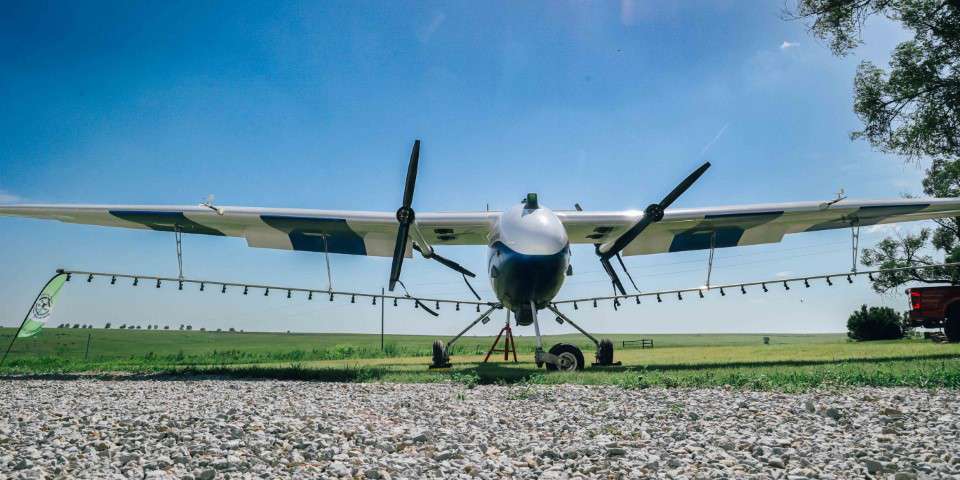
Besides its extensive network of industry connections, Kelly Hills is also a valuable partner for K-State because of its nearly 50,000-square-mile test range and experience with the Pyka Pelican 2 — the world's largest autonomous agricultural aircraft and the largest uncrewed aerial system authorized by the FAA for commercial use.
But one of the company's biggest assets is its ability to connect with on-the-ground farmers, said Brian McCornack, an ID3A director at K-State.
"They're creating a lot of excitement around what they're doing," McCornack said. "They have the ears of the producers in their area, and they're growing excitement beyond that. When you have that kind of excitement and investment from farmers, it makes it easier for us to partner with farmers, listen to their needs and figure out solutions together with them."
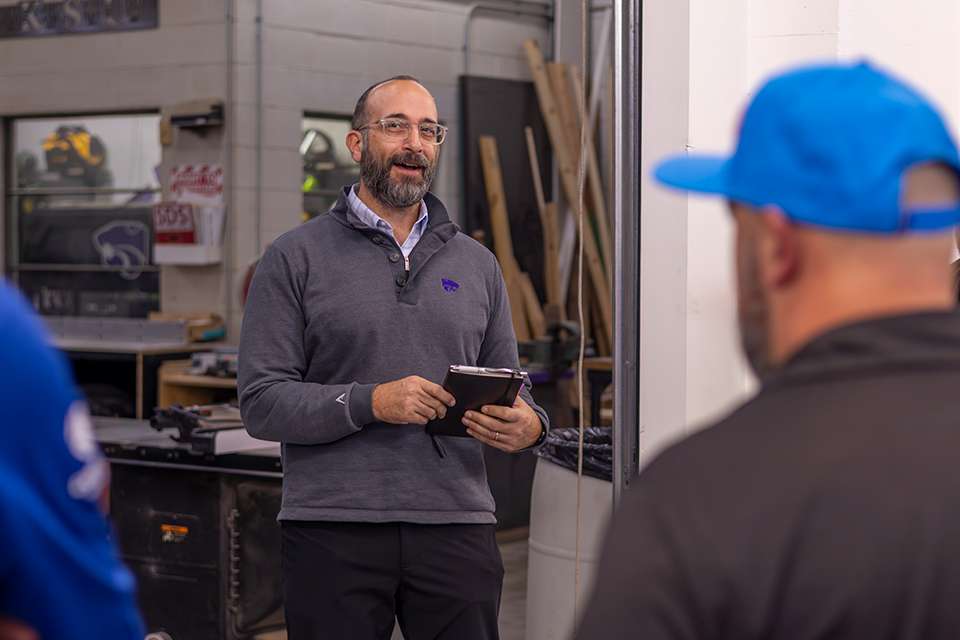
Creating an uncrewed aerial systems pipeline
In addition to K-State's expertise in agriculture and unmanned aerial systems, K-State will play a big role in helping Kelly Hills work with the large data sets collected from farmers' lands, said Ajay Sharda, professor of biological and agricultural engineering and an ID3A director.
"We have a diverse range of skillsets, including remote sensing, data analytics, working with large and small machines, and economic responses," said Sharda, who also taught Koch during his time at K-State. "There's a whole team of people, and they're all directly or indirectly involved with ID3A. It's an amazing opportunity for us to put a pin on the map."
Through each of the three pillars, Kelly Hills and K-State will collaborate on innovative ways to scale up the technology and reduce costs.
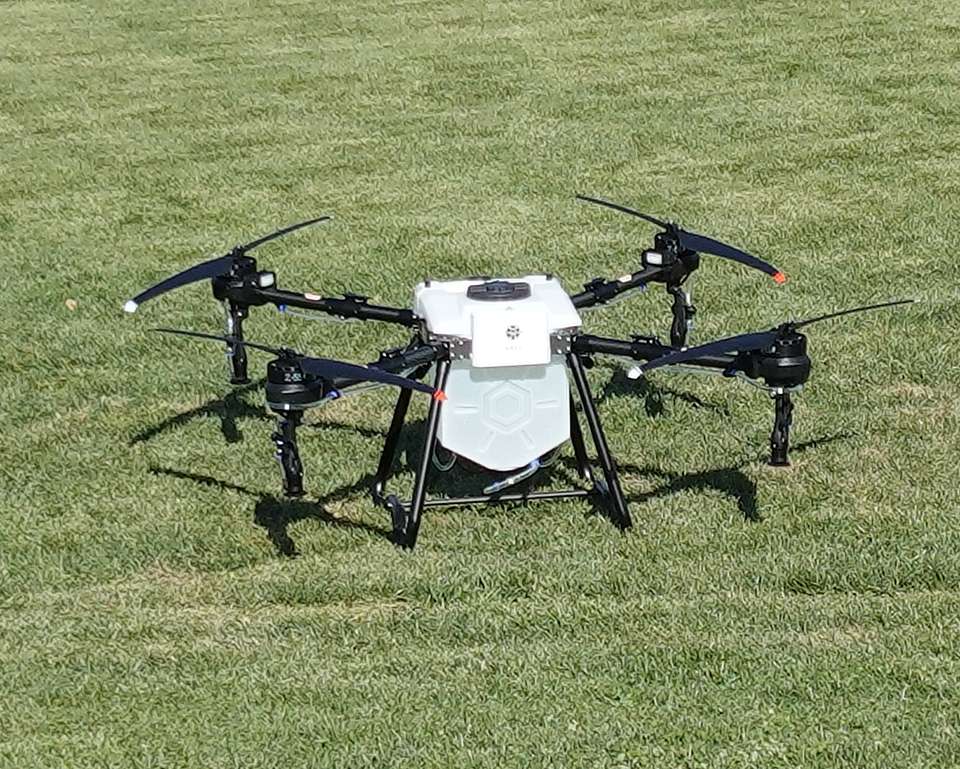
Kelly Hills Unmanned Systems partners with companies like Hylio, a Texas-based American drone manufacturer.
Farmers juggle a variety of equipment, input and operational costs, and typically aren't looking to spend more, Sharda said.
"But they are looking to spend smarter, and this is a perfect spot for us to help make a business case for this technology," Sharda said.
Long-term, the collaboration will result in resources, tools and education that familiarize, train and encourage farmers and other interested industry partners in the use of uncrewed aerial systems at scale.
"When you look at how much agriculture exists within Kansas, it's crucial to have a pipeline of folks who can provide additional support in industry areas like fertility, pest protection or crop monitoring — all those services that help support an industry that is half of Kansas' GDP," McCornack said.
For Koch, there's a sense of personal satisfaction in working with professors he learned from and appreciated, while also serving a state he loves.
Having grown up on a technology-forward farm, he's seen the transformative power of next-generation agricultural technology in Kansas, and he wants Kelly Hills and K-State to unlock that innovation for the world.
"We're early in it, but with a relationship like this, we can build on K-State's mission to serve people across Kansas and the world as a land-grant university," Koch said. "It's a unique state and position for K-State to be in to do research that benefits farmers across the wide variety of regions in Kansas, and I see a future where we can work together and bring that value back for everyone."