


MARC JACOBS
Hutch Post
A central Kansas woman recently had a front-row seat—and a hands-on role—in one of the most iconic New Year’s Day traditions in the country.
Shirley Nisly of Pleasant View Home Improvements traveled to California over the Christmas holiday to volunteer on float construction for the Tournament of Roses Parade in Pasadena. Nisly joined hundreds of volunteers from service organizations across the country who help bring the elaborate floral floats to life each year.
Nisly said she was invited through a Rotary Club connection after her sister, a member of the Rotary Club in Camarillo, California, encouraged her to apply for a volunteer shift.
“It was truly a once-in-a-lifetime experience,” Nisly said. “It’s something you really can’t appreciate unless you’re there, in the middle of it.”
A year-long process behind a single parade
While the parade itself lasts only a few hours, Nisly learned that float creation is a nearly year-round effort. Designers begin planning the next year’s floats the day after the parade concludes, with construction taking place in massive “float barns” around the Pasadena area.
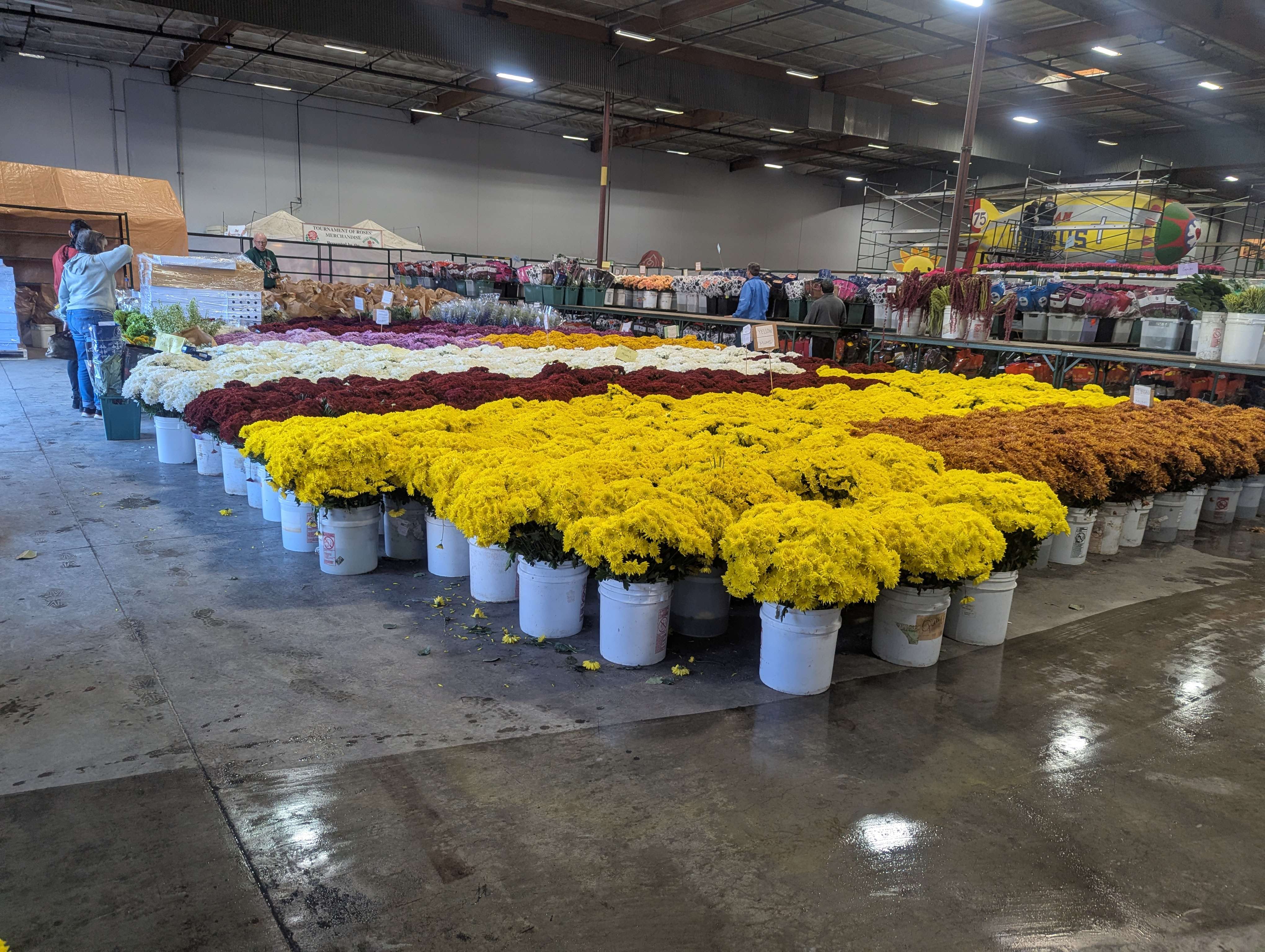
Nisly worked in a 110,000-square-foot facility in Irwindale, California, where 14 of the parade’s 39 floats were assembled. More than 1,000 volunteers representing organizations such as Rotary, Kiwanis, Lions Club, Knights of Columbus, Trader Joe’s, and others worked simultaneously in the barn.
“All of the floats are built in stages and inspected constantly,” Nisly said. “There’s no such thing as ‘good enough.’ Everything has to be perfect.”
All-natural, down to the smallest detail
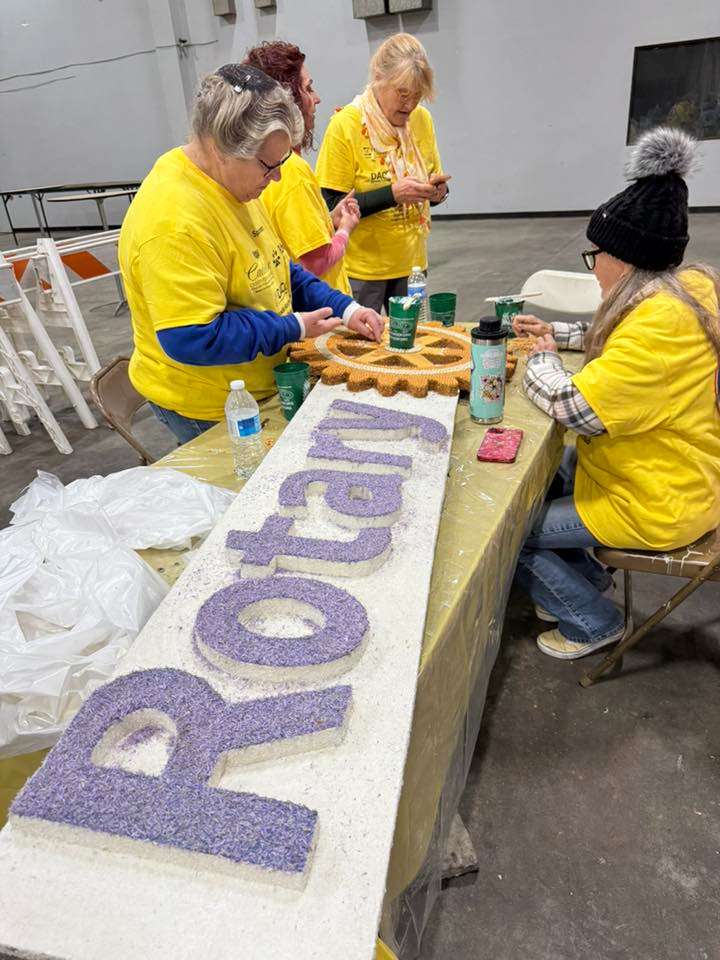
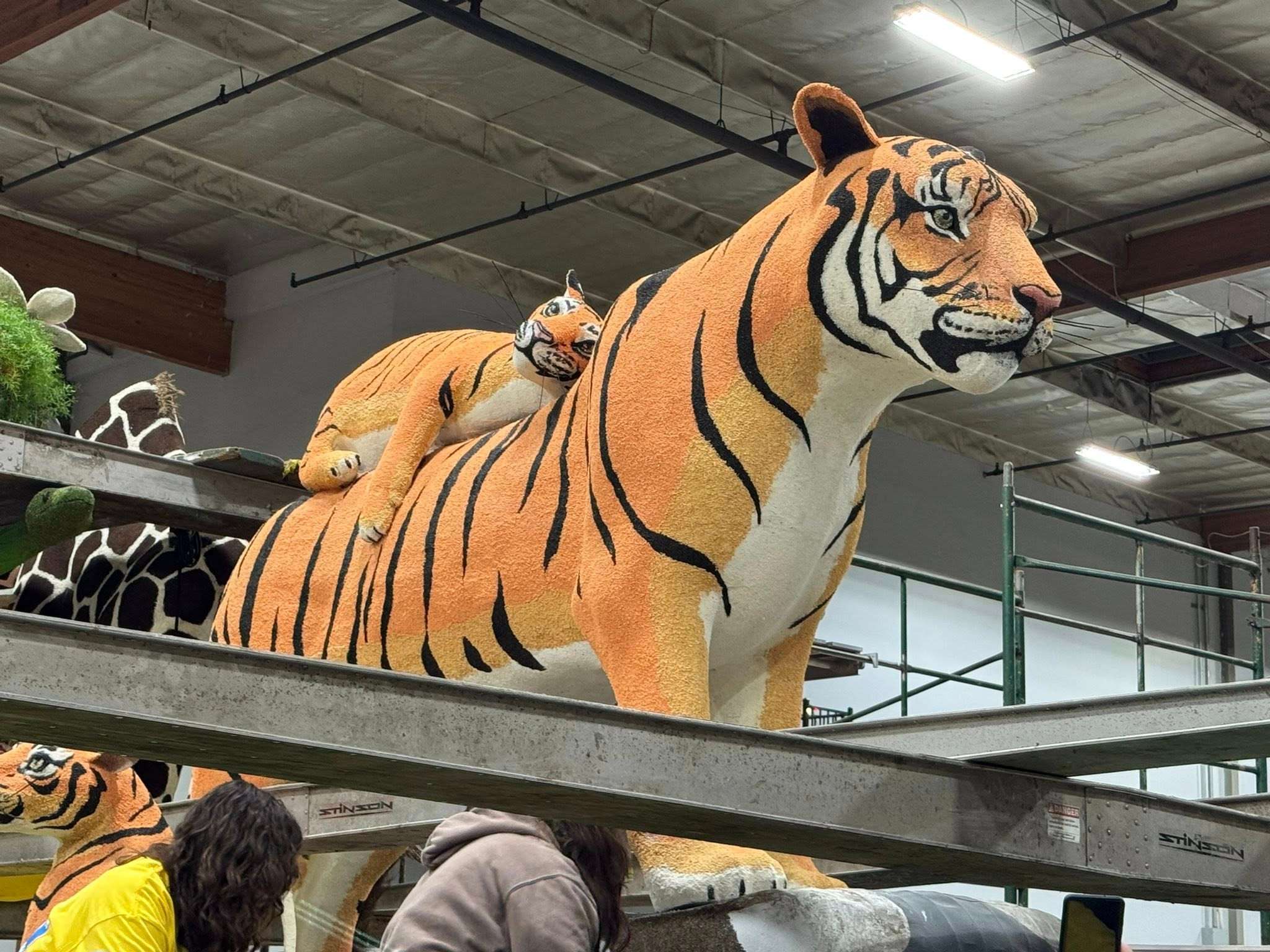
One of the parade’s most surprising rules, Nisly said, is that nearly everything on the floats must be natural. Aside from the metal frame and Styrofoam base, all decorations—flowers, seeds, leaves, beans, and grains—must be real and unaltered.
“They are extremely particular,” she said. “I actually got in trouble for taking a photo near containers of seeds because it could affect their quality.”
Volunteers worked on detailed tasks such as cutting leaf patterns for tree trunks, gluing split peas into precise rows, and applying flowers with different types of glue depending on drying time and placement.
“At one point, one split pea in my row wasn’t perfectly straight,” Nisly said. “I had to take off two rows and redo it.”
High pressure as judging approaches
Float judging takes place the morning of December 31, a day before the parade. By the time Nisly arrived for her volunteer shift—Christmas week—the pressure was mounting.
“All animation, music, performers, and floral elements have to be finished for judging,” she said. “That’s when the stress really kicks in.”
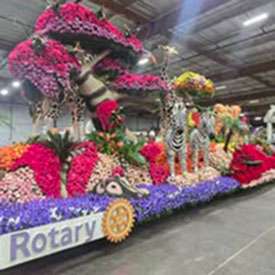
Nisly worked on a Rotary International float that measured approximately 45 feet long, 18 feet wide, and 20 feet tall. Despite its modest size compared to others, the float required an estimated 6,000 volunteer hours to complete.
The effort paid off. The Rotary float earned the Tournament Volunteer Award for Most Outstanding Floral, recognizing that roughly 90 percent of the work was done by volunteers.
Massive costs and modern technology
According to Nisly, float budgets range from approximately $275,000 to more than $550,000, with some of the largest floats—such as Trader Joe’s—approaching $700,000. Larger floats can exceed 80 feet in length and nearly reach the ceiling height of construction facilities.
Modern technology has also changed how floats operate. Drivers, who are paid professionals, no longer look through viewing slots. Instead, they rely on camera systems and screens inside the float to navigate the 12- to 16-hour journey from the float barns to parade staging areas.
“It’s incredible to think they’re driving an 85-foot float using just a screen,” Nisly said.
A new appreciation for a beloved tradition
Rain on New Year’s Eve and parade morning added another challenge, as water-soaked flowers increased the weight of the floats, requiring extra reinforcement underneath.
Despite the stress, Nisly said the experience gave her a new appreciation for the parade millions watch on television every year.
“I would highly recommend it to anyone who gets the chance,” she said. “It’s hard work, but it’s fun, and you walk away with a whole new respect for what goes into that parade.”
Nisly said she would not rule out volunteering again in the future—proof that even a once-in-a-lifetime experience can be tempting to repeat.