


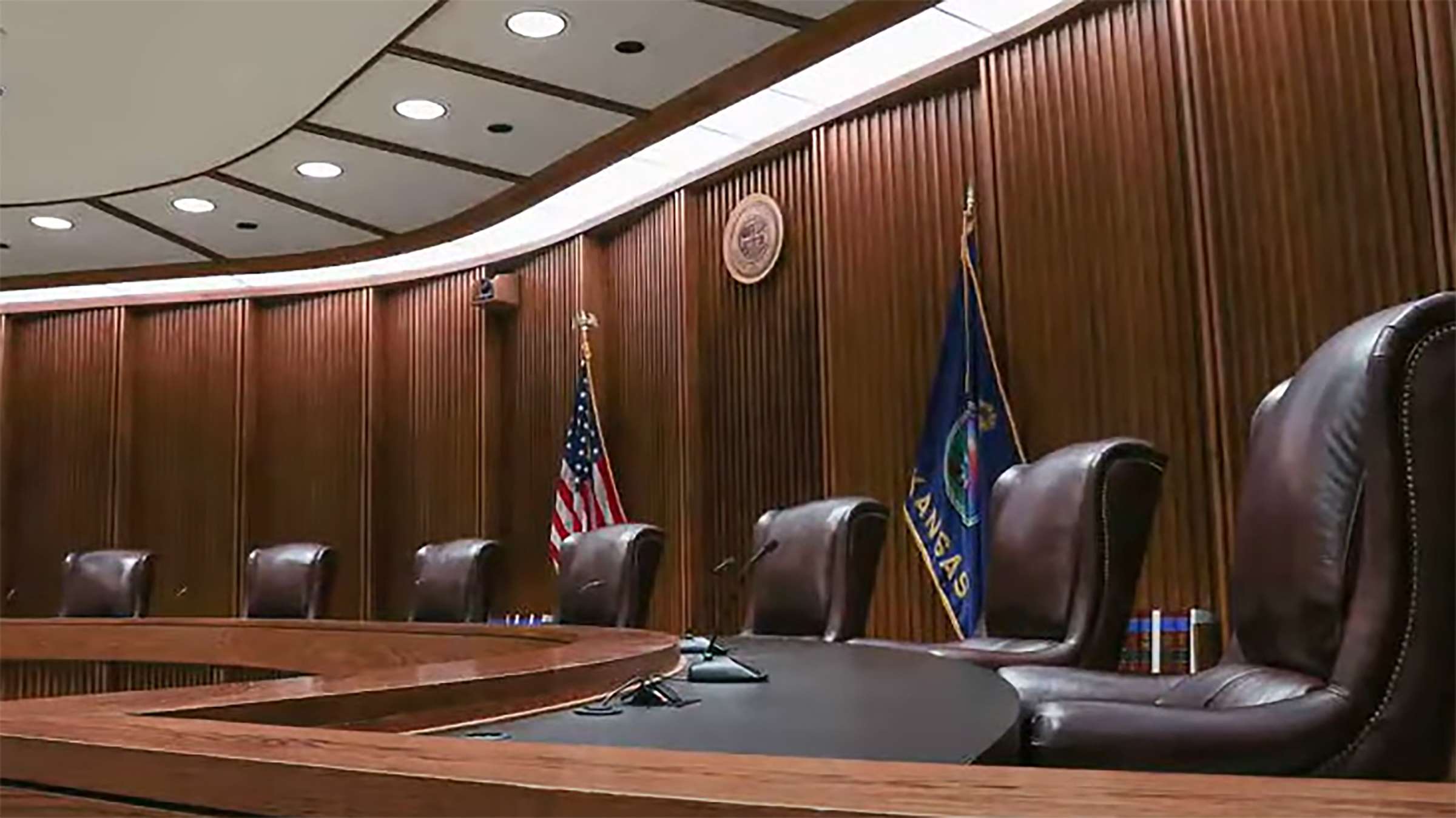
TOPEKA, Kan. — The Kansas Supreme Court will convene a special session at 9 a.m. Friday, Jan. 16, to hear an expedited case involving a constitutional dispute between Governor Laura Kelly and Kris Kobach over who has the authority to represent the State of Kansas in federal court.
The case, No. 129,788 — Governor Laura Kelly, in her Official Capacity v. Kansas Attorney General Kris Kobach, in his Official Capacity, will be heard in the Supreme Court courtroom on the third floor of the Kansas Judicial Center in Topeka. Oral arguments will be livestreamed on the court’s YouTube channel. Court filings and related documents are available to the public through the Kansas judicial branch website.
The matter comes before the court as an original action seeking a writ of quo warranto. According to the case summary, the material facts are not in dispute.
Kelly has asked Kobach to join several federal lawsuits she believes have merit challenging actions of the federal government on behalf of the State of Kansas. Kobach declined, stating he believed the lawsuits lacked merit. Kelly then attempted to join two federal lawsuits in her official capacity as governor, seeking relief on behalf of the state.
In response, Kobach filed amicus briefs in those cases, arguing that Kansas law grants exclusive authority to the attorney general to initiate and control litigation on behalf of the state in federal court. Kelly has also expressed interest in seeking federal judicial review of a decision by the SNAP Appeals Board, an action Kobach contends likewise falls solely within the attorney general’s authority.
Kelly subsequently filed the current quo warranto petition, asking the Supreme Court to resolve the dispute.
The justices are expected to consider four central legal questions:
- Whether Kansas statutes vest the attorney general with exclusive control of the state’s litigation in federal court;
- Whether the governor has independent constitutional litigation authority as the state’s “supreme executive”;
- Whether the attorney general lacks the power to prevent the governor from participating in litigation; and
- Whether the attorney general’s statutory authority over federal litigation violates the Kansas Constitution.
The court’s decision could have significant implications for the balance of power between the governor and attorney general and for how Kansas participates in federal litigation going forward.