


MARC JACOBS
Hutch Post
Kansas corrections officials told lawmakers Friday that the state’s aging Hutchinson Correctional Facility is nearing a breaking point, with decades-old infrastructure problems and rising inmate population projections driving renewed discussion about a costly rebuild.
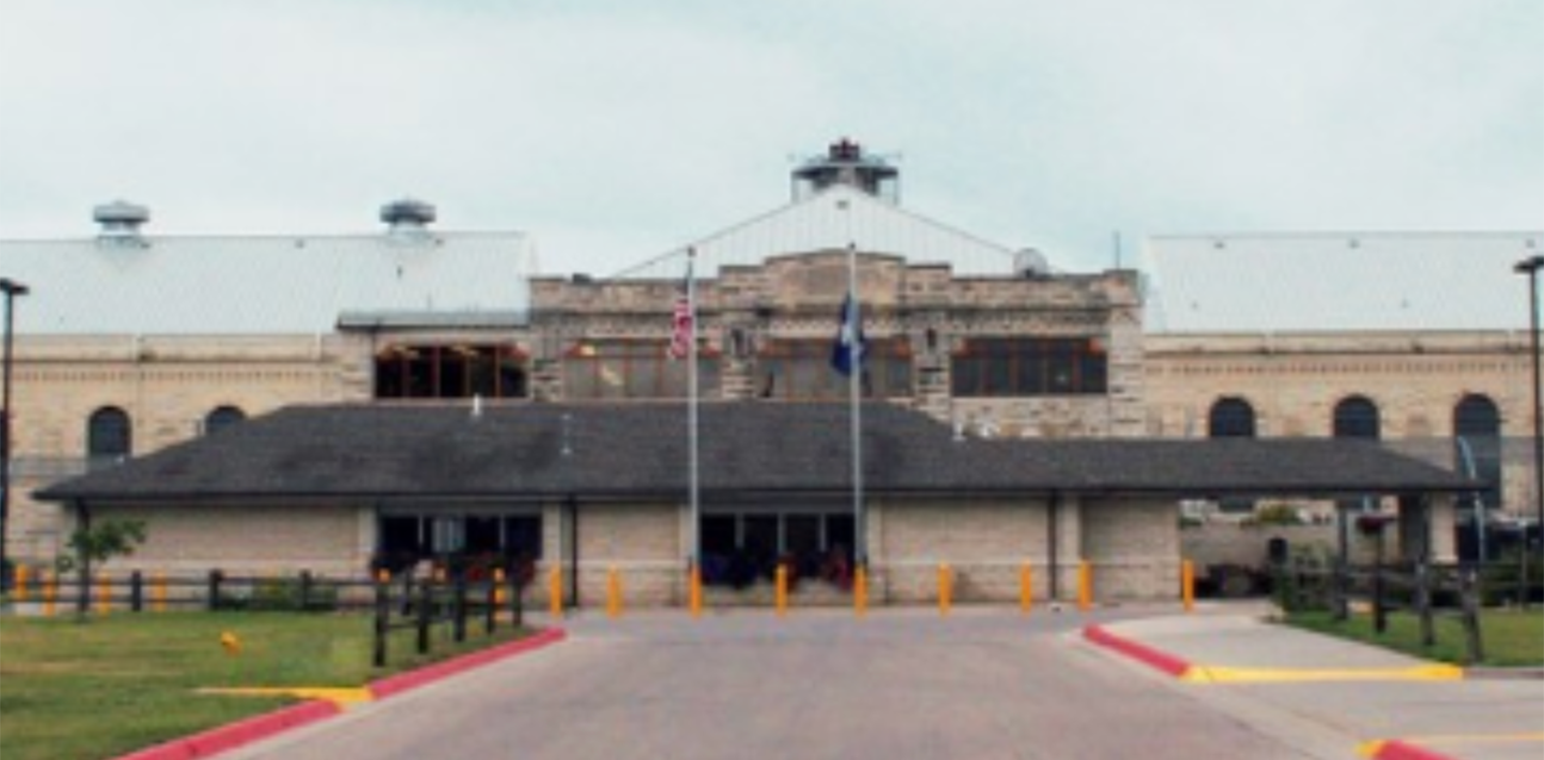
Kansas Department of Corrections Secretary Jeff Zmuda testified before a joint hearing of legislative committees that the prison’s Central Unit — portions of which date back to the 19th century — faces significant design and maintenance challenges that are increasingly difficult to manage. Construction on the Central Unit began in 1885, he said.
Lawmakers formed the joint hearing to gather information from KDOC and the Kansas Sentencing Commission about options to renovate or replace the facility, which houses adult men and is the state’s third-largest prison.
Zmuda said KDOC has examined replacement plans for several years, but escalating construction costs have narrowed the department’s focus. Earlier concepts contemplated replacing three units at Hutchinson — the Central, South and East units — but KDOC has since scaled back to prioritize the Central Unit.
A replacement plan that also adds about 400 beds to help address projected population growth is now estimated at about $453 million, Zmuda told lawmakers. If financed through a 20-year bond, annual debt service would be about $34.5 million, he said.
The project was previously included in an earlier budget recommendation, Zmuda said, but the Legislature did not fund it. It is not included in current budget recommendations, he said.
KDOC officials described multiple concerns at the Central Unit tied to its age and layout, including extreme temperature swings in housing areas, frequent plumbing and electrical system failures, and limited fire protection systems in parts of the facility. Zmuda said maintenance staff “just can’t keep up” with the demands of the infrastructure.
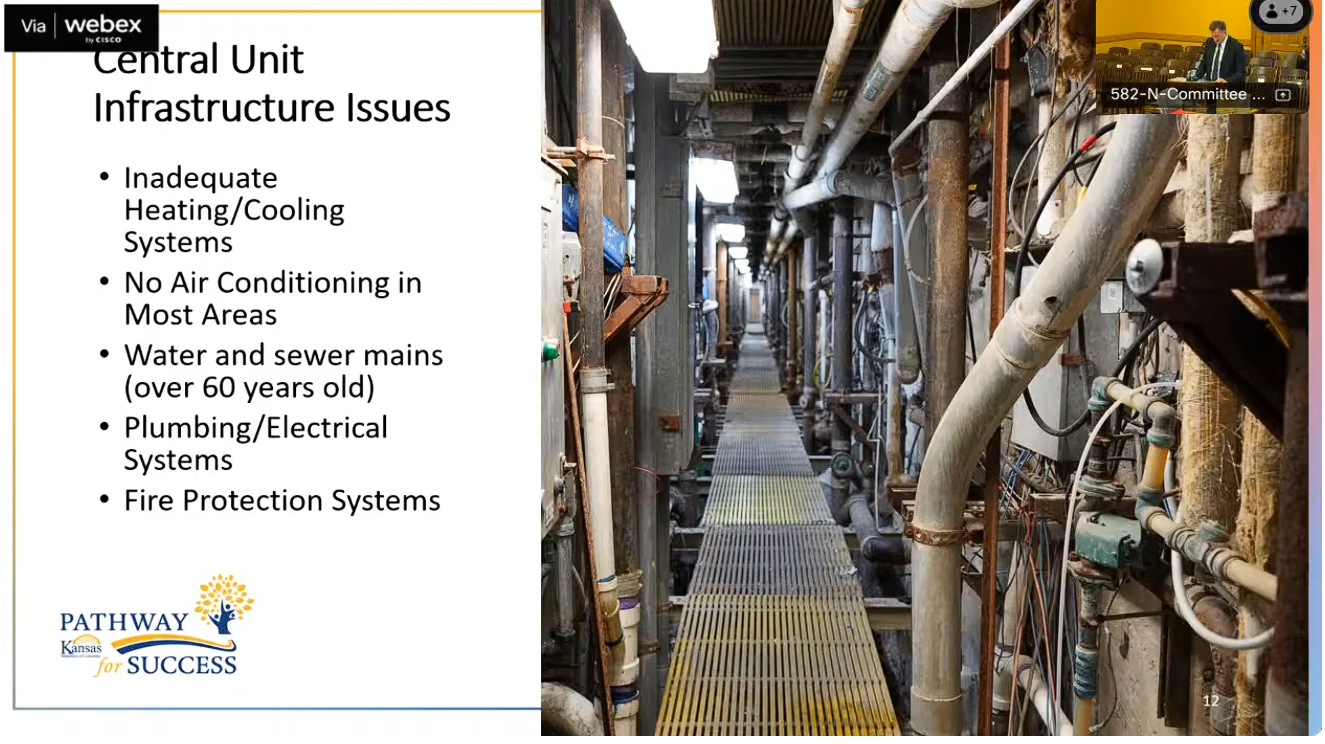
He also pointed to cramped cell sizes — some measuring roughly 5 1/2 feet by 7 1/2 feet — and older open-bar cell designs that can complicate safety and security. Limited day-room space and poor sightlines for officers operating cell doors also add operational challenges, he said.
In addition, KDOC officials said public streets run close to portions of the Central Unit’s perimeter, allowing people to throw contraband — including drugs and cellphones — over the wall. Contraband drives a large share of problems inside facilities, Zmuda said.
A 2021 facility assessment commissioned by KDOC found building conditions at Hutchinson ranged from fair to poor and concluded replacement would likely be more cost-effective than major renovations, Zmuda said. The assessment estimated about $80 million in renovation needs at the time — a figure Zmuda said would translate to about $95 million in 2026 dollars — but he cautioned the total would rise further if the state pursued major renovations that would require additional compliance work and hazardous-material mitigation.
Lawmakers asked KDOC how a rebuild would work and where inmates would be housed during construction. Zmuda said the department would likely build a new unit on available land near the current Central Unit and keep inmates in the existing facility until the new unit is completed, then relocate them. He said a full replacement project could take roughly 40 to 50 months from approval to completion, including design and bidding.
Other legislators raised questions about potential demolition or repurposing of the old Central Unit, including whether historic preservation requirements might apply and what demolition costs could be. Zmuda said KDOC has not priced demolition and has not determined whether parts of the old facility could be repurposed for community uses.
Kansas Sentencing Commission Executive Director Scott Schultz told lawmakers that prison populations dropped during the COVID-19 pandemic as court proceedings slowed and releases outpaced admissions, but have since climbed back toward pre-pandemic levels. Based on the commission’s projections, Kansas is expected to exceed prison capacity around fiscal year 2029, he said.
Schultz said the commission’s 10-year model projects a roughly 20.6% increase in the prison population through fiscal year 2035, translating to about 2,530 additional beds compared with today’s numbers. After accounting for existing capacity, he said the system would still need about 1,365 more beds beyond current capacity — even if Kansas moves forward with the Hutchinson project and adds beds there.
Schultz urged lawmakers to consider prison construction alongside sentencing policy, rehabilitation programs and community-based alternatives. While the system must house people who pose serious risks, he said, most incarcerated people ultimately return to their communities.
Several lawmakers echoed calls for a broader strategy that balances facility needs, public safety and costs. The hearing chair said no decision would be made at the meeting but argued the issue needs sustained attention and could become more expensive the longer it is delayed.
The hearing concluded with lawmakers encouraging colleagues to tour the Hutchinson facility to better understand conditions and the scope of the challenges.