


MARC JACOBS
Hutch Post
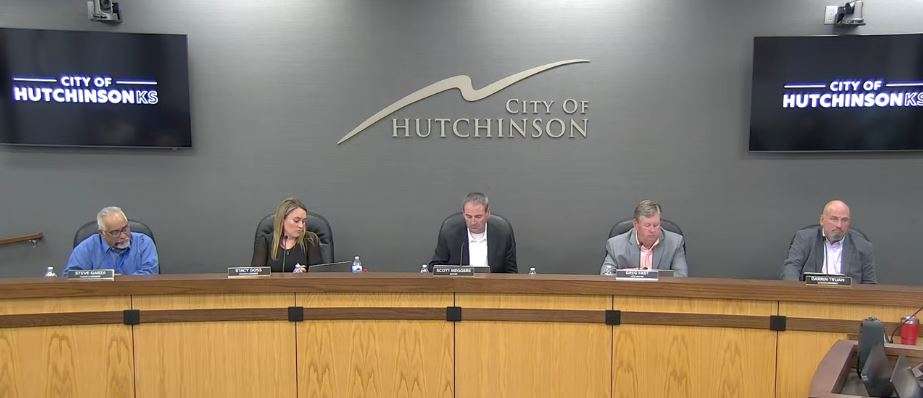
The Hutchinson City Council approved an ordinance adopting the city’s STAR Bond project plan—an action city officials emphasized is a required legal step that advances the proposal but does not authorize issuing bonds or spending city money at this time.
City staff explained the ordinance approves a framework document under the Kansas STAR Bond Act, formally known as Sales Tax and Revenue Bonds. Under the program, new sales tax revenue generated within a defined project district can be used to pay for eligible public improvements tied to tourism- and destination-oriented projects. Officials repeatedly noted the bonds are not backed by property taxes and not backed by the City’s general fund; instead, repayment depends on the project area generating incremental sales tax.
“This is approving the rule book, but not starting the game yet,” staff told council, describing the vote as a checkpoint that preserves the city’s ability to consider STAR Bond financing later, subject to additional approvals.
As presented Tuesday, the STAR Bond project plan contemplates three components
- Cosmosphere improvements as a major tourism anchor.
- Memorial Hall and downtown improvements.
- Improvements tied to the Landmark building—specifically the commercial portion at Fifth and Main.
City leaders also referenced elements intended to reinforce Hutchinson’s identity around space tourism, including a proposed $1 million component previously discussed by the city.
Process and safeguards discussed
Bond counsel Dominic Act, with Gilmore & Bell, told council the primary “safeguard” for a future bond issue is the underwriting and revenue-sizing process. Following project plan approval, an underwriting firm would conduct deeper due diligence and commission third-party revenue projections to determine an appropriate bond size that can be repaid through incremental sales tax over time.
Council members and staff compared the earlier feasibility work to a preliminary screening, while underwriting was described as the more detailed step required to market and sell the bonds.
Act said the council would see the proposal again for additional votes, including a “sale resolution” authorizing preparation of bond documents and a later approval of the final bond terms after pricing, including interest rates and final amounts. He indicated the timeline from this point could be “another couple months,” driven by underwriting schedules and cash-flow needs across the project components.
Council members acknowledged ongoing public confusion, noting multiple overlapping discussions, including the city’s separate sales tax vote tied to eliminating a stormwater fee and broader infrastructure funding conversations. Several council members encouraged residents to contact elected officials directly with questions rather than relying on social media commentary.
To help clarify how STAR Bonds work, council members and bond counsel repeatedly stressed the concept of “incremental” sales tax: the program does not impose a new tax rate inside the district; rather, it redirects the additional sales tax generated above an established baseline within the project area toward bond repayment.
Examples cited: Strataca STAR Bonds paid off early
When asked for examples of STAR Bond projects, officials and community members pointed to Hutchinson’s own experience with Strataca, calling it one of the state’s most successful STAR Bond projects. Strataca Director Rachel Woods told the council Strataca utilized approximately $10 million in STAR Bonds and paid them off early, adding that the attraction likely would not have been possible without the financing mechanism.
Council members also referenced other STAR Bond-related developments around Kansas, including projects in Goddard, Salina, Manhattan, and those tied to major venues such as Kansas Speedway.
Legislative uncertainty raised
Council member Stacy Goss asked about discussion in Topeka regarding potential changes to the STAR Bond program. Act noted the STAR Bond Act currently has an expiration date at the end of June 2026, though it has historically been renewed. He said the city would retain authority to proceed under current law through at least that date, and that the city and bond team would monitor any legislative developments closely.
After closing the public hearing, the council voted unanimously to adopt the STAR Bond project plan ordinance and authorize the mayor to sign, moving the plan into the next phase that includes development agreement negotiations, coordination with the Kansas Department of Commerce, and further financial refinement.