


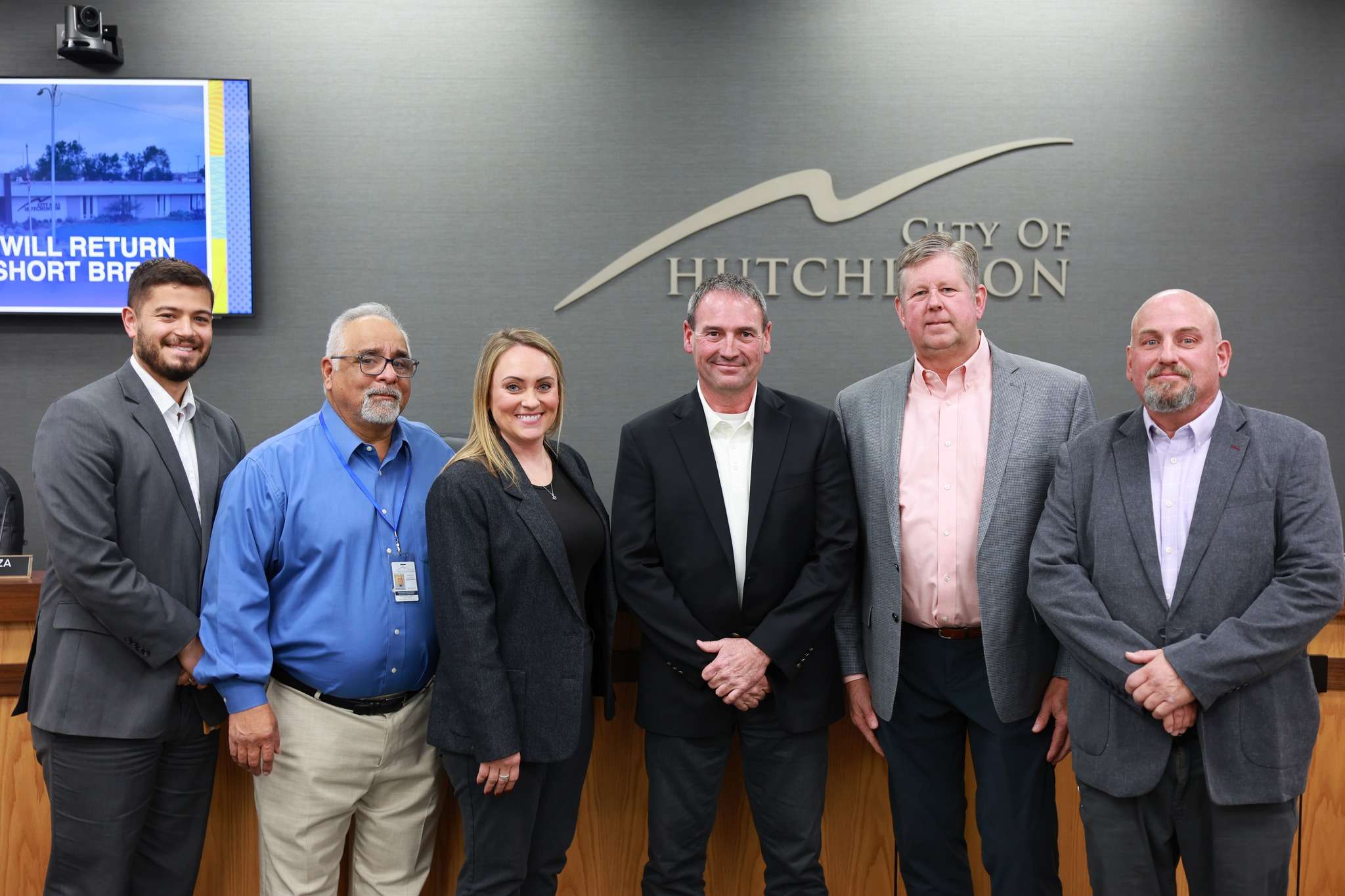
HUTCHINSON, Kan. — Business expansion, downtown redevelopment, golf course improvements and neighborhood safety were all on the agenda Monday night as the Hutchinson City Council approved or advanced several measures aimed at strengthening the local economy and improving quality of life across the community.
From authorizing industrial revenue bonds for a long-time employer to setting hearings on a proposed downtown financing district and deteriorating homes, council members described the actions as strategic investments and housekeeping steps designed to support growth while protecting neighborhoods.
IRBs approved for SDI expansion, 50+ jobs expected
The council unanimously approved issuing up to $2 million in taxable industrial revenue bonds (IRBs) for Sales Data, Inc. to help finance a 101,754-square-foot expansion of its south Hutchinson facility.
SDI supplies and services point-of-sale systems for more than 2,700 McDonald’s restaurants nationwide and has operated locally since 1976.
City and Greater Hutch officials said the expansion will:
- Renovate and modernize the existing facility
- Support continued growth in technology and service operations
- Create at least 50 new jobs, with potential employment reaching about 170
- Offer average wages of $41,000–$42,000, above the county median
SDI currently employs roughly 120–130 people locally with about $6 million in annual payroll. Officials noted most of the company’s revenue comes from outside Kansas, bringing new dollars into the Hutchinson economy.
“This is revenue that is being brought into Hutchinson and infusing our local economy,” said Lauren Storm with Greater Hutch.
Finance Director Angela Richard emphasized the IRBs do not use city tax dollars or create city debt.
Instead, the structure allows SDI to:
- Avoid paying sales tax on construction materials
- Receive a temporary 10-year property tax abatement
“The city will not be responsible for any expenses related to issuing the bonds, and no city funds will be used,” Richard said.
A Kansas Department of Commerce cost-benefit analysis found the project’s long-term economic return would outweigh the temporary incentives, with projections showing the city’s investment recouped within about four years.
During the hearing, some residents questioned whether a successful private company should receive incentives and suggested SDI seek private financing.
Council members responded that IRBs are not direct public funding and are a long-standing economic development tool available to qualifying businesses statewide.
“This is not public money,” one council member said. “It’s a tool that helps companies grow and create jobs here rather than somewhere else.”
SDI co-owner Jerry Boone said the company chose to expand locally rather than in larger metro areas.
“We could grow in Chicago or Denver, but we choose to grow here,” Boone said. “The workforce here cares a little more.”
Landmark CID hearing set for downtown project
The council also voted to set a March 3 public hearing on a proposed Landmark Community Improvement District (CID) requested by Landmark LLC for a downtown property.
Monday’s vote only schedules the hearing and does not approve the district.
If later approved, a CID can allow; An additional sales tax within the district, or special property assessments.
Revenue generated inside the district must be used solely for improvements within that area, such as renovations or infrastructure upgrades. Costs are paid by customers or properties inside the boundary, rather than citywide taxpayers.
Council members characterized the step as procedural, with no formal details presented yet.
Golf course bonds reduced, improvements move forward
Council members also approved a scaled-back general obligation bond authorization of up to $428,000 to complete improvements at the municipal golf course.
Originally, staff proposed bonding roughly $840,000. However, unused funds from a past Orchard Park project were identified to offset costs, cutting the borrowing amount nearly in half.
Parks and Facilities Director Justin Combs said the city is about 70% complete with upgrades to holes 15 and 16, including:
- Replacing a 60-year-old irrigation system
- Regrading fairways and greens
- Rebuilding tee boxes and bunkers
- Installing new sod
“If we stopped today, we’d still owe the contractor for the work already completed and would be left with an unfinished hole,” Combs said.
Officials warned that operating with fewer than 18 holes could reduce revenue and jeopardize tournaments. The course generated about $847,000 last year and currently covers roughly 75–77% of its operating costs through user fees.
Council members described the action as finishing a project already budgeted rather than launching new spending.
“These are quality-of-life services for the community,” one member said.
April hearing scheduled for five unsafe homes
Finally, the council set an April 7 public hearing to address five residential properties city staff say may qualify as unsafe or condemned structures.
Building Official Jason Lovelady called them among the “worst of the worst” in the city’s backlog of abandoned homes.
Properties included in the list:
- 419 East Ave. F
- 1526 East 2nd Ave.
- 224 East 3rd Ave.
- 213 East 8th Ave.
- 526 West Ave. A
Issues cited include boarded openings, code violations, lack of utilities, delinquent taxes and extended vacancy.
The hearing will allow owners to respond and the council to decide whether repairs or demolition are required. If owners fail to act, the city can remove the structures and place costs as a lien on the property.
Officials said removing dangerous buildings helps reduce fire risks, crime and declining property values.
“These are the ones that rise to the top because of how unsafe they’ve become,” Lovelady said.