


MARC JACOBS
Hutch Post
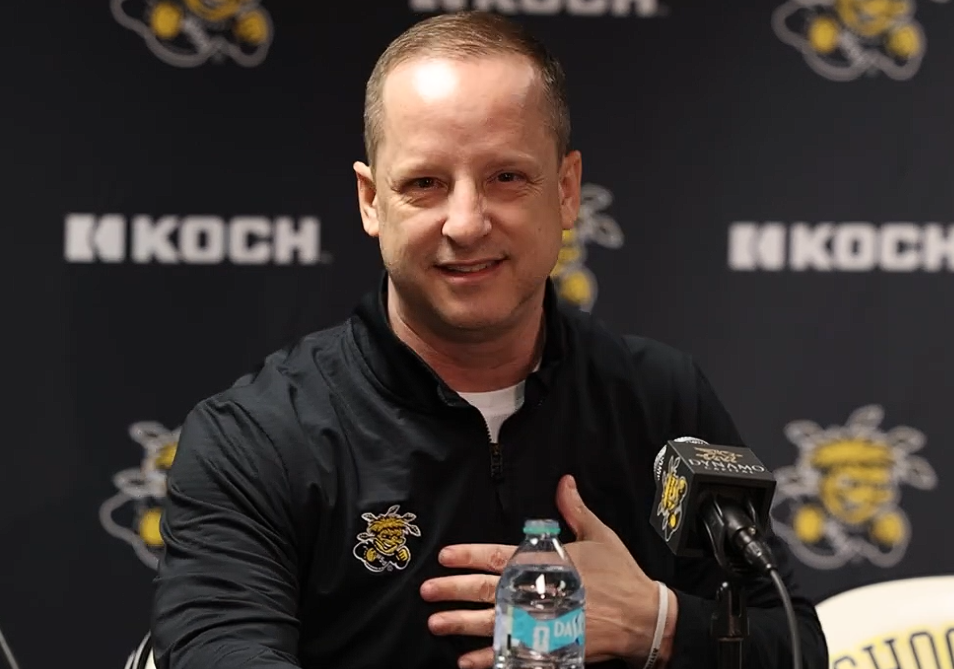
Wichita State University men’s basketball head coach Paul Mills is sharing a deeply personal story after surviving a life-threatening cardiac emergency earlier this month—an experience he says could have ended very differently had even a few circumstances changed.
Mills explained that two weeks ago, following a road game at Northern Iowa, he began experiencing severe chest pain and difficulty breathing immediately after the final buzzer.
“I realized something wasn’t right,” Mills said. “It felt like my chest had a skeletal fracture, and it was extremely hard to breathe.”
Despite the pain, Mills completed postgame responsibilities before sitting down in the locker room, exhausted and struggling to move. With a winter storm impacting travel plans, the team ultimately boarded a late-night flight rather than returning by bus. Mills said that decision may have saved his life.
After landing shortly after 1 a.m., Mills told his wife he needed to go to the hospital. Doctors immediately performed an EKG and identified abnormalities, admitting him overnight while a cardiac team was called in. Mills said the next thing he remembers is waking up after undergoing emergency cardiac surgery.
Doctors later told Mills his right coronary artery was 100 percent blocked and had gone without blood flow for approximately six hours. Multiple stents were inserted to restore circulation.
According to his cardiologist, survival rates for that type of cardiac event drop to about 50 percent if treatment is not received within the first hour.
“There were so many moments where this could have gone the other way,” Mills said. “If we had gotten on a bus, if I had gone to a hotel, if I had gone to the wrong hospital, or if I had ignored the pain and gone to sleep—I likely wouldn’t be here.”
Mills credited what he described as a series of providential circumstances for his survival, noting that he does not drink or smoke and runs regularly.
“I thought I was doing everything right,” he said. “What I didn’t realize was that about 80 percent of my cholesterol issue was hereditary.”
Despite being released from the intensive care unit on a Wednesday, Mills returned to the bench just days later for Wichita State’s game against DePaul, under strict medical supervision and while wearing heart-monitoring equipment.
“I wouldn’t recommend getting out of the ICU on a Wednesday and coaching on a Saturday,” Mills said. “But I wanted to show up for our players.”
Mills said doctors initially warned his wife they were uncertain about his long-term quality of life, and a chaplain was brought in following surgery. Today, however, Mills says he feels better than he has in years.
“It’s like living your whole life with low water pressure and suddenly everything is wide open,” he said. “I had no idea how restricted my blood flow was.”
Mills said the experience has changed his perspective on life and work, and he urged others—especially young people—not to ignore warning signs or skip routine medical checkups.
“There are two conditions,” Mills said. “There’s death, and there’s life. And I have life. For that, I’m grateful.”
He closed his remarks by reflecting on the meaning of the holiday season.
“Christmas is both sacred and solemn,” Mills said. “Some families have empty chairs at the table. We almost had that. Don’t take a single day for granted.”
Mills ended with a message he said now carries deeper meaning than ever before: