


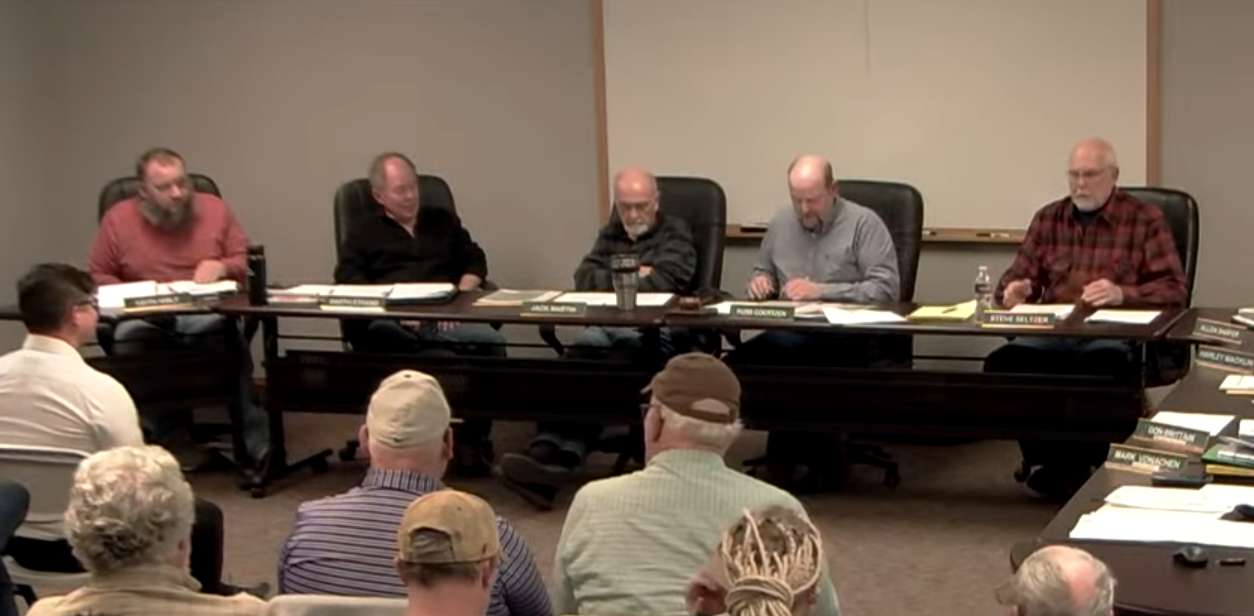
The Reno County Planning Commission has taken two key steps toward a proposed destination-style golf resort planned for the former Cottonwood Hills Golf Course property, approving both a rezoning request and a conditional use permit during a public hearing.
In the first action, commissioners unanimously recommended rezoning roughly 180 acres from the R-2 Suburban Residential District to the AG Agricultural District. County Planner Mark Vonachen said the request was made largely to remove the possibility of future high-density residential subdivision development on that portion of the property, noting that the project’s current proposed uses could be allowed under either zoning classification with a conditional use permit.

“This is really more of a protection for the surrounding property owners,” Vonachen told the commission, explaining that maintaining R-2 zoning could allow higher-density residential development without the same rezoning process and public notification requirements that would apply under AG zoning.
No written public comments were submitted on the rezoning request, according to staff, though one audience member asked whether the zoning change would affect existing water rights. Vonachen said the zoning classification itself does not change water rights.
The commission then moved into a second public hearing on the conditional use permit request for a golf course resort on land zoned AG, located near the northeast corner of East Fourth Avenue and North Buhler Road.
Brent Hugo of CE Golf Design, one of the project’s golf course architects, outlined plans for what he described as a high-end, public-access “destination” facility. The project includes two 18-hole courses, a 9-hole par-3 course, and a lighted putting course adjacent to the clubhouse. Hugo said the design will emphasize natural features, including sand dunes on the property, drawing comparisons to other destination courses in the Midwest and nationally.
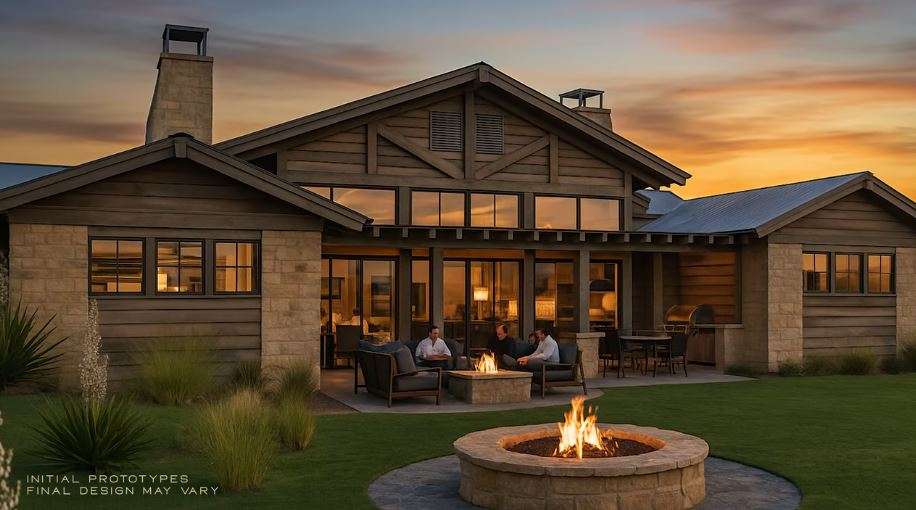
Plans also include a central clubhouse with fine dining, a cart and caddie operation, and on-site lodging. He also told commissioners the resort concept would include an off-season hunting lodge component, with hunting activities occurring off-site through leased property and local guides, and no firearms use planned on the golf resort property itself.
Public comment on the conditional use permit included a wide range of concerns and criticisms, particularly from residents who live in the area and experienced the wildfire that previously swept through the sand hills.
Several speakers raised concerns about water use for multiple golf courses, water pressure for fire suppression due to the site’s elevation, and whether hydrants or other infrastructure would be provided for emergency response.
Sewer and wastewater were also a major topic. One resident questioned the proximity of a proposed lagoon system to an existing rubber-lined irrigation pond and expressed concern about flood conditions and potential contamination. Commissioners and the applicant said the wastewater system would be permitted through the Kansas Department of Health and Environment, with the applicant stating state requirements would address flooding and system performance.
Fire safety and evacuation was another recurring issue. Commissioners questioned whether a primary paved access road and a secondary access route would be sufficient given wildfire risks and the potential for guests on site. The applicant said the main entrance would be paved, the secondary access would be gravel, and buildings would include fire protection systems such as sprinklers. Tornado shelter planning was also discussed, with the applicant indicating a shelter may be incorporated into central facilities.
Other audience members cited issues they said have already occurred during site activity, including nails and debris on nearby roadways causing flat tires, smoke and flames from brush pile burns, and ongoing stress for families who lost homes in the prior wildfire. One speaker asked about potential hazards from ice shedding off a nearby tower, saying ice had fallen in the area in the past.
Airport-related impacts were also raised in support of the project. One speaker from the aviation community said destination-style recreation and lodging can increase business traffic through the Hutchinson airport and spur broader economic activity.
Vonachen told commissioners staff recommended approval of the conditional use permit, citing consistency with county planning goals related to rural development, transportation impacts, and adequate services. He noted internal roads would be private and maintained by the developer, not the county or township.
Staff outlined multiple conditions of approval tied to the submitted site plan and operational documents, including requirements for paved access and parking at the main entrance, minimum widths for access routes to accommodate emergency vehicles, and compliance with applicable federal, state, and local regulations. Staff also included provisions requiring additional review if future changes significantly alter the project’s character or intensity beyond what the current approval contemplates.
During commission discussion, members amended one access condition to increase the minimum width of the secondary entrance route, reflecting concerns raised during testimony.
The Planning Commission ultimately voted unanimously to recommend approval of the conditional use permit, granting waivers related to certain parking, loading, and stall-count requirements as described in the staff report.
The recommendations now advance to the Reno County Commission for final consideration at a future meeting, with the record of the Planning Commission hearing forming the basis for the county commission’s review. Under the county’s stated procedures, additional materials or public comment at the county commission level would be limited to specific circumstances such as claims of incomplete process or genuinely new information that was not available at the time of the Planning Commission hearing.